
Over the weekend, an app rather jarringly named “Are You Dead Yet?” (死了么) hit #1 on Apple’s paid charts in China — and quickly sparked debate over whether its blunt name crosses cultural lines around death and fortune. Developed by a startup based in Henan province released in March 2025, the app costs 8.00 yuan ($1.15 USD) and offers a simple yet increasingly necessary function: people who live alone check in daily (with one click) to confirm they’re okay. If consecutive check-ins are missed, the user’s emergency contacts receive automatic alerts about their well-being.
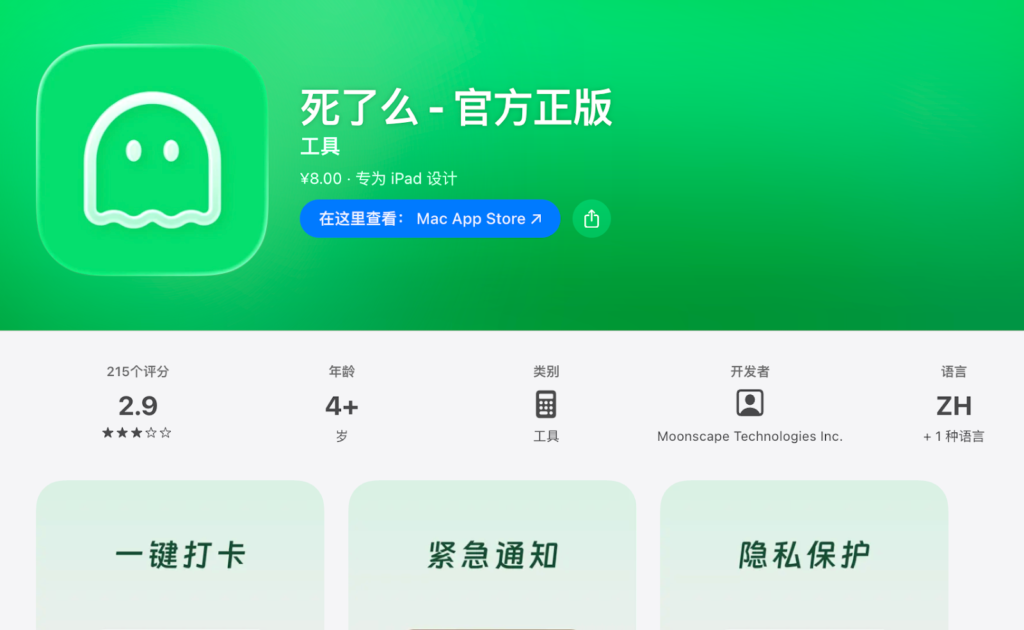
The app addresses a critical safety need for China’s surging solo-living population. As of 2020, there were 125 million single-person households, where sudden illness or accidents can often go unnoticed. That number is expected to balloon to 200 million by 2030. After the app’s launch, downloads jumped 100-fold to 12,000+ within less than 24 hours, according to Chinese media.
It was the name that sparked heated debate on Chinese social media this week. Netizens, particularly on the short-video platform Douyin (抖音), criticized the name as too harsh and inauspicious, saying it lacked positive vibes. Many proposed the softer “Are You Alive?” (活着么) as an alternative. This reaction reflects deeper tensions around Chinese taboos about death — the preference for positive expressions over direct confrontation with mortality.
Developers have pledged to consider renaming the app as they expand features like SMS notifications and elder-friendly versions. Beyond what we name it, this app shows how digital tools are stepping in where traditional support systems — family, friends, community — have grown weaker.