Cover prompted by CMP, using ChatGPT.
In foreign media reporting on China, there exists a group of people who have long been present yet rarely seen by the outside world. They are neither the bylined journalists nor the on-camera interview subjects, but rather the “news assistants” (新聞助理) — commonly called fixers — who play indispensable roles in the news production process. In China, they are often how foreign media can access society and complete their reporting, yet they must carefully navigate between risks, restrictions, and professional predicaments.
“Once an interviewee was suddenly dissuaded by family members from accepting an interview,” W says, discussing his experience working as a news assistant for foreign media in China. “I had to quickly calm the reporter while trying my best to persuade the interviewee.” His tone is flat, suggesting such spur-of-the-moment emergencies were something to which he was simply habituated.
“Another time we encountered law enforcement conducting a spot check,” says W. “I could only stay calm and try to explain with proper reasons to avoid unnecessary trouble. I also had to draft backup plans and adjust interview subjects on the fly.”
For W, these are just isolated examples among countless precarious moments he experienced over a career of many years as a fixer. Given professional considerations of risk, and after discussion with Tian Jian (田間), W agreed to share his experiences under a pseudonym.
Behind the Byline
As a Chinese news assistant, W has never received a byline for any news report, even though he has been involved in the genesis of nearly every story, and even though — like all fixers — he is involved in every stage of the process, from contacting interview subjects to translating, from applying for interview permits to introducing foreign reporters to Chinese local contexts and social customs, to handling emergencies. The work of W and other news assistants is critical to on-the-ground reporting by foreign correspondents in China.
Zeng Qingxiang (曾慶香), a professor at the School of Journalism at Communication University of China, once pointed out in an article called “News Fixer: The ‘Invisibles’ of International Reporting” that “industry generally considers news fixers to be intermediaries between professional journalists and interviewees.” Fixers, Zeng writes, handle such tasks as renting vehicles, booking hotels, locating interview subjects, conducting interviews, translation and communication, and ensuring the safety of correspondents in dangerous environments. But the professor also notes that “there exists a degree of tension in the relationship between fixers and journalists: beyond the employment relationship, fixers and journalists also learn from each other and compete for byline credit.”
“Initially I did odd jobs in translation and media, then through arrangements by a labor service company designated by the Ministry of Foreign Affairs, I began work at a foreign media organization and was based in Beijing, helping foreign reporters solve interview problems on an ad hoc basis,” says W. Beyond translation, much of his work involved making preliminary arrangements — such as helping contact interviewees, collecting background materials, and confirming whether interview locations were permitted by relevant authorities.
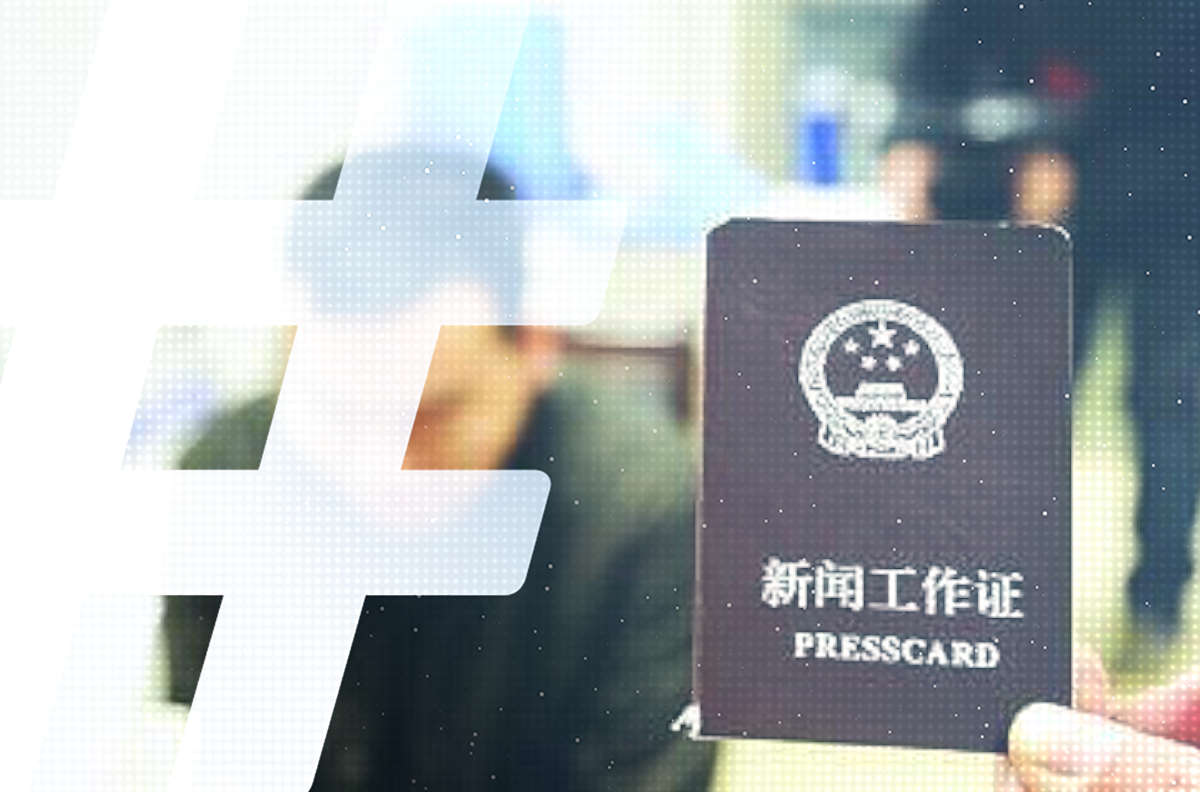
Article 18 of the Regulations of the People’s Republic of China on Resident Foreign News Agencies and Foreign Journalists’ Reporting Activities stipulates that resident foreign news agencies and foreign journalists may employ Chinese citizens for auxiliary work through foreign affairs service units (外事服務單位). Foreign affairs service units are designated by the Ministry of Foreign Affairs (MFA) or the foreign affairs offices of local governments with MFA consent. Due to this restriction, foreign media cannot directly employ local staff within the PRC. Moreover, employment contracts can only designate these hires as “news assistants” (新聞助理) or “news assistant personnel” (新聞助理人員). Unlike foreign correspondents in China who hold press credentials, news assistants may not conduct interviews or write articles as journalists, and their salaries and benefits can only be distributed through labor service companies under “dispatch” (派遣) arrangements.
This institutional design ensures that fixers perpetually work outside formal status as journalists. They cannot become journalists, and yet they perform the work of journalists; they have no news gathering and editing rights (新聞採編權), formally speaking, and yet must bear some of the most high-risk aspects of the news production chain.
For W, this situation is simply a reality of the industry. From day one, dispatched by a foreign affairs service company to work at the office of a foreign media in Beijing, he understood that he could only be a news assistant, not a journalist. Nevertheless, he feels that fixers deserve greater respect and recognition for the work they do.
“Because every successfully completed report has depended on a fixer’s coordination work, judgment, and protection,” he says.
Professional Life Under Pressure
It was during the reporting of the story of severe acute respiratory syndrome, or SARS, in China in early 2003 that W first experienced more profoundly the risks and weightiness of his role.
“I contacted Ditan Hospital and submitted an interview request but was refused,” W says, speaking of the Beijing facility that played a critical role in the treatment and containment of SARS that year, even before the scale of the epidemic was public knowledge. “So, I had to find ways to interview hospital personnel.” The work required ingenuity and local understanding. “The foreigners didn’t know where to start, so I had to figure it out. Later I thought of interviewing several Beijing scholars, then going to hospitals in Beijing’s suburbs to report on their disinfection procedures.”
W remembers clearly that at the time, SARS was classified as a state secret, and interviews were not open to foreign media. He had to thread a careful path between the need to complete his mission as a fixer, and the imperative of avoiding obvious red lines. Those tensions and pressures persist today, many years on, and only a sense of purpose keeps W in the field. “Honestly, I’ve thought about giving up many times, because sometimes this work feels very stressful and risky. But what keeps me here is that sense of achievement from ‘bringing something important to the outside world,'” he says.
This sense of achievement is especially strong during major events. During a report on a mass protest involving tens of thousands, W contacted interviewees willing to speak out. Local people trusted foreign media, W recalls, believing that only foreign reporters could help them transmit their voices. “At that moment I felt the weight of this work,” he says. “This is not just a profession, but also a responsibility.”
But risk always follows like a shadow, and fixers can often bear a greater portion of that risk than their foreign counterparts. “Legally we’re not journalists, but when we encounter risks on-site, we face them just like journalists. I don’t have the protection of foreign reporter status. I must be careful and cautious, avoiding crossing red lines,” says W.
For fixers in China, danger is not an abstract concept. The Committee to Protect Journalists, a US-based non-profit supporting press freedom and journalists’ rights, has noted that when foreign journalists anger Chinese authorities, the worst outcome is generally expulsion from the country. When Chinese news assistants anger Chinese authorities, however, all bets are off.
Fang Kecheng (方可成), an associate professor at the School of Journalism and Communication at the Chinese University of Hong Kong (CUHK), says that while news assistants can only be designated as such according to Chinese regulations, they undoubtedly perform the work of professional journalists — and they do so often with stronger local knowledge. “They understand China’s situation better, use the language more fluently, and know the social media platforms here better,” says Fang. “In fact, many interviews are completed independently by these so-called assistants.”
However, the fixer community faces pressures not only from state control, but also from long-standing power dynamics and implicit bias within foreign media organizations, as well as professional ceilings that prove difficult to break through.
“Their editors and supervisors are often Westerners, and they have greater decision-making power,” says Fang. “Of course they have their reasons — after all, these foreign media outlets serve Western audiences, and they would argue they understand Western readers better. From a market perspective, their editorial judgment isn’t necessarily wrong.”
But these structural challenges within newsrooms pale beside the mounting external pressures fixers have faced in recent years. After 2020, with China-US tensions escalating, the pandemic outbreak, and official stigmatization campaigns against foreign media, public hostility toward foreign correspondents — and their Chinese assistants — intensified dramatically. This has exposed the fixer community more directly to public scrutiny and placed them at the center of public opinion. “Risks are also increasing,” says Fang. “On one hand there’s the risk of being noticed by relevant departments, and on the other hand there’s the more obvious risk of online harassment.” That harassment, Fang adds, can arise directly while reporting. “For example, news assistants may send private messages on [services like] Weibo or Xiaohongshu to arrange interviews but then get exposed in ways that trigger online harassment.”
Risks can also arise when foreign correspondents are less attuned to social, cultural, or political pitfalls — situations that require fixers to serve as both guide and guardian. “For example, foreign journalists sometimes don’t understand that you can’t just photograph certain sensitive occasions, or what constitutes forbidden territory for Chinese government interviews — I have to constantly remind them,” W says with a laugh. “Sometimes foreign journalists like to press interviewees with questions, but some interviewees don’t like being pressed, such as about family financial situations. At those times I have to explain on behalf of the foreign reporter that this is necessary to understand how things happened during interviews, but it may not appear in the report.”
Beyond the professional pressures and risks, the work can exact a personal toll. “Because I often travel or work overtime on short notice, family members sometimes don’t understand and worry about safety issues,” says W. “Friends think I’m always on the move and find it hard to get together with me.”
A New Terrain for Fixers in Hong Kong
The predicament of news assistants is not limited to mainland China. Hong Kong, long a “safe harbor” that enjoyed freedom of speech and broad protections for the news media, has also lost the more open environment it once provided. And news assistants have found themselves in newly precarious territory.
Formally implemented in 2020, the Hong Kong National Security Law lists espionage activities, collusion with external forces, and theft of state secrets as major crimes. Four years later, the passage of Article 23 of Hong Kong’s Basic Law further expanded the scope of national security offenses. Although laws and regulations have not placed explicit restrictions on local journalists and news assistants, the ambiguity in legal interpretation and application creates an undeniable deterrent effect. Foreign media organizations have taken note: in 2024, The Wall Street Journal indicated in an internal email that it would relocate its Hong Kong office to Singapore, a move confirmed by AFP and multiple other media organizations.
CUHK’s Fang points out that Chinese news assistants in Hong Kong can work as journalists, but the risks of doing so have surged dramatically in the wake of the National Security Law, and the protection foreign media organizations can offer, he says, is ” extremely limited.”
In 2020, Haze Fan (范若伊), a Chinese news assistant for Bloomberg in Beijing, was taken away by officers from China’s Ministry of State Security on suspicion of endangering national security. She was released in 2022, and in 2024 attempted to work as a journalist in Hong Kong but was denied a visa.
In its 2025 World Press Freedom Index, the organization Reporters Without Borders ranks China 178th out of 180 countries, noting that the country remains the world’s largest jailer of journalists, with 123 in detention at the time of the index’s release. In the same index, Hong Kong’s press freedom ranking fell to 140th.
“In this environment, independent reporting and the work of local fixers has become virtually impossible and extremely dangerous,” says Aleksandra Bielakowska, advocacy manager for RSF’s Asia-Pacific Bureau. “They are frequently subjected to harassment, intimidation, and coercion, often threatened with arrest, forced interrogations, or meetings with officials. Police and government departments increasingly attempt to discourage them from cooperating with international media or force them to report on international colleagues.”
“On top of this, fixers frequently suffer verbal accusations and social exclusion, being labeled ‘traitors’ by other citizens,” Bielakowska adds.
Brittle Protections
Unlike foreign journalists holding formal press credentials, local news assistants in China exist in a virtual legal vacuum. Their security protection depends chiefly on the media organizations they serve and support from the international community.
The safety of news assistants and local staff is also supported, Bielakowska says, by networks of local lawyers who can intervene in emergencies. Since 2021, RSF has provided direct assistance to more than 30 Chinese media outlets and journalists — including news assistants.
But beyond direct assistance, Bielakowska says, there is a pressing need for greater recognition and structural support for news assistants within media organizations themselves. International media should truly treat news assistants as equal partners and provide them with dedicated safety and emergency plans, understanding the unique contexts in which they work. “In authoritarian environments, authorities often attempt to intimidate or coerce local assistants, which poses a direct threat to their independence and personal safety,” she says.
It is crucial for foreign media organizations to prepare in advance, ensuring local colleagues receive specialized safety training and establishing clear crisis response mechanisms. Most importantly, local assistants and international journalists should enjoy equal degrees of protection, support, and respect.
For news assistants like W, the professional reward lies in seeing stories that can make a difference reach the outside world. “When I see reports published overseas and think about my contribution to them, I feel very satisfied,” he says.
But W and countless colleagues continue to walk carefully through gray zones where the risks remain all too real. “If they catch me,” he says, “I’m in trouble.”
Xiao Bing is a former correspondent based in Washington. She focuses on strategic national competition, the evolution of political discourse, and media ecosystems. This story was originally published in Chinese at Tian Jian.