Year: 2020

Questions for Hubei’s Delegates

As the coronavirus continues to spread in China, so are questions multiplying and replicating in the online space. And while containing the virus is a matter of urgent concern, tackling these questions is of equal importance.

In recent days, a couplet has become popular online that goes something like this, though it is hard to do it justice in translation: “If popular will came first and not what leaders espoused, what need would there be to shut cities or mouths?”
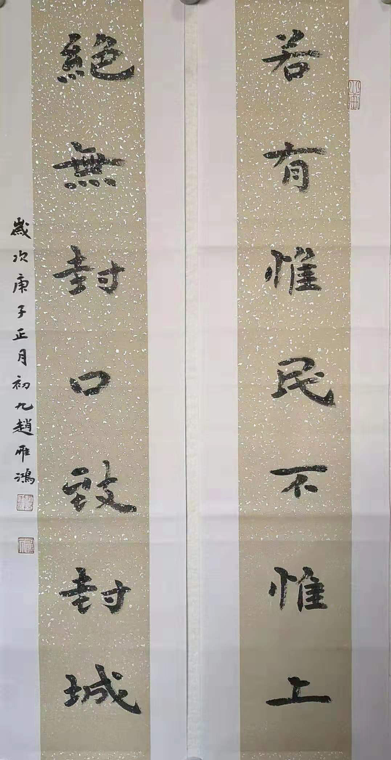
A couplet about the importance of speech and the public will written on February 2, 2020, by calligrapher Zhao Yanhong (赵雁鸿).

The essential idea in this clever play on politics and history (which I won’t get into right now) is that we might not be in the place where we are now had it been possible in China to hear what people were trying to communicate in the weeks before the full scale of the coronavirus epidemic was exposed in the second half of January.

Many Chinese have noted with anger and dismay how officials in Hubei province and in Wuhan were focussed, even as the virus was wreaking havoc, on holding the so-called “two meetings” – annual gatherings of the people’s congresses and political consultative conferences at both the provincial and city levels. As those familiar with China’s political system will know, the people’s congresses and political consultative conferences are meant to be the channels by which the “popular will,” or minyi (民意) is expressed and conveyed.

How could it be, people have asked, that such a critical threat to the public was breaking out right in the midst of these “two meetings,” and yet the ostensible representatives in attendance completely turned their eyes away and kept their mouths shut?

When we search through media reports in Hubei province in January, the following picture emerges of the “two meetings” held at the provincial and city levels:

Times: the 4th Plenum of the 13th Wuhan CPPCC, held from the morning of January 6 to the morning of January 10, for a total of 4 days; the 5th Plenum of the 14th Wuhan People’s Congress, held from the morning of January 7 to the afternoon of January 10, for a duration of 3 days; the 3rd Plenum of the 12th Hubei Provincial CPPCC, held from the morning of January 11 to the afternoon of January 15, for a duration 4.5 days; the 3rd Plenum of 13th Hubei Provincial People’s Congress, held from the morning of January 12 to the morning of January 17th, a duration of 5 days.

Locations: The Wuhan municipal session of the “two meetings” was held at the Wuhan Theater (武汉剧院), located 5.8 kilometers from the Huanan Seafood Wholesale Market, where the virus is believed to have first spread to humans; the Hubei provincial session of the “two meetings” was held at the Hongshan Ceremonial Hall (洪山礼堂) in Wuchang, 17.3 kilometers from the Huanan Seafood Wholesale Market. Readers may recall that on January 21, when the campaign from the top against the epidemic had already begun, the official Spring Festival Gala (春节团拜晚会) was held at this venue, attended by both the Hubei Party secretary and the governor – and some performers in the ceremony were reportedly ill at the time, according to official propaganda that reported this fact with an air of sacrifice and heroism.

Participants: 512 delegates were in attendance at the Wuhan CPPCC meeting. 657 delegates were in attendance at the Hubei provincial CPPCC, and 689 delegates at the Hubei People’s Congress. This brings the total in attendance at the “two meetings” at the city and provincial levels to 2,369 people.

Propaganda: During the “two meetings” sessions at both city and provincial levels, a total of 148 pages were devoted to the meetings in four major newspapers, including Hubei Daily, the official organ of the Hubei Provincial Committee of the CCP, Chutian Metropolis Daily (a commercial spinoff of the Hubei Daily Newspaper Group), Changjiang Daily, the official organ of the Wuhan Municipal Committee of the CCP, and the Wuhan Evening Post (a commercial spinoff of the Changjiang Daily Newspaper Group). These 148 pages exclude frontpages reporting the opening and closing of the meetings, and pages simply publishing the texts of government work reports.

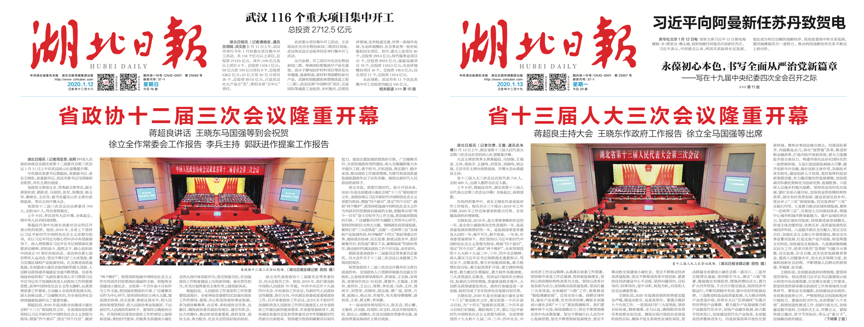
The vast majority of the content on these 148 pages consists of simple praise for accomplishments in 2019, and hopes for 2020. Here is an example of a special page in Hubei Daily reporting on the “two meetings.”
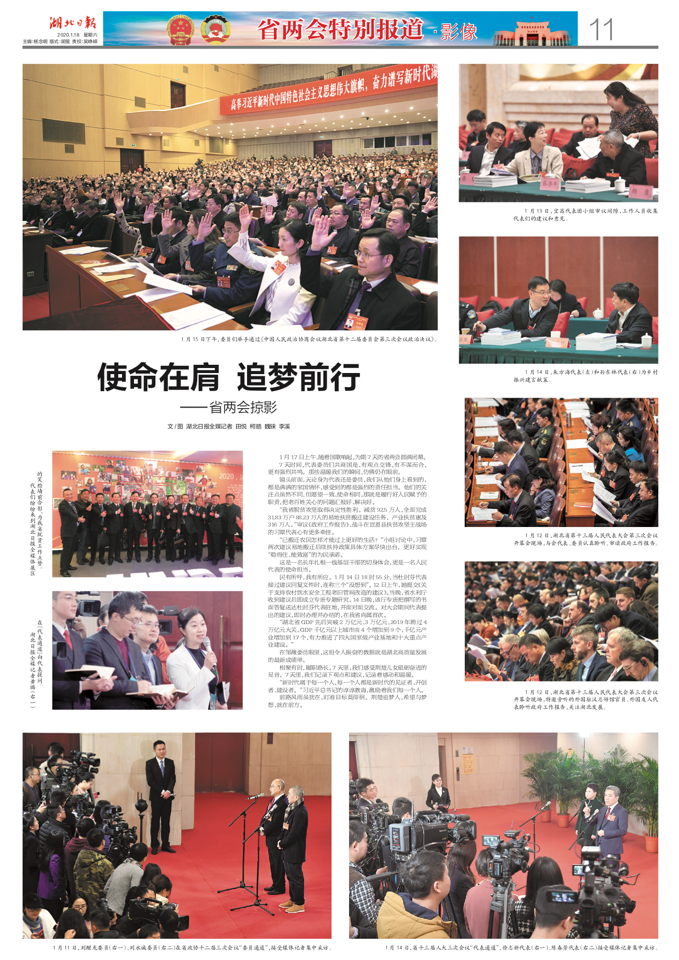
From the information above we obtain the following picture.

From January 6 to January 17, for 12 full days, Wuhan was in the midst of what the Party refers to as “two meetings time” (两会时间). Because all delegates to the CPPCC are present at the people’s congress, we can imagine 1,013 delegates crowded into the Wuhan Theater, and later 1,346 delegates crowded into the Hongshan Ceremonial Hall. Those present at the provincial event also included consuls from the United States, France and Great Britain, a number of citizen observers and a large number of journalists. The newspapers present readers with a picture of a momentous event.

As I prepare the analysis to follow, it is with a sense of unease. I can’t help wondering whether these 2,369 delegates are still doing OK, given what we now know of the spread of the virus at the time. The thought of them all gathered in close quarters as we see on the page above is a frightening picture in retrospect.

But considering that we now find in these same official Hubei media positive reports like this one praising many of these same delegates for working on the “front lines,” even “giving up Spring Festival,” in order to assist in fighting the coronavirus epidemic, there are some things that simply have to be said – and questions that must be asked. We can wish these delegates well and support their actions to control the epidemic, yet still expect answers as to why they remained collectively silent during “two meetings time,” under the immediate threat of the virus.  

Let us review the facts about the context in which the “two meetings” sessions were held at the city and provincial levels in Hubei.

The opening of the “two meetings” in Wuhan was happening just as an outbreak of pneumonia was revealed. Here is the January 1 edition of Chutian Metropolis Daily.
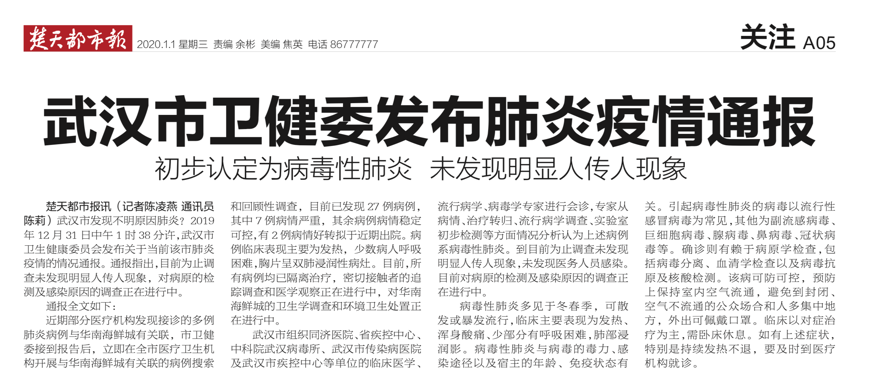
And here is a page from January 6 edition of the Changjiang Daily reporting on the notice from the Wuhan Health Commission on “viral pneumonia” on the very same day as the opening of the Wuhan Municipal CPPCC.
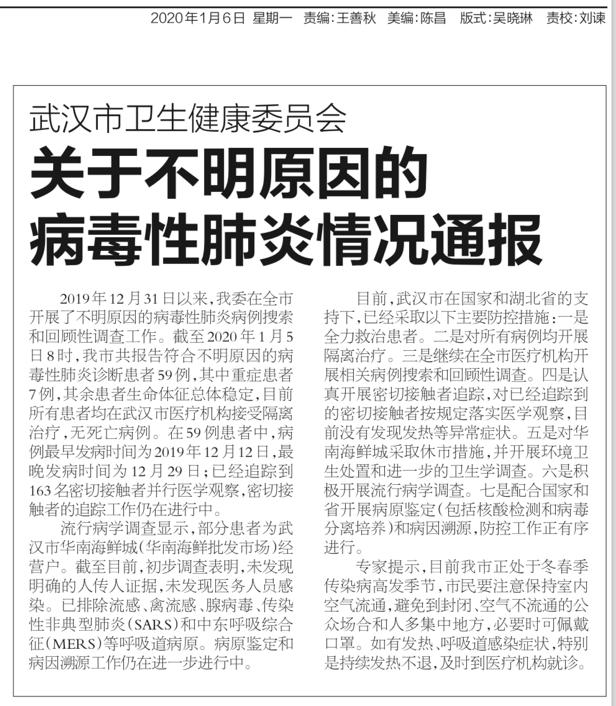
Even though, as we now know, the situation was far worse than suggested by these notices from the Municipal Health Commission, the news of “viral pneumonia” was already out in Wuhan, and there were warnings from doctors already being shared through WeChat groups. It’s just not possible in this context that delegates were not cognizant of the outbreak.

Not only is it true that officials taking part in the meetings must have known about the situation – but in fact delegates from the healthcare field very possibly had first-hand knowledge of the outbreak and its seriousness.

Among Wuhan CPPCC delegates there were 16 from the healthcare field, including delegates from Wuhan No. 1 Hospital, Wuhan No. 6 Hospital, from the Union Hospital of Wuhan Medical School, from Wuhan TCM Hospital, and even from the Respiratory Clinic of Wuhan No. 1 Hospital. Among these, the Union Hospital was one of the earliest to treat coronavirus patients.

According to a report from Caixin, as early as December 31, “The five-story building housing the Infectious Diseases Ward of the Union Hospital had to convert on floor into an isolation ward for infectious respiratory disease.”

Among the Wuhan CPPCC delegates there was also a representative from the Wuhan City Epidemic Prevention and Control Center, and two from the Wuhan Health Commission.

The focus of the “two meetings” in Wuhan was on the notion of its being a “new first-tier city,” meaning that Wuhan would seek a seek first-tier status like Beijing, Shanghai, Guangzhou and Shenzhen by attracting further investment, promoting technology development, making moves in education and human resources and so on. These were the top policy issues.

Meanwhile, the coronavirus outbreak, this major challenge concerning the entire population of Wuhan, was nowhere on the agenda.

According to reports in Chutian Metropolis Daily, the major points of action for the general welfare during the “two meetings” in Wuhan were “transportation,” “housing,” “social security,” “education,” “ecology” and “healthcare.” The last of these, healthcare, was about “raising the health of the entire population.” Wuhan Mayor Zhou Xianwang (周先旺) demanded in his government work report that “the system of epidemic disease control be strengthened, raising capacity in dealing with sudden-breaking public health incidents and in treatment.”

But in news reports we cannot find any discussion of these points in relation to the coronavirus epidemic.

If we say that during its own “two meetings time” Wuhan missed the most optimal window in the control of the epidemic, then we can say that it was during the provincial “two meetings time” that Hubei missed its last opportunity to control the full outbreak of the disease.

On January 10, the Changjiang Daily and other papers published the results of the investigation into the source of the cases of viral pneumonia, and the phrase “new coronavirus” entered the public view.
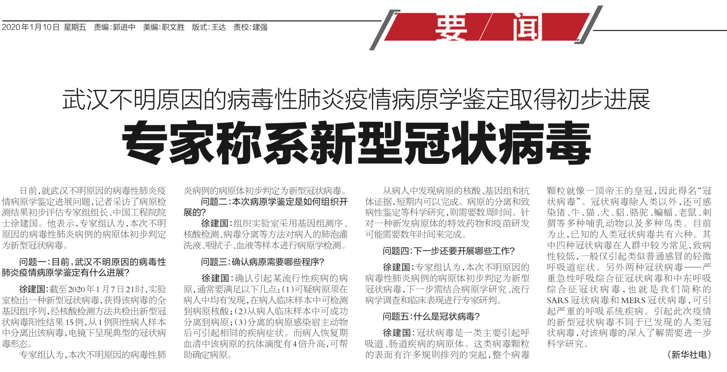
The participants in the Hubei provincial “two meetings” would certainly have seen such reports, and they would have heard the chatter in the streets before they crowded into the Hongshan Memorial Hall on January 11. We can be sure that these provincial delegates were by this time more knowledgeable about the situation than delegates during the city-level meetings had been – and this is especially true of the delegates from the medical field. By January 11, the day the Hubei Provincial CPPCC opened, at least 7 doctors had already been infected by the virus.

Among the delegates to the Hubei CPPCC, there were 26 from the medical profession. They were from Tongji Hospital, Union Hospital, the People’s Hospital of Wuhan University, Wuhan Central Hospital, Hubei TCM Hospital and others. Like Union Hospital, experts from the People’s Hospital of Wuhan University had already been dealing with coronavirus patients since December.

It was on December 30, in fact, that Li Wenliang (李文亮), an ophthalmologist (眼科医生) at Wuhan Central Hospital, posted the warning to his WeChat group for which he was admonished by police.

On January 11, the day the curtain opened on the provincial CPPCC, Li reportedly developed a fever. On January 12, the day the provincial people’s congress opened, he was admitted to the hospital. On February 1, his diagnosis was confirmed. On February 7, he passed away.

Among the delegates to the provincial CPPCC, there was one who served as Party secretary at the Hubei Health Commission. On the day the “two meetings” began, as media reported the understated Wuhan Health Commission notice, this official surely would have been in the know:
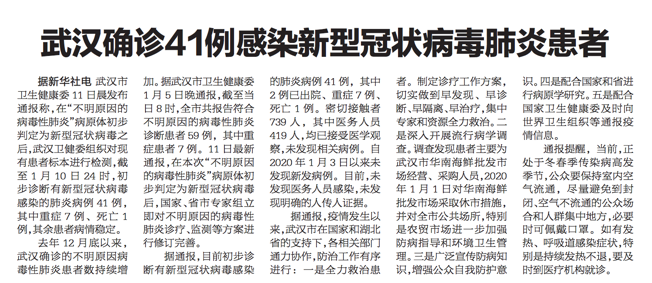
This news release from the official Xinhua News Agency says:

Since December last year, confirmed cases in Wuhan of cases of unexplained viral pneumonia have been on the rise. . . . According to notices, there have to now been 41 confirmed cases of new coronavirus infection presenting as pneumonia, with 2 cases already released, 7 in serious condition, and 1 death.

The report revealed that since the start of the outbreak, Wuhan had applied five countermeasures with the support of the national and provincial governments: 1) using all means to save patients; 2) conducting an epidemiological investigation; 3) widely publicizing information on disease prevention; 4) cooperating with the national and provincial authorities in investigating the origins of the disease; 5) cooperating with the national and provincial authorities to make timely information reports to the World Health Organization and others about the situation.

The shadow of the epidemic had already fallen, and the situation was serious. But there was already a full event calendar in preparation for Hubei’s “two meetings,” which would be used to celebrate the glorious achievements of 2019, and to promote the 2020 realization of a “comprehensively well-off society,” a key propaganda objective across the country.

The front page of the January 13 edition of Chutian Metropolis Daily will give readers a clear sense of the mood of the “two meetings.” The page is all about the benefits for the people that were realized in 2019, and the riches to come for 2020:
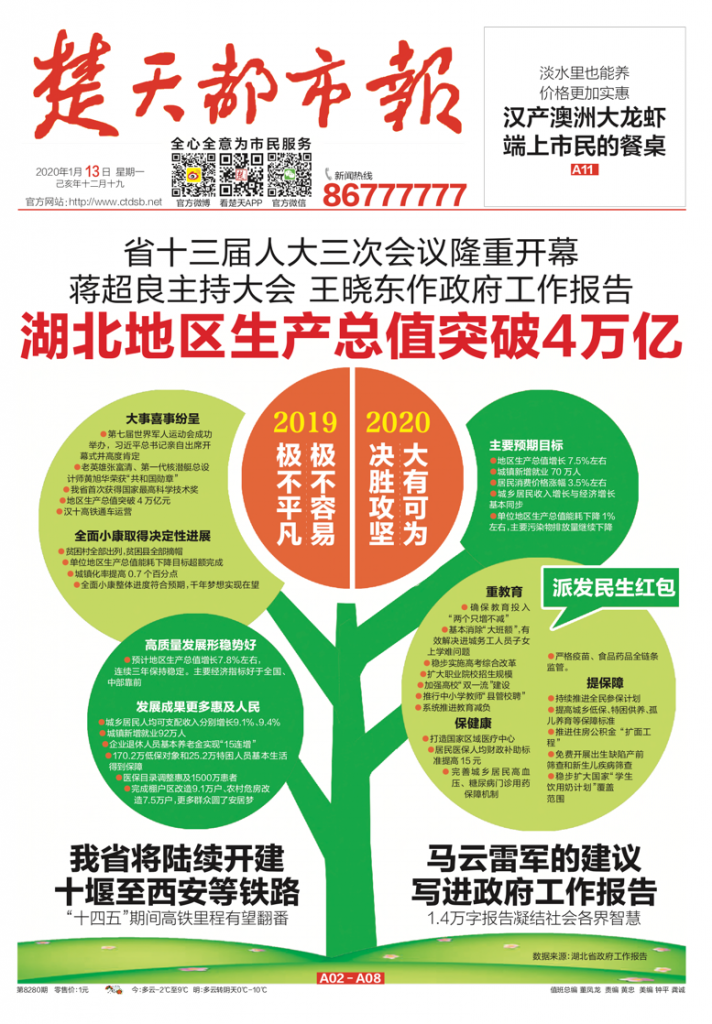
The “two meetings” agenda promised three things to the people: “prioritizing education” (重教育), “raising protections” (提保障), and “preserving health” (保健康). That’s right, preserving health.

As an article in the Changjiang Daily, “Looking to Hubei’s 2020,” reported on January 13, the first task in protecting the welfare of the people in 2020 would be “creating a national and regional medical center.” On January 12, the provincial governor, Wang Xiaodong (王晓东), said in his government work report that “without the full health of the people, there can be no fully well-off society.” Wang demanded that, “the problems that cause the people anxiety must be treated as major issues, be met with real action, and be given full energy, steadily increasing the people’s sense of benefit, prosperity and security.”

What exactly caused the public anxiety at that moment? How could the 1,346 delegates taking part in Hubei’s “two meetings” not have known?

They raised their hands, they applauded, they actively discussed, they accepted interviews with reporters, but just as was the case at the Wuhan city level, there was not a hint at the provincial meeting about the coronavirus epidemic.

If we look at Wuhan in the early stages of the outbreak and at the “two meetings,” one clear question we are left with is why these 2,369 delegates all kept silent, so that these major meetings on policy were completely futile and unproductive in the face of a serious public health crisis. Some might respond with cynical laughter to such a question. They might ask: In China’s political system, what power do these 2,369 delegates actually have to address serious issues? Can we really treat these meetings as genuine opportunities for decision-making at all?

Well, OK. Point taken. But in any case, let’s review the operation of the system in terms of its original intent, stated mission and responsibilities.

1. The basic defined responsibility of delegates to the CPPCC and people’s congresses is to convey concerns to the upper levels. The outbreak had already begun in Wuhan by the end of 2019. So, of those delegates preparing to take part in the “two meetings” at either the city or provincial level, did anyone visit hospitals, the health commission or research clinics? Some delegates, who already had patients quarantined and under treatment in their own hospitals, didn’t need to go far to do so.

2. Toward year’s end, as the government work reports were being prepared at the city and provincial levels, it should have been typical practice to solicit views from different sectors. Did anyone raise the epidemic with the government? Did the government consider adding related content to the government report? In the end, why was nothing included?

3. On January 1, police in Wuhan issued a notice about 8 people being questioned and admonished for sharing “untrue” information about pneumonia cases online. On January 2, China Central Television also reported this news as well. How did delegates in Hubei and Wuhan, particularly those from the medical profession, respond to this? What impact did this incident have on the words or actions of these delegates as they took part in the “two meetings”?

4. Did any delegates at either the city or provincial levels exercise their legal right to inquiry, raise questions about the epidemic to health department officials, to emergency response department officials, or to the mayor or governor (for example, about medical personnel being infected by patients)?

5. Did any delegates at either the city or provincial levels exercise their legal right to deliberation (审议权), raising the issue of the epidemic during deliberation of the government work reports?

6. During the “two meetings” period, the Hubei Health Commission was already working with the National Health Commission to report information about the outbreak to the World Health Organization. If reports could be made to the WHO, why could the provincial government not also inform the 2,369 delegates to the “two meetings” at the city and provincial levels?

7. Did any delegates, including those from the medical profession, exercise their right to democratic supervision (民主监督) or political participation (参政议政), offering suggestions to the government on prevention and control of the epidemic?

8. Did any delegates submit views or proposals concerning possible measures to be taken to deal with the epidemic, for example through local laws or regulations, thereby exercising their right to make proposals (提案权)? Were earlier proposals made on the quarantine of Wuhan, for example?

9. The 2020 “two meetings” in Hubei were the first time that “delegate channels” were set up with the idea of allowing delegates to answer questions and speak up in public. Were these interactive channels actually used to respond to the most pressing concerns of the public?  Why did the media not use these channels to address questions about the epidemic to delegates?

When the curtains closed on the provincial people’s congress in Hubei, Party secretary Jiang Chaoliang (蒋超良) praised “all delegates for faithfully fulfilling their responsibilities and reflecting the will of the people.” But the fact is that the “two sessions” meetings at both levels in Hubei in 2020, from conception to start to finish, suffered serious and unforgivable errors in terms of the exercise of responsibility.

The “two sessions” are not meant to be celebrations or carnivals. The people’s congress system and the political consultation system are meant, at least in principle, to be watchtowers and protective walls safeguarding society and the people. When such an immense threat faces the well-being of the people, it is impossible not to ask serious questions about what ails this system, about what kind of virus has infected it.

One month before the epidemic struck Wuhan, the 4th Plenum of the 19th Central Committee of the CCP released a policy document called “Decision Concerning Major Questions in the Continuation and Improvement of the System of Socialism With Chinese Characteristics, Promoting the Modernization of the Governing System and Governing Capacity” (关于坚持和完善中国特色社会主义制度 推进国家治理体系和治理能力现代化若干重大问题的决定). The Decision reiterated the point that “the people’s organs for exercising state power are the National People’s Congress and local people’s congresses at all levels.” It talked about “supporting and guaranteeing the people’s exercise of state power through the people’s congresses, and ensuring that the people’s congresses at all levels are democratically elected, are accountable to the people, and are supervised by the people, and that state organs at all levels are created by, are responsible for, and are supervised by the people’s congresses.”

The coronavirus epidemic has worked like a CT scan of China’s system, exposing the deep contrast between lofty rhetoric and real conduct, and displaying the “voiding out” (虚化) of the people’s congress and political consultative systems. Millions of people are now bearing the burden of a calamity brought out by this chronic disease of the system.
Internet Giants Warned Amid Coronavirus Crackdown

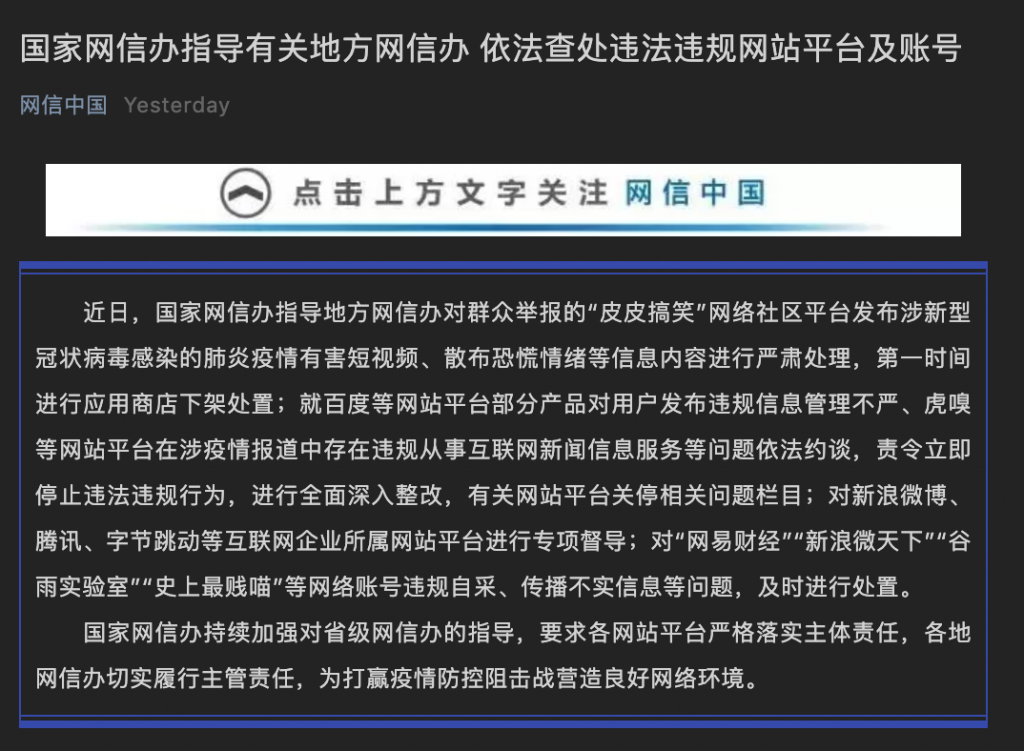
A notice issued yesterday by the Cyberspace Administration of China, the central agency for control of the internet and social media, provides a glimpse not just of the actions being taken now by the authorities to control information about the coronavirus epidemic, but also of the platforms and activities that have threatened the Party’s dominance of information in recent days.

The notice, for example, singles out a number of WeChat public accounts alleged to have “illegally carried out reporting activities,” meaning that they are accused of acting journalistically, pursuing their own information on the epidemic. It orders the removal from app stores of “Pipi Gaoxiao” (皮皮搞笑), a platform for the sharing of short videos, suggesting that material on the platform has “spread panic.”

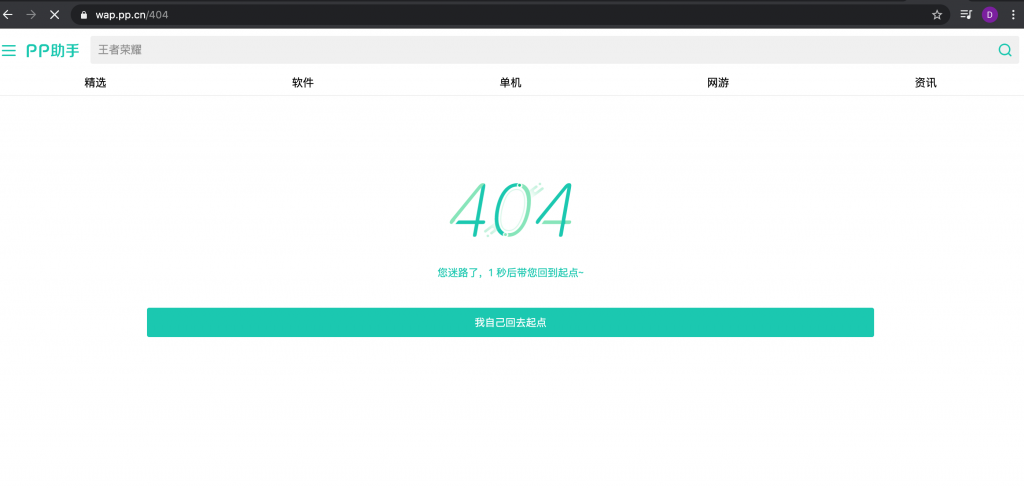
An online link to the “Pipi Gaoxiao” app now yields a 404 error, page not found.

The notice also says that Sina Weibo, Tencent, ByteDance and other internet companies will now be under “special supervision” (专项督导), which means essentially that the companies operating many of the country’s biggest and most popular internet platforms and services have been put on notice and are subject to much more active supervision and management by the CAC.

Here is a translation of the notice:

In recent days, the Cyberspace Administration of China has, on the basis of reports from the masses, directed local CACs to seriously deal with such information and content as the “Pipi Gaoxiao” (皮皮搞笑) online social platform which has distributed harmful short videos about the coronavirus outbreak, and has spread panic, [ordering them to] remove the app from the app store immediately. Concerning certain products on the Baidu web platform posting information in violation of regulations to users and conducting lax management, and Huxiu and other online platforms illegally engaging in internet news information services in epidemic-related reports and other problems, [the companies] have been called in for discussions in accord with the law. They have been ordered to immediately stop all illegal conduct and to carry out comprehensive and deep rectification, and these relevant online platforms [have been ordered to] close down problem sections (问题栏目). Concerning Sina Weibo, Tencent, ByteDance and other internet companies, special supervision (专项督导) will now be in effect. Concerning [the WeChat public accounts] “Netease Finance” (网易财经), “Sina Weitianxia” (新浪微天下), “Guyu Laboratory” (谷雨实验室), “Jianmeow” (史上最贱喵) and other online accounts that have illegally carried out reporting activities (自采), broadcast untrue information and other problems, they will be handed in a timely manner.

The CAC continues to strengthen its direction of provincial-level CACs, demanding that online platforms strictly carry out their responsibilities [in regard to content controls], and that local CACs actively exercise their management responsibilities, creating a favorable online environment for winning the war for prevention and control of the coronavirus outbreak.

The notice issued yesterday by the Cyberspace Administration of China.

[Featured image by Chinwag posted to Flickr.com under CC license.]

Wrestling Back the Agenda

A notice released to Chinese media this week concerning the coronavirus outbreak suggests that in terms of information and media policy we have now entered a new phase in which propaganda authorities are making a renewed push to secure the source of information and wrestle back control of public opinion.

Over the past two weeks, as the scale of the epidemic and the attempted cover-up became clear, Chinese commercial media and “self-media” (自媒体) led the charge in reporting and commentary, and authorities found it difficult to restrain information — particularly in the face of public anger and insatiable demand. This pattern is very similar to what we saw in the aftermath of the 2008 Sichuan earthquake and the 2011 Wenzhou train collision, providing a narrow window of opportunity to more enterprising media.

That window now seems to be closing. The focus of the authorities is on controlling the source and then pushing reporting and framing by trusted Party-state media as “authoritative” information. The instructions are as follows:

Reports concerning the epidemic must take [information from] authoritative departments as the standard. Sources of articles must be strictly regulated (严格规范), independent reporting (自采) is strictly prohibited, and the use of non-regulated (非规范) article sources, particularly self-media (自媒体) is strictly prohibited. Without joint arrangements [with authorities], daring to use outside media reports is strictly prohibited. When distributing authoritative reports, the original meaning of the news must not be twisted, such as through “misleading headlines” (标题党). Pop-up means must not be used to push unregulated articles or information, unverified information and information that might have a negative influence. Do not render commentary on our global mobilization to purchase prevention and control materials, in order to avoid interference with our overseas purchasing work. Do not render commentary on the economic impact of the epidemic, resolutely preventing talk of the Chinese economy being undermined by the epidemic. On the extension of the Spring Festival holiday in various locales, do not collect [information], do not make comparisons, and do not relate this with hyping or commentary to the impact on economic development.

[Cover image by Nicolo Lazzati available at Flickr.com under CC license.]

As An Epidemic Raged, What Kept Party Media Busy?

As I was researching the early stages of reporting on the coronavirus outbreak in China, I came across a number of interesting statements in various official media.

In the People’s Daily on December 16: “Some live animals may carry viruses that, if transported carelessly, could cause the spread of disease.” In the People’s Daily on December 25: “[We] will focus on the prevention and control of major infectious diseases, the handling of public health emergencies . . . revising a number of urgently needed national standards.” In Changjiang Daily, the official mouthpiece of the Wuhan city leadership, on December 17: “Humans feel a sense of triumph over new discoveries and victories in medicine, and so they rest easy, but are unprepared for the approaching epidemic.”

Were these articles on disease and preparedness about Wuhan? No.

The first article was a criticism of the transport of live animals, the second a report on the creation of the new National Technical Committee on Health Quarantine Standardization. The third statement, from Wuhan, came in the context of a book review. All three of these reports used keywords like “disease,” “epidemic” and “public health incident” that seem very of the moment in light of the coronavirus outbreak — but they had nothing whatsoever to do with the epidemic that was at that time spreading silently.

In this article I look back on coverage focusing on four newspapers in particular – the People’s Daily, the official organ of the Chinese Communist Party; Hubei Daily, the official organ of the Hubei provincial CCP leadership; Changjiang Daily, the official organ of the CCP leadership in Wuhan, right at the center of the epidemic; and Chutian Metropolis Daily, a commercial spin-off under the umbrella of Hubei Daily. I focus on the period from January 1, 2020, when media reported that the Wuhan city government had issued a notification on disease cases in Wuhan, and January 26, when media reported on the meeting of the Politburo Standing Committee on prevention and control of the outbreak.

Media Context: A New Year in Politics

Chinese leaders do not pass the New Year and the Chinese Spring Festival in the way that ordinary people do. For them, these events are a political stage for the coming year. And while we have no way of knowing exactly what the Central Propaganda Department specifically planned for its official messaging during this key period, we can glimpse the orientation quite clearly through media coverage itself.

The priorities in in the New Year were all about three major tasks Xi Jinping wished to achieve. First, he hoped to loudly proclaim China’s success in reaching the “full establishment of a moderately wealthy society” (全面建成小康), as some will recall that 2020 was defined back in the 2000s under the Hu-Wen administration as the year that the CCP was to achieve this goal.

This publicity campaign was to be all about China parting ways with poverty once and for all. In line with this, we did see the state media promoting Xi’s “fight against poverty” (脱贫攻坚). Remember that when this “fight” was first declared back in November 2015, it was also linked to the 2020 goal of “moderate wealth,” or xiaokang (小康), with the idea that China’s poor would enter the era of full xiaokang along with the rest of the country.

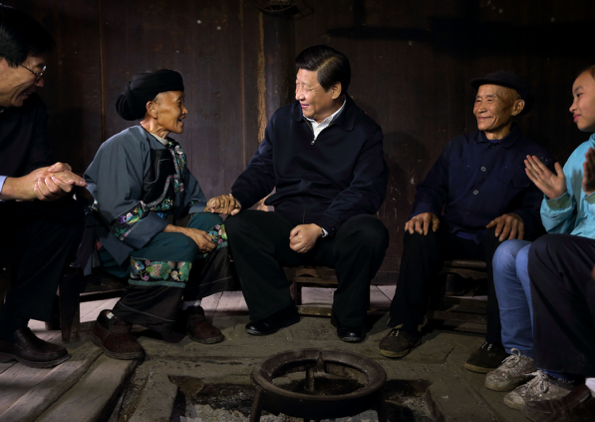
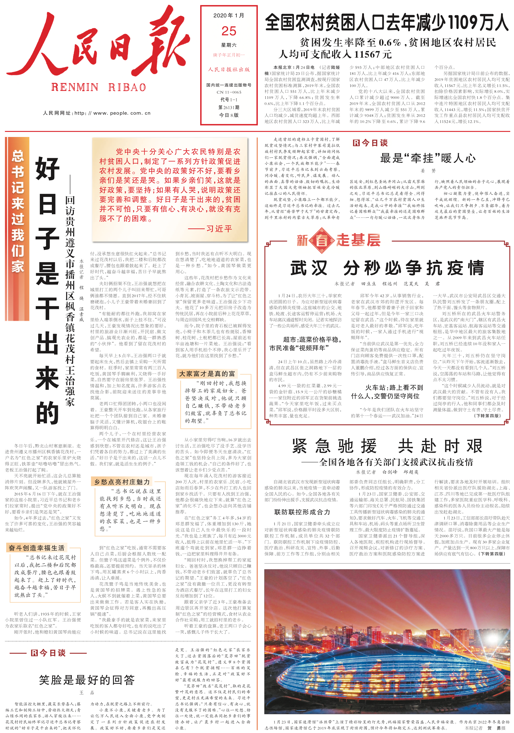
The achievement of “moderate wealth” and the throwing off of poverty were symbolized in the Party media this month by the figure of Xi Jinping entering the home’s of the people. This has been the central theme of much coverage of Xi’s visits to the countryside in recent years, as in this article looking back on his visits to the Hunan in November 2013 – under the phase, “The General Secretary Visited Hour Home” (总书记来过我们家).

Another apparent objective was to capitalize on Xi Jinping’s visit to Myanmar in order to re-emphasize the Belt and Road Initiative, Xi’s core foreign policy program.

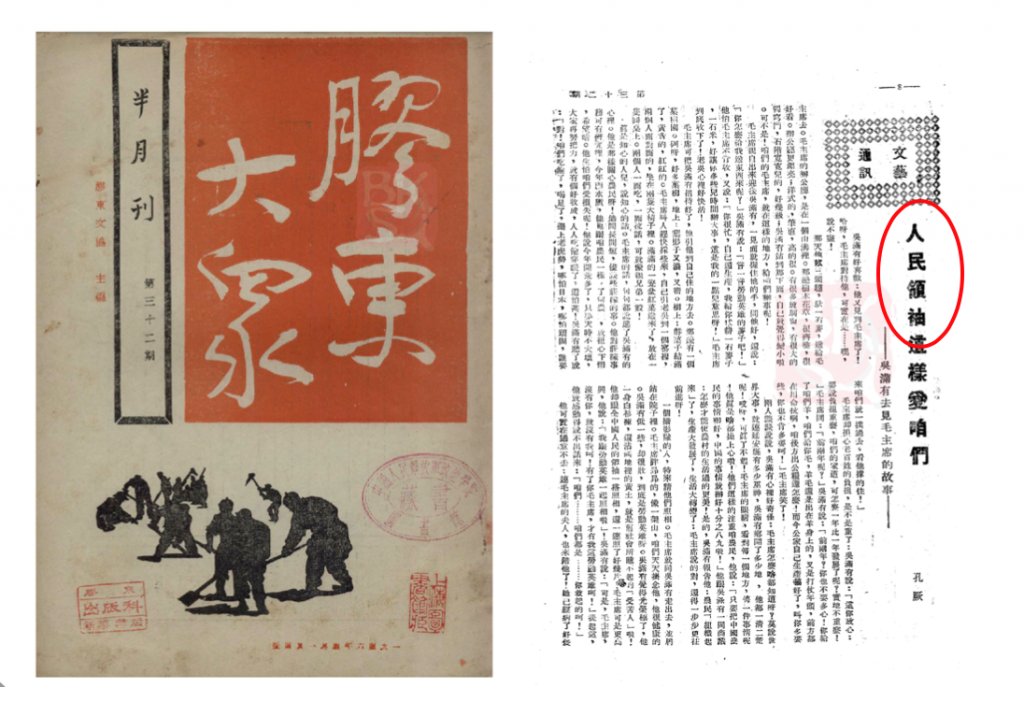
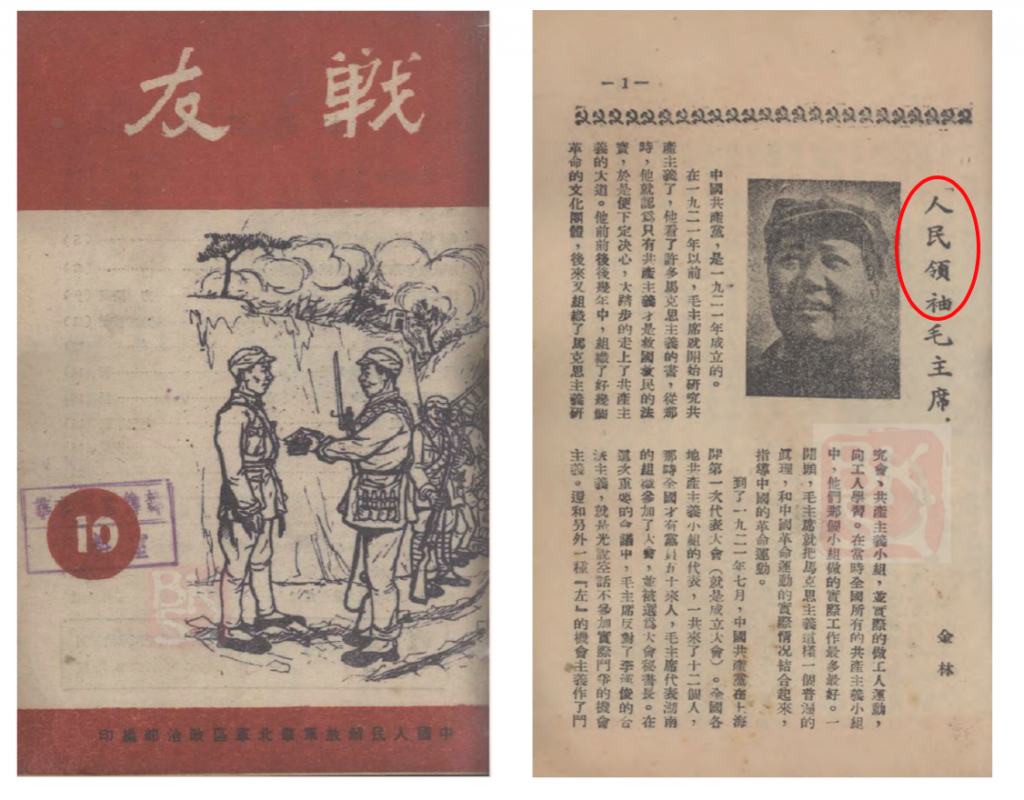
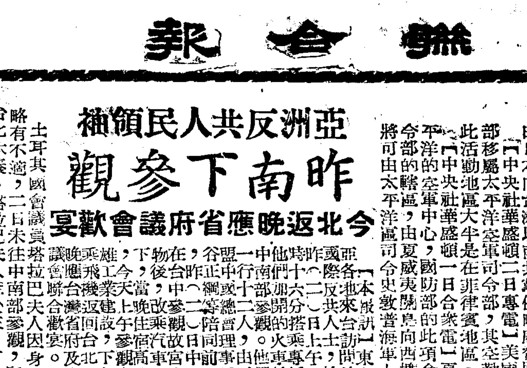
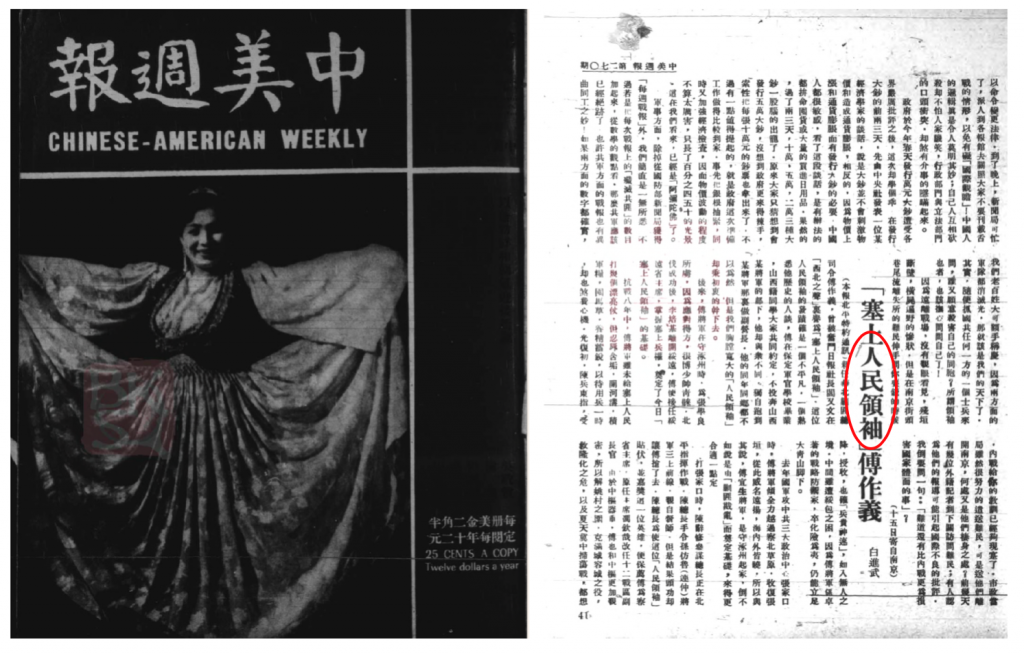
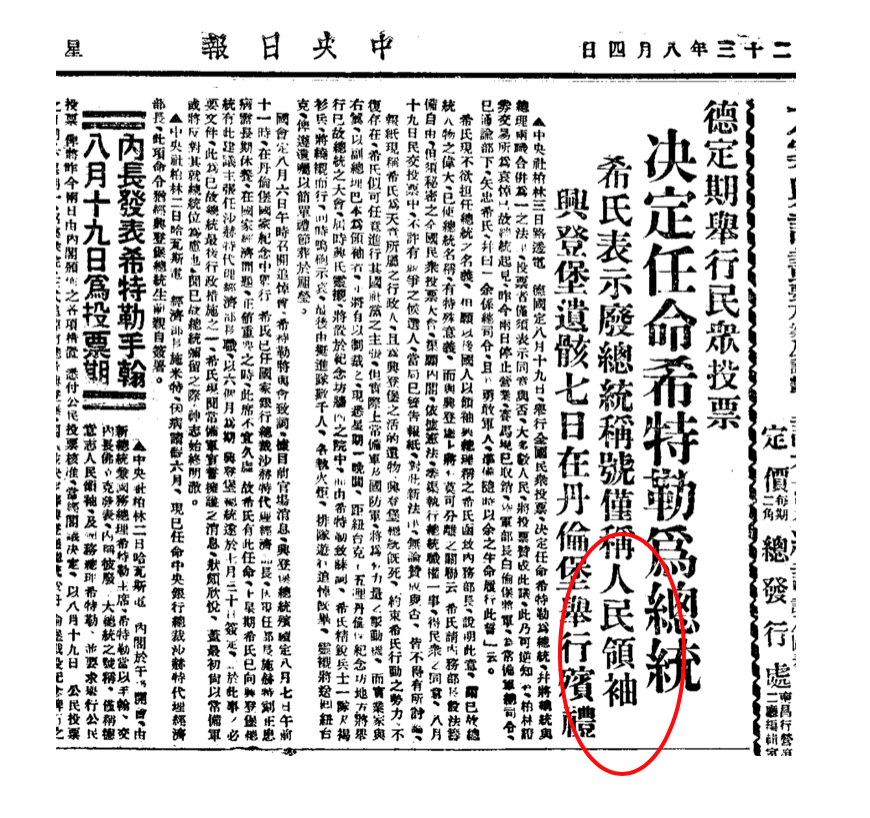
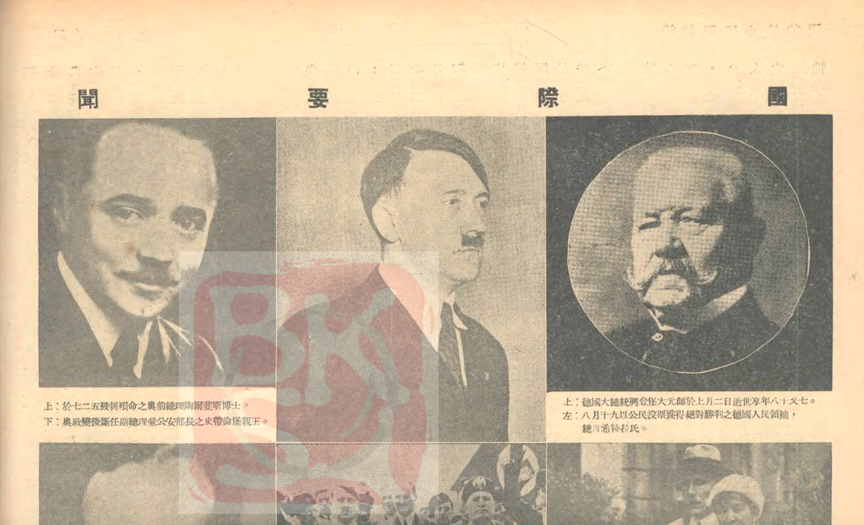
Finally, the arrival of the Spring Festival period could be used to show Xi Jinping among the people, emphasizing his closeness to them (亲民) and his status – recently emphasized more insistently, since its re-emergence last August – as “people’s leader” (人民领袖). Visits with the military could also be used to stress his status as commander (统帅). And, importantly, a meeting with former top leaders in the Party (including Jiang Zemin and Hu Jintao), could be used to demonstrate their commitment to Xi’s leadership and to his governing concepts.

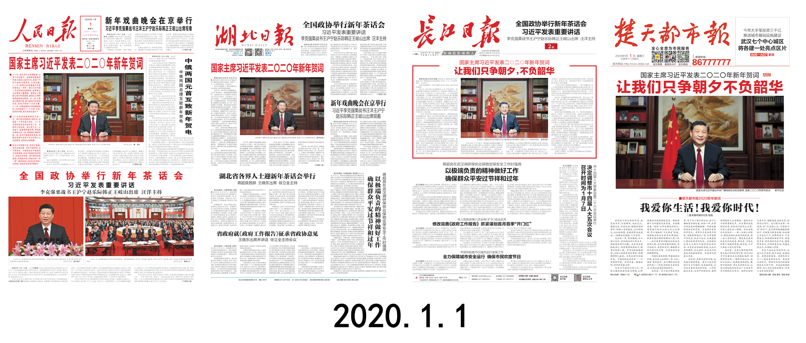
In the following images of the January 1, 2020, editions of the People’s Daily, Hunan Daily, Changjiang Daily and Chutian Metropolis Daily, you can clearly see how the above priorities were played out, with little variation between papers.

图片包含 报纸, 文字
描述已自动生成

These were the frames and campaigns that surely determined in the days and weeks before the coronavirus outbreak emerged as a story that could not be ignored, with clear and urgent public relevance.

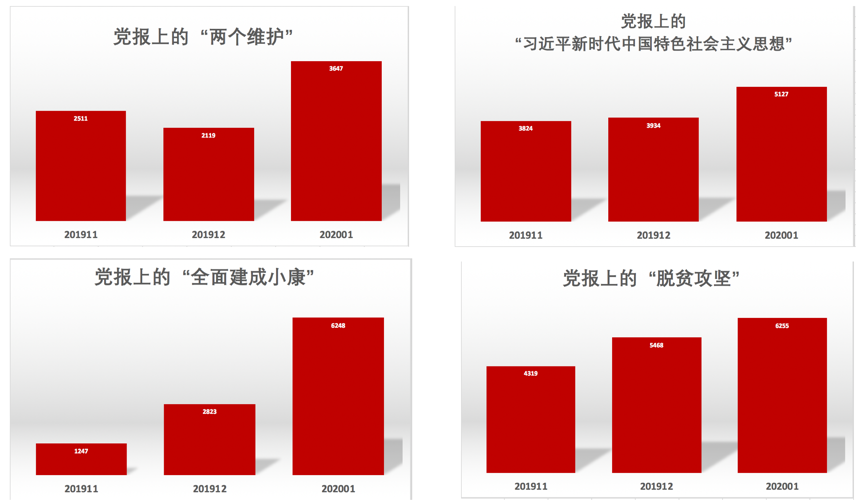
In central and provincial-level Party newspapers, I found a clear shared trend, namely that four political keywords that had experienced the highest level of per-article use in the previous two months (“scalding” on the 5-level scale developed by CMP) had all further risen in intensity.

The first two keywords were the “two protections” (两个维护), meaning to protect the “core“ leadership status of Xi Jinping and the authority of the CCP, and “Xi Jinping thought of socialism with Chinese characteristics for the new era” (习近平新时代中国特色社会主义思想), Xi Jinping’s so-called “banner term” (旗帜语). Taken together, the fresh intensity of use of these two terms suggests that propaganda leaders intended to push a new offensive in raising Xi’s status as a “leader”, or lingxiu (领袖).

图片包含 文字
描述已自动生成

The phrases “fight against poverty” (脱贫攻坚) and “comprehensive building of a moderate wealth” (全面建成小康) are rooted, as I previously said, in the fact that this year is meant to be the year of achievement of the “moderately wealthy society” in China.

All four of the abovementioned terms can be seen as the core of the January propaganda strategy, all a way to put the focus on the “leader” and his glorious achievements.

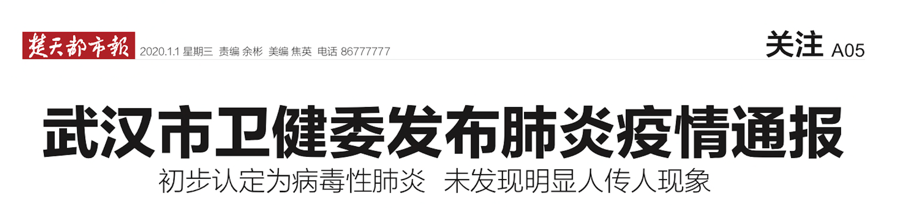
It’s an understatement to say that events in Wuhan – and now beyond – have thrown a wrench in these plans. The image below is a headline on page five of the January 1, 2020, edition of Chutian Metropolis Daily, the commercial spin-off of the official Hubei Daily. It reports that a new form of pneumonia has been identified in Wuhan, but says in the subhead that there are “no clear signs of human-to-human transmission.”

Twenty Days in the People’s Daily

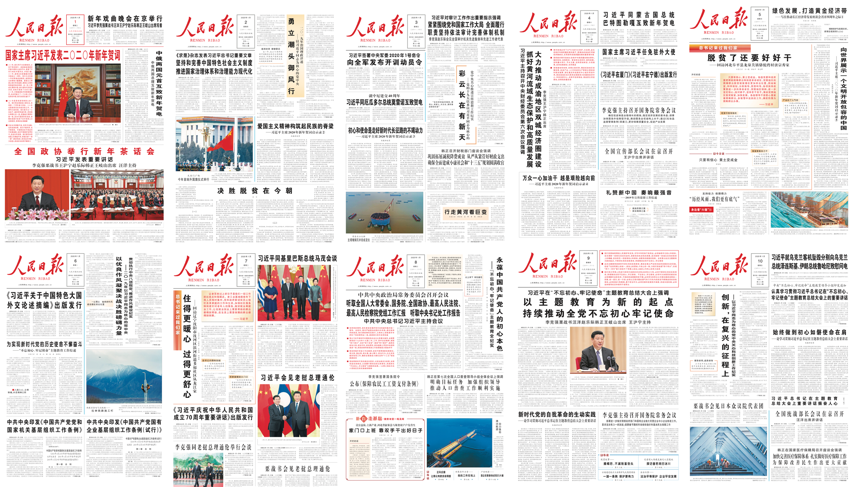
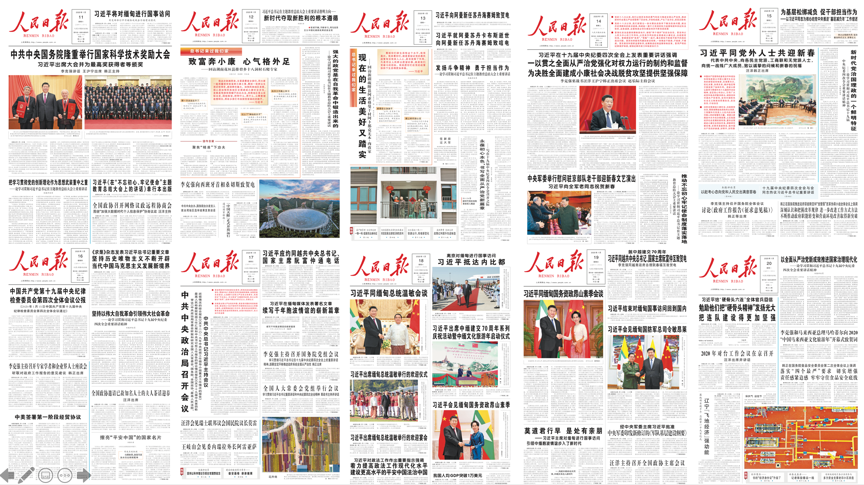
From January 1, 2020, through to January 20, 2020, for a full 20 days, not a word appeared in the CCP’s official People’s Daily newspaper about the epidemic in Wuhan. Below you can see all 20 front pages from the newspaper over those days.

图片包含 文字
描述已自动生成
图片包含 文字, 报纸
描述已自动生成

All 20 of these People’s Daily editions could be seen as classic examples carrying out the demand for the “two protections,” emphasizing the power and prestige of Xi Jinping. During these 20 days, 19 principle headlines had to do with Xi Jinping. Of these, there are three of his official speeches, three high-level meetings he chaired, two reports of his visits overseas, and so on. There were also four separate reports on the theme of, “The General Secretary Visited My Home,” in keeping with the focus on prosperity and the “moderately wealthy society.”

Together, these 20 front pages included 66 articles in which “Xi Jinping” appeared in the headline.

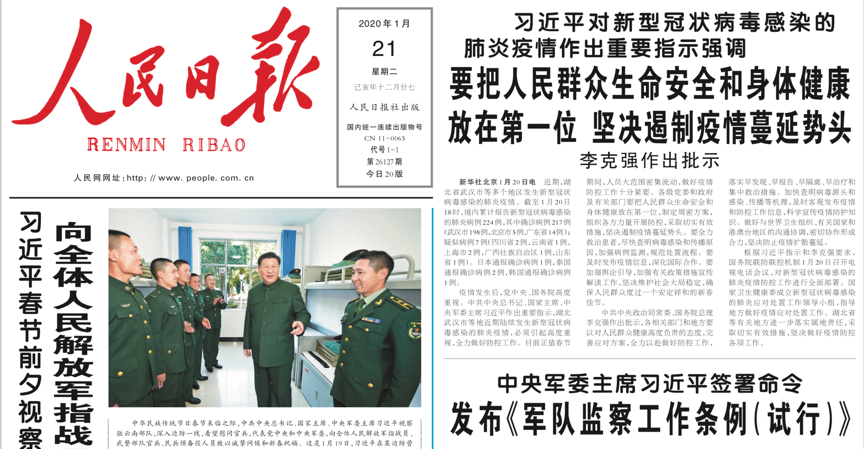
Things did not change until January 21, when at last news of the epidemic made it into the headlines.

图片包含 文字, 报纸
描述已自动生成

But on this front page, the epidemic is still not the top story. The top story, accompanied by the image, is about Xi Jinping paying a visit to a People’s Liberation Army base in Yunnan.

Local Party Media

From January 1, the day the Wuhan Health Commission (武汉卫健委) issued its notice on the outbreak, to the January 21 edition of the People’s Daily, 20 days had already passed. Under the system governed by the Chinese Communist Party, the Party controls everything (党管一切). And we should remember that the principal readers of Party newspapers – Party members who have subscriptions to various Party papers through their Party organizations – are also the backbone of governance in China.

During this 20-day period, what response did local Party media in Hubei have toward this rapidly spreading disease?

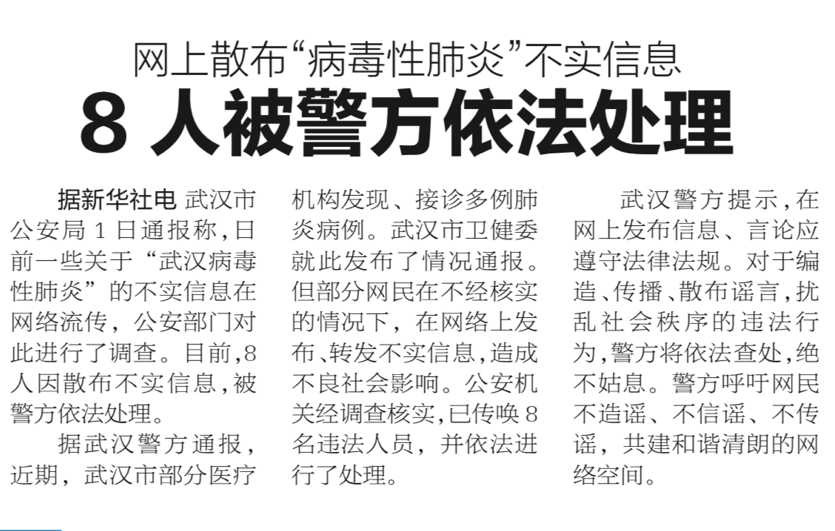
On January 2, Chutian Metropolis Daily reported that eight people had been taken in by the police for spreading inaccurate information about “viral pneumonia” (病毒性肺炎), which had “created harmful social effects.”

图片包含 文字, 报纸
描述已自动生成

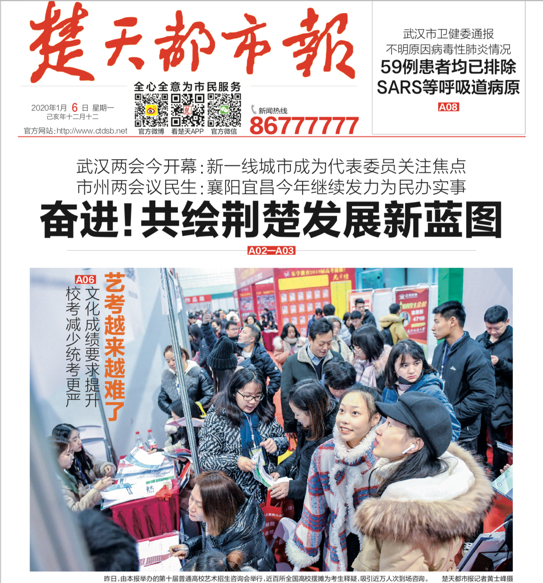
On January 6, the same newspaper’s top story on the front page was about tens of thousands of people attending a college admissions event. Another top story was the opening of the local meeting of the people’s congress in Wuhan. A small story just to the right of the masthead was the second notice from the Wuhan Health Commission, saying that SARS and other respiratory illnesses had been ruled out for 59 patient cases.

图片包含 文字, 报纸
描述已自动生成

The happy news in this second Wuhan Health Commission notice was the bell toll that essentially announced that all was well, and the time had come for the festive political atmosphere of the “two meetings” in Wuhan, of the people’s congress and the political consultative conference.

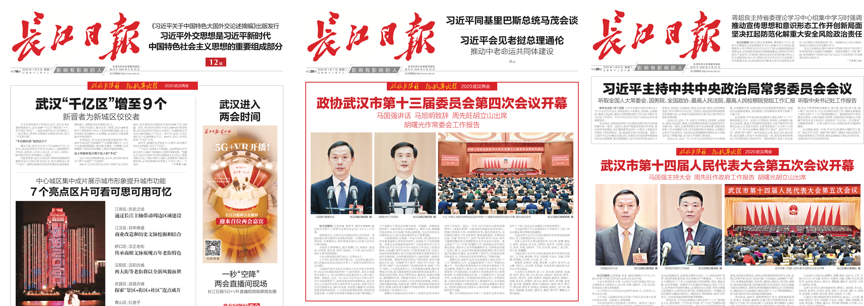
Here are three front pages from Changjiang Daily, the official CCP organ in Wuhan, during the “two meetings.” They follow a pattern rather like the People’s Daily as seen above, focusing on the top provincial leaders and on official news, with some key national Party headlines.

图片包含 屏幕截图, 报纸, 文字
描述已自动生成

The epidemic was not mentioned at all in the local media while the “two meetings” were in session. There was only a slight mention by Wuhan Mayor Zhou Xianwang (周先旺) in the government’s work report that there was a need to “strengthen the construction of disease prevention and control systems, improving the capacity for emergency treatment and medical treatment in the case of public health emergencies.”

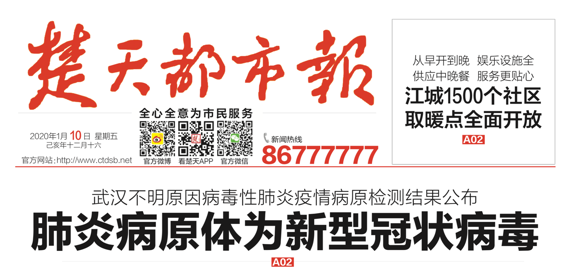
The “two meetings” in Wuhan closed on January 9. The next day, January 10, was an extremely important day in the development of the epidemic. Here is the front page of Chutian Metropolis Daily that day, with a headline reporting that the pneumonia in Wuhan had been identified as a novel coronavirus.

图片包含 文字
描述已自动生成

This news, as well as the new notice from the Wuhan Health Commission two days earlier, was entirely ignored by the top Party leadership in Hubei province. The time had now come for the provincial-level people’s congress, and this new “two meetings” season blanketed media coverage.

图片包含 文字, 报纸
描述已自动生成

The “two meetings” of the political consultative conference and the people’s congress opened on January 10 and 11 respectively. In his government work report on January 12, Hubei Governor Wang Xiaodong (王晓东) had a section dealing with key problems, but it made no mention of the epidemic. Another section that dealt specifically with public health talked about the issue in the context of the main propaganda theme of building a “moderately wealthy society.” “Without the health of all the people,” said Wang, “there can be no comprehensively well-off [society].” Again, there was no mention of the illness spreading in Wuhan. Wang’s report talked about “doing everything in our power to continuously enhance the people’s sense of prosperity, happiness, and security.”

It was surely bitter irony for Wang that his report was published in Hubei Daily on January 21, the very same day that Xi Jinping’s high-level instructions on the epidemic made the People’s Daily and media across the country. The obvious gap between the very public, published priorities in Hubei and the direction from Xi was a serious misstep, ironclad proof of error.

But seen from another perspective, Hubei Daily through January was mostly a perfect picture of the servant doing the master’s bidding, and the January 21 paper was simply a rare glint of originality.

If we look back on Hubei Daily frontpages from January 1-20, twenty pages in all, we find that 14 of these are identical to the People’s Daily – essentially just local Hubei versions of the CCP’s flagship newspaper. This is very typical, it must be said, of provincial-level Party newspapers in China since 2013, which have largely lost any of the relative autonomy they might have previously had. Since Xi Jinping’s pronouncement in February 2016 that media must be “surnamed Party,” we have seen the same happen to commercial newspapers as well, so that in the case of Hubei, Chutian Metropolis Daily is also largely a mirror of its “mother paper,” Hubei Daily.

In the midst of this 20-day period there was another bit of news that would in retrospect prove unfortunate for the leadership in Hubei. On January 7, the province’s top leader, Jiang Chaoliang (蒋超良) held a collective study session to address Xi Jinping’s remarks on emergency management. Jiang demanded that officials: “Adhere to bottom line thinking, strengthen risk awareness, strengthen emergency management and emergency capacity building, and resolutely take up the political responsibility to prevent and resolve major security risks. [The Party] must be extremely responsible to the people, do a good job in public health and epidemic prevention, and strengthen open and transparent information disclosure.“

Needless to say, two weeks later, this language would ring hollow.

图片包含 屏幕截图
描述已自动生成
图片包含 屏幕截图
描述已自动生成

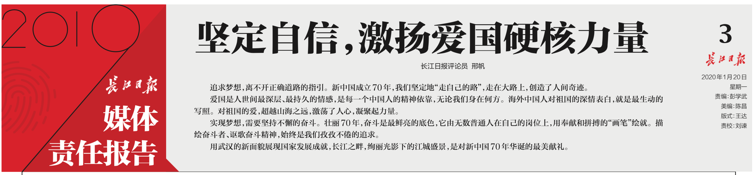
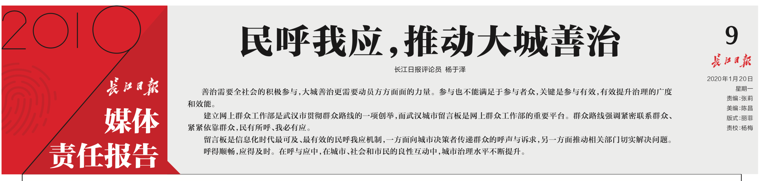
On January 20, shortly before Xi Jinping’s response to the epidemic became public knowledge, Changjiang Daily, the official Party organ in Wuhan, published the results of its “Media Responsibility Report” – this being an exercise now demanded of Party-state affiliated media in China, in which they enumerate their actions, from compliance to innovation. The preface to the report read: “We move with the flow of the people, leaping to wherever the people are. We embrace the internet and set out for the clouds, for the responsibility of the media has never changed . . . .” It added: “The people call, we answer.”

Was this meant to be a joke? Of course not.

As Spring Festival approached, there were no early warnings in Hubei province. The four notices from the Wuhan Health Commission were in each case major news seriously downplayed, reassuring the public that all was well.

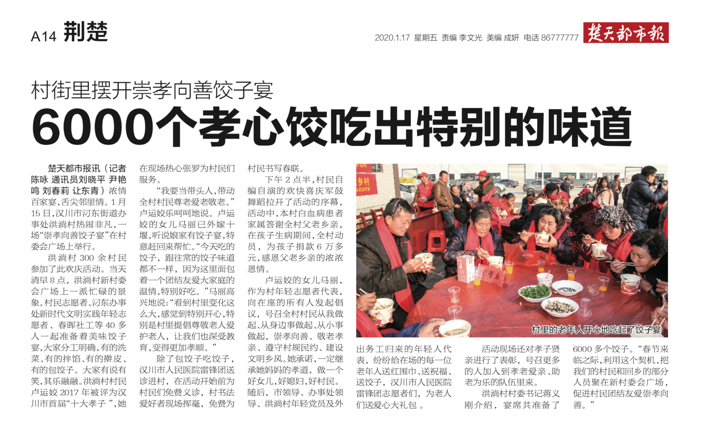
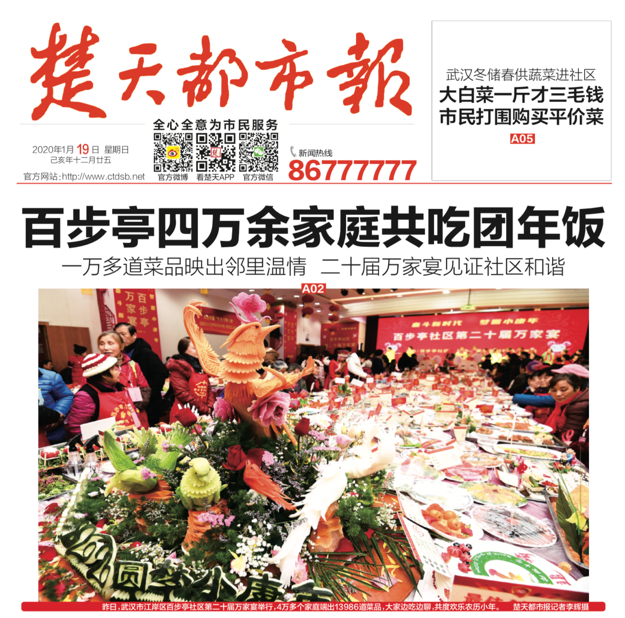
On January 17, 18 and 19 in Chutian Metropolis Daily, the mood was celebratory. If people felt fear, it would be impossible to gather them together – and how then to create the impression that all was well?  

And so we had villagers gathering to eat dumplings.

图片包含 报纸, 文字
描述已自动生成

    We had tens of thousands gathering for a banquet.

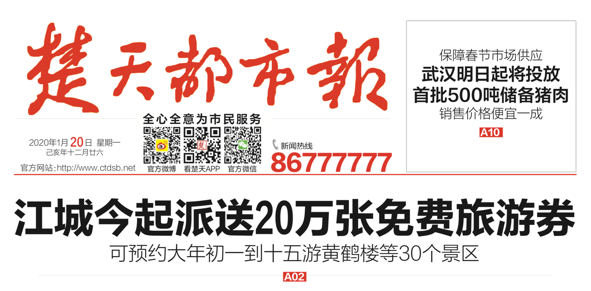
We had the distribution of 200,000 free travel tickets to encourage travel to tourist sights in Wuhan.

图片包含 文字
描述已自动生成

But of course all was not well, and the victims of these celebrations, of course, were the people of Wuhan, of Hubei and of the whole country.

Joy and Peace in a Time of Tragedy

On January 21, Xi Jinping made his official remarks on responding to the coronavirus outbreak, which should have meant that the entire country had now entered a period focused on fighting the epidemic. But when we look back on the People’s Daily, we find something that almost beggars belief – the front pages of the CCP’s flagship newspaper on January 22, 23, 24 and 25 have nothing whatsoever to do with the epidemic.

Page layouts are of course also a form of discourse, and an important one in China. Front pages in Party newspapers are a clear representation of the political language and priorities of the Party leadership.

So let’s have a look at what we can see.

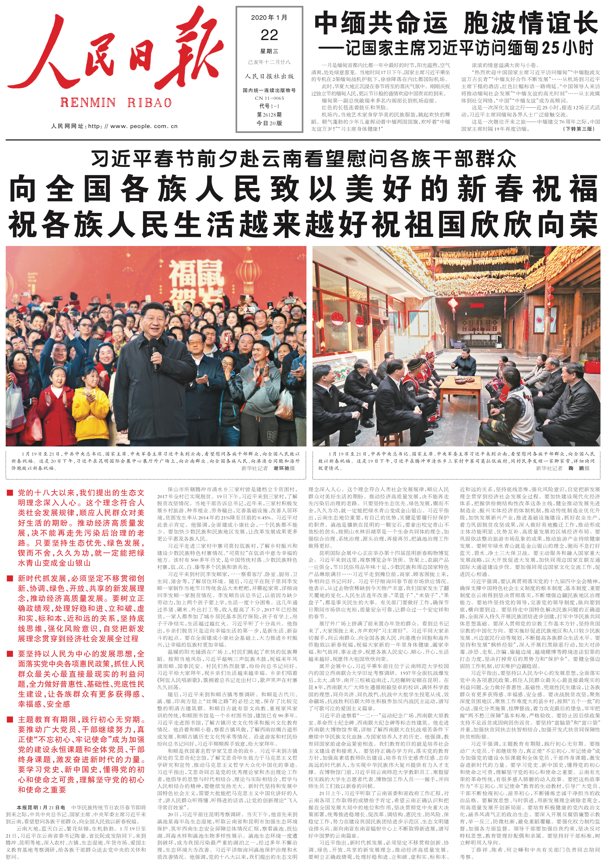
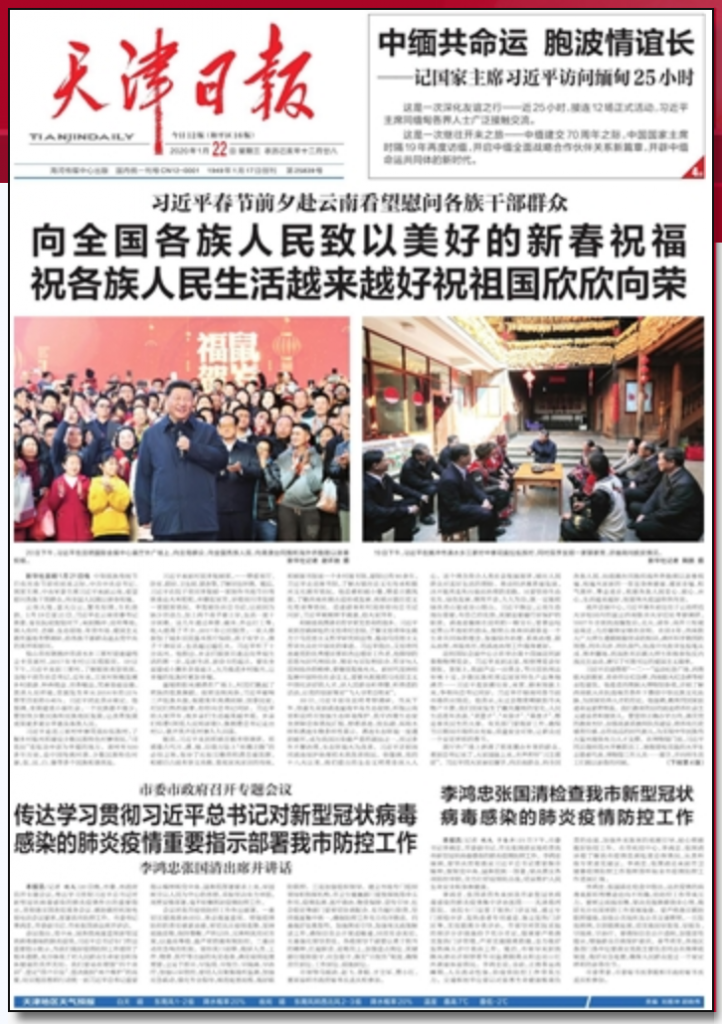
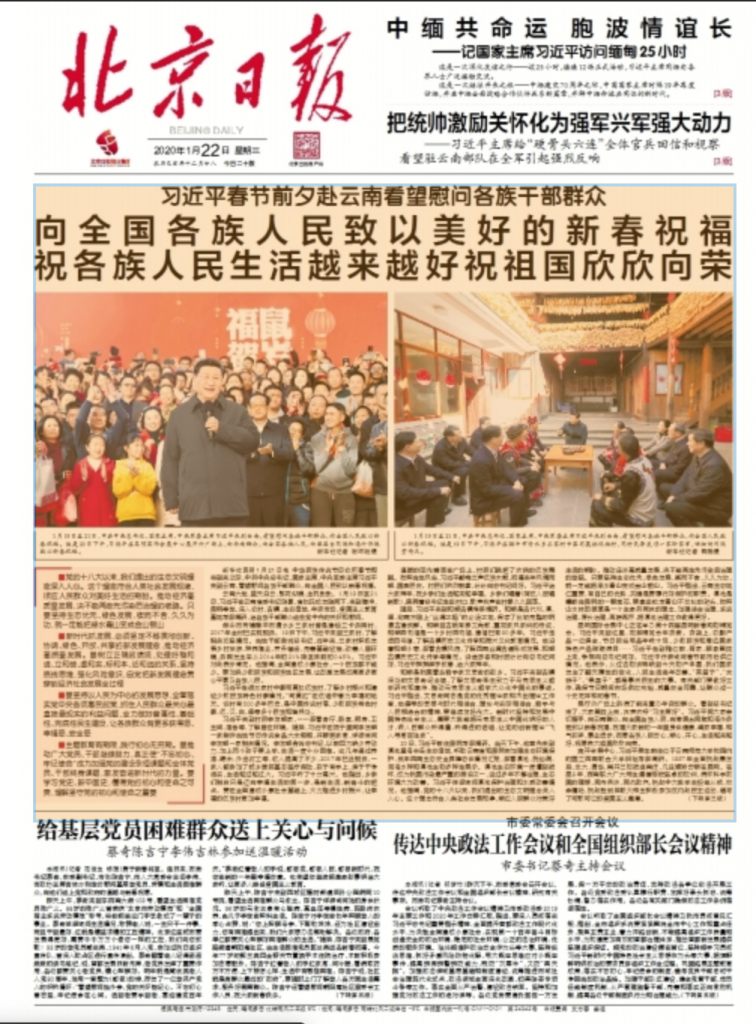
Here is the front page on January 22, which leads at the very top with news of Xi Jinping’s visit to Myanmar on January 17 and 18. After that, with the images, we have Xi in Yunnan province on the 18th, during a time I suppose when he must have issued his instructions concerning the epidemic that resulted in the response on the 20th.

图片包含 文字, 报纸
描述已自动生成

From January 19-21, Xi Jinping was in Yunnan “visiting with cadres and the masses of different ethnicities,” and we have once again the theme – the pre-established theme, you will recall – about “fighting poverty” and “comprehensively building a moderately wealthy society.” Xi was busy visiting among the people, and it was during this time, on January 21, that the first news came of a confirmed case of the coronavirus in the city of Kunming.

While in Yunnan, Xi emphasized the need to “adhere to bottom-line thinking and strengthen risk awareness.” But there was no talk at all of fighting the epidemic.

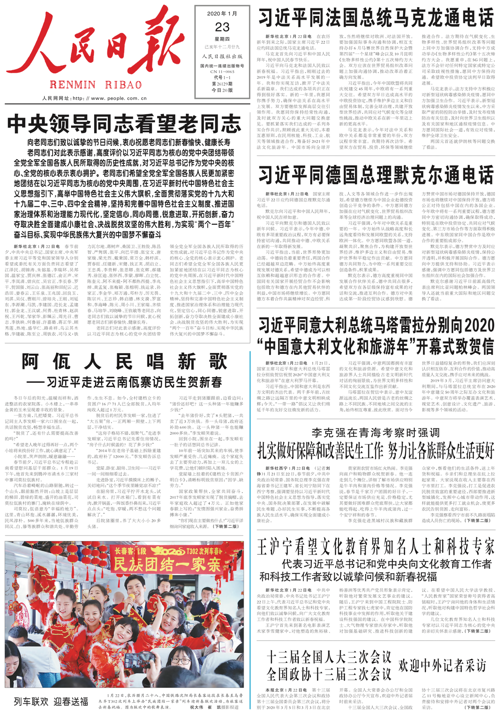
The front page of the People’s Daily on January 23 reported that Xi Jinping had “met with elderly comrades,” these being former top Party officials, including Hu Jintao and Zhu Rongji.

图片包含 文字, 报纸
描述已自动生成

In what is actually quite a rare practice, this report, meant to demonstrate fealty and trust in Xi’s leadership, actually listed out 111 names of elderly comrades with whom Xi met. It stressed that they “gave a lofty assessment of the historic achievements of the Central Party with Xi Jinping as the core.”

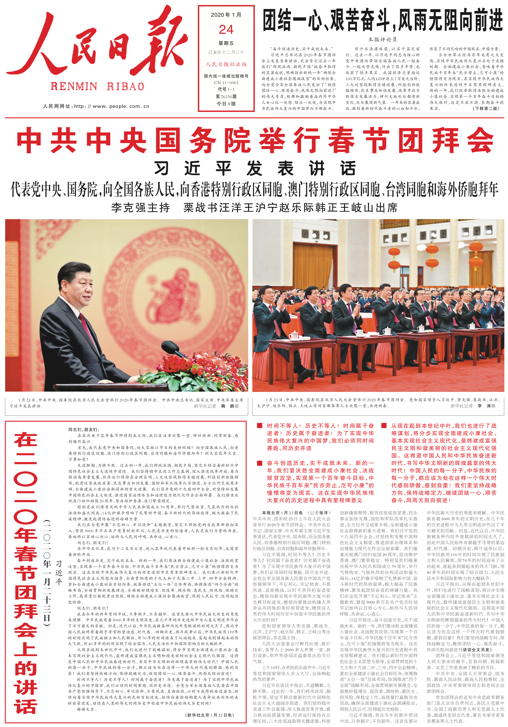
On January 24, on the eve of Chinese New Year, the People’s Daily focused on the Spring Festival celebration for the CCP Central Committee and the State Council.

图片包含 文字, 报纸
描述已自动生成

Xi Jinping delivered what was clearly a very carefully prepared message, calling for “the full building of a well-off society and a determined fight against poverty.” “We must race against time!” he declared. But in that key moment, as an infectious disease was racing against all Chinese, there was no mention at all of the epidemic.

图片包含 文字, 报纸
描述已自动生成

On January 25, there were at last two reports about the epidemic on the right-hand side of the People’s Daily front page. Either of these stories would have merited top billing on the page, but this was not the case. Priority was given instead to a report in the anti-poverty propaganda series, “The General Secretary Visited Hour Home.”

During this key period, from January 21 to 25, many party members, cadres and ordinary people were full of suspicions. They wondered how it was that no member of the CCP Standing Committee had yet managed to visit the scene of the epidemic in Wuhan, something that had happened in the case of both the SARS epidemic and the 2008 Wenchuan earthquake. When people felt fearful and at a loss, why was there all this focus on peace and happiness?

The blame certainly does not fall on the shoulders of the top editors of these Party papers. Since the start of the year, the pages of China’s Party newspapers have been given their “assigned seats.” The activities in which leaders would take part had already been fixed, and the themes to be emphasized had been more or less carved in stone. Inspections, greetings, expressions of condolence, banquet speeches – everything had already been planned. There would be no detracting from the prestige of the “leader.”

The system of the CCP is like a great big elephant. It is difficult for the sudden and unexpected to force any change to its huge and lumbering gait.

All of the deception and miscalculation that has happened in the wake of the revealing of the epidemic has been a source of immense public anger. But in such a time of disaster, we have also seen journalists within the system trying to act in good conscience, and internet users too have taken to new digital platforms to try to raise their voices.

图片包含 文字, 报纸, 屏幕截图
描述已自动生成

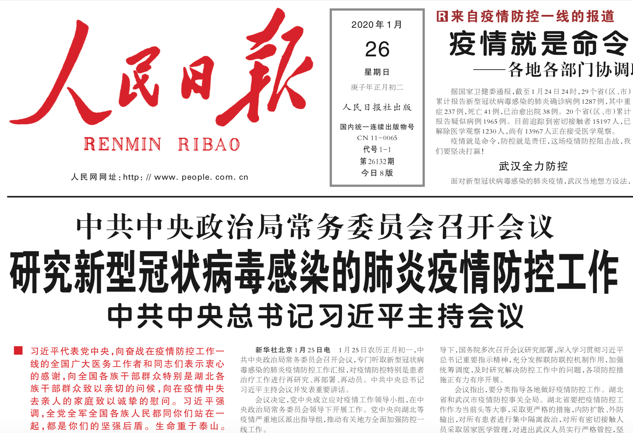
Since January 26, as media across China reported on the meeting of the Standing Committee to address the epidemic the day before, as seen above, China has at last entered true epidemic response mode.

From this point on, we can expect the Party media to begin playing a slightly different game. Let us watch and see.

An Outbreak of Slogans

As China’s battle against the coronavirus outbreak continues, anger has spilled over online, testing the leadership’s capacity to achieve what it calls “guidance of public opinion,” or the control of society through information control. Users on WeChat, Weibo and many other platforms have shared stories, photos, video, or simply vented their rage at what many see as the inadequacy of the government’s response, particularly at the early stages of the outbreak.

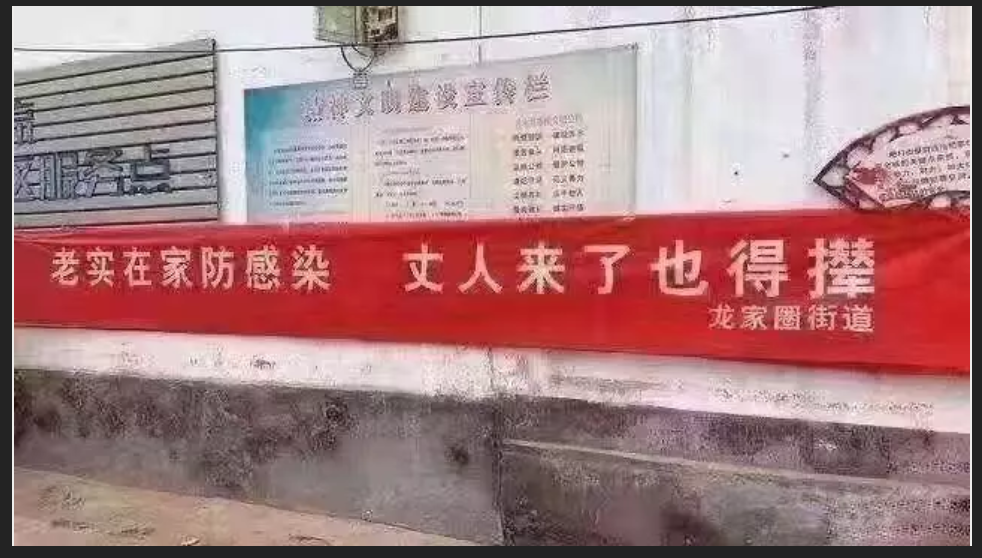
And as communities across China mobilize against the spread of the disease, they are naturally exercising one very creative (and often revealing) aspect of the country’s political culture – the ubiquitous “slogan,” or biāoyǔ (标语).  Such slogans, which may deal with local or national policy issues as well as the personal — everything from (in the past) the one-child policy, to pushing basic social mores (like caring for one’s parents), to protests over the forced demolition of one’s home — are generally very simple in structure, direct (or even crude) and easy to understand.

As one post on China’s WeChat platform noted today, slogans should be artful enough to have the capacity to “intimidate, seduce, threaten or coerce.”

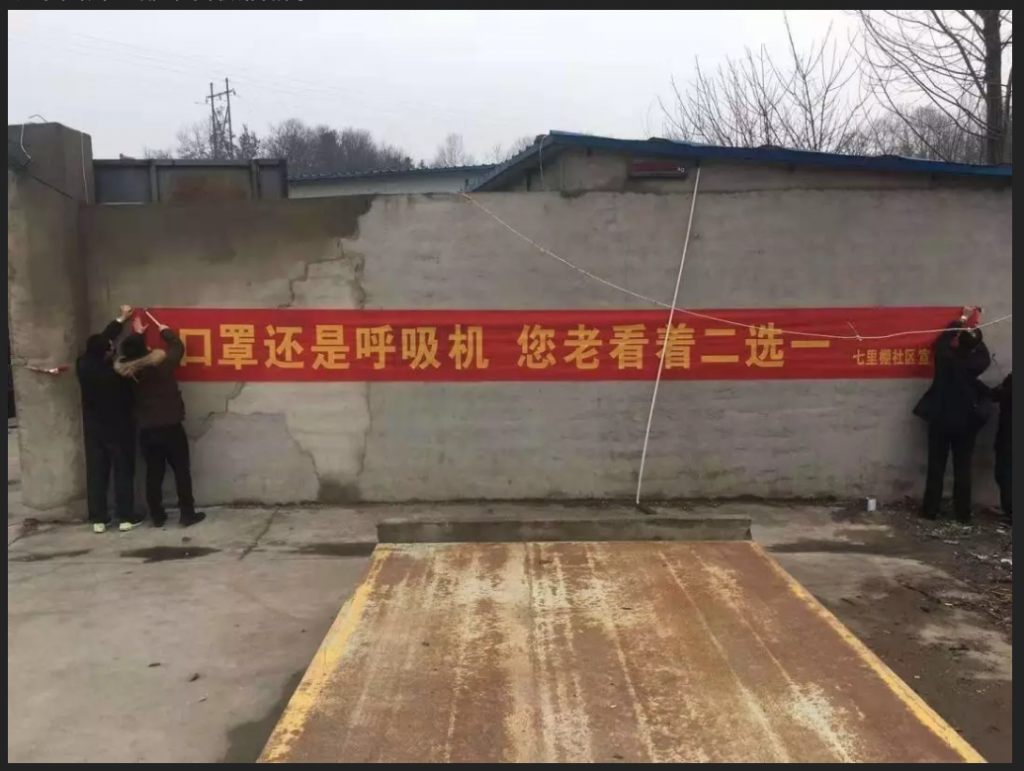
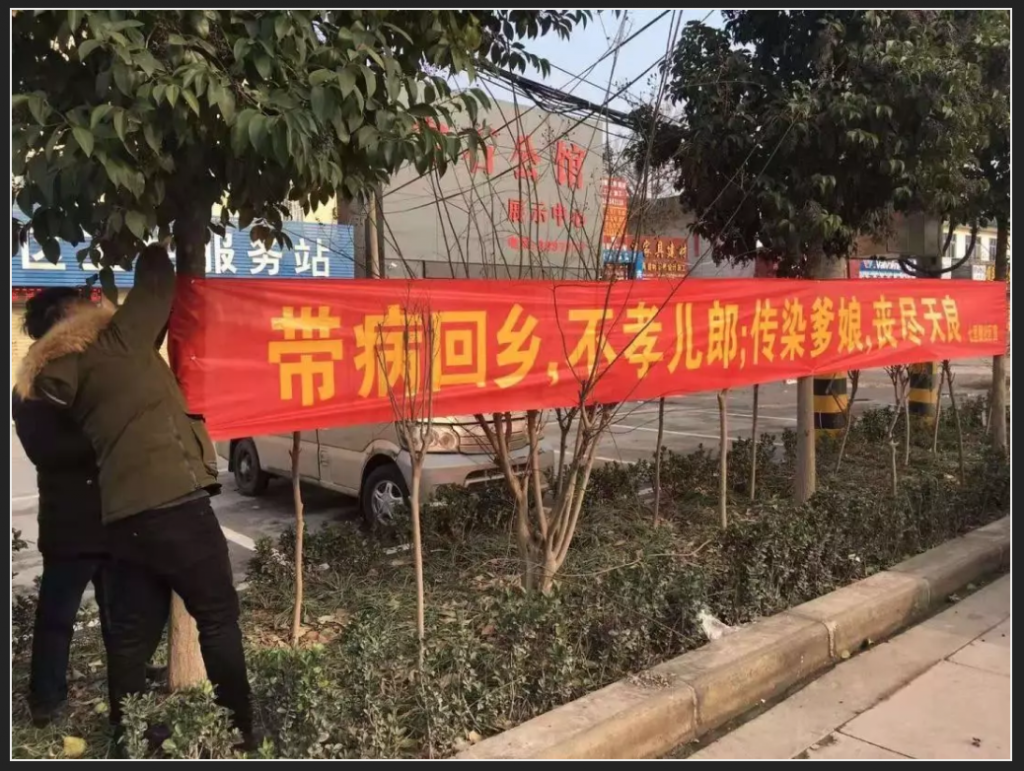
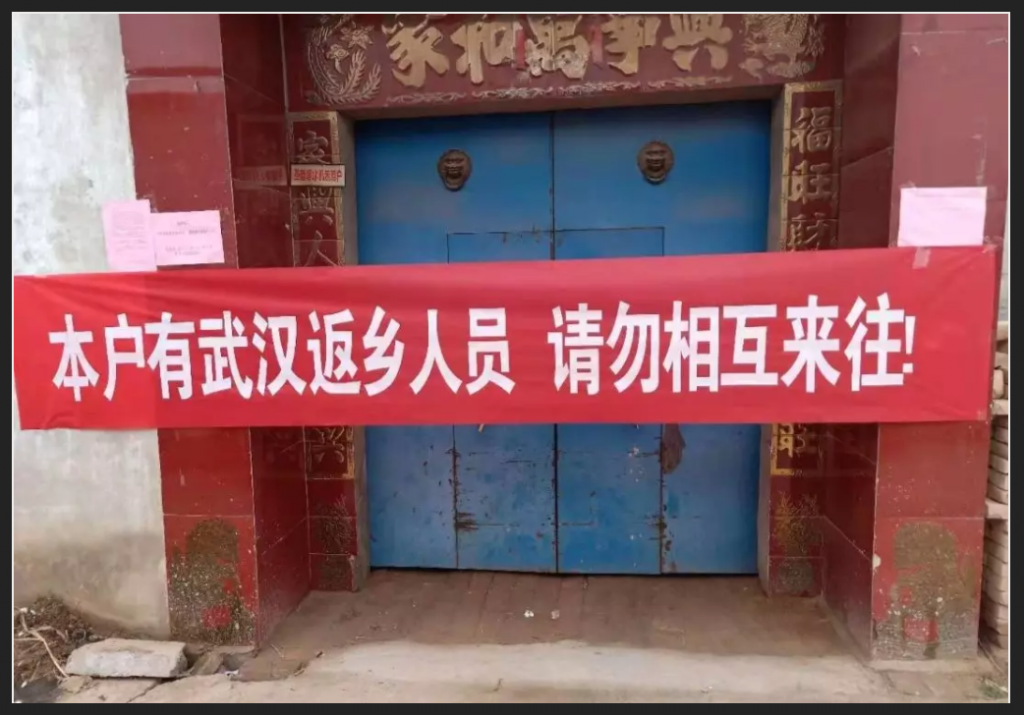
Here we share a number of current slogans invented in the midst of the coronavirus outbreak that have appeared on social media (see link above) and are reportedly from communities across China. We provide in some cases only approximate translations for these clever and frightful creations, some quite difficult to fully convey.

[1]

口罩还是呼吸机,

您老看着二选一

A face mask or a breathing tube,

Make a choice, it’s up to you.

[2]

带病回乡, 不孝儿郎

传染爹娘,丧尽天良

Returning home with your disease,

Will not make your parents pleased.

Infect mom and dad,

And your conscience is bad.

[3]

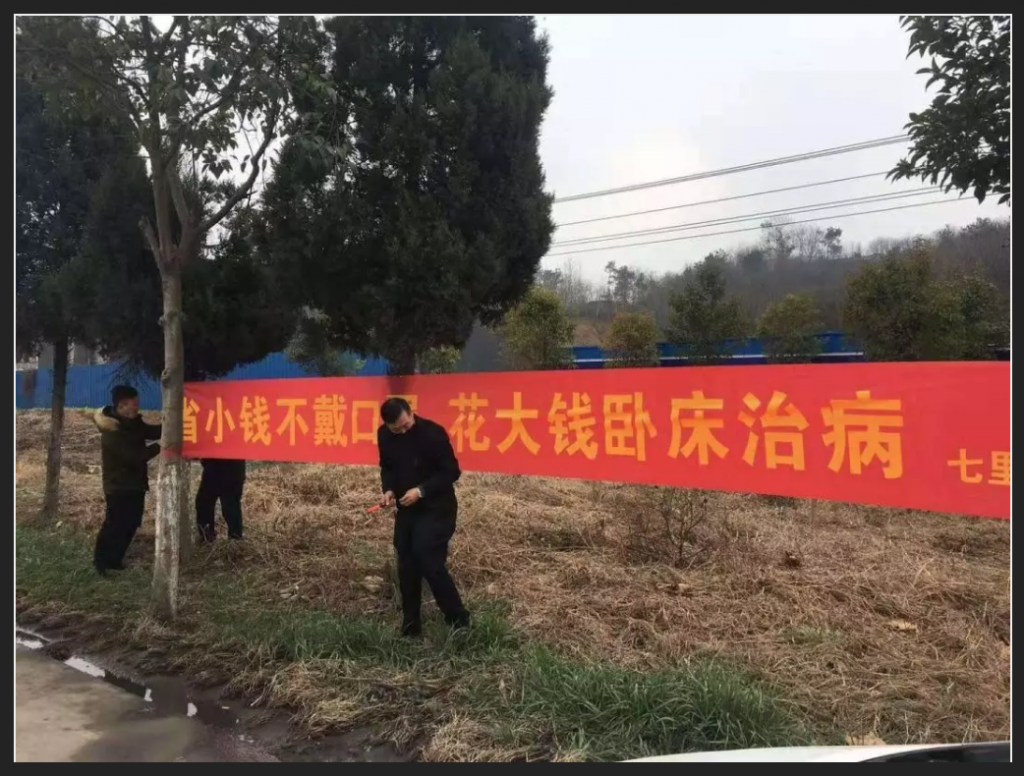
省小钱不戴口罩,

花大钱卧床治病

Save money not wearing a mask,

Spend big getting cured in your sickbed.

[4]

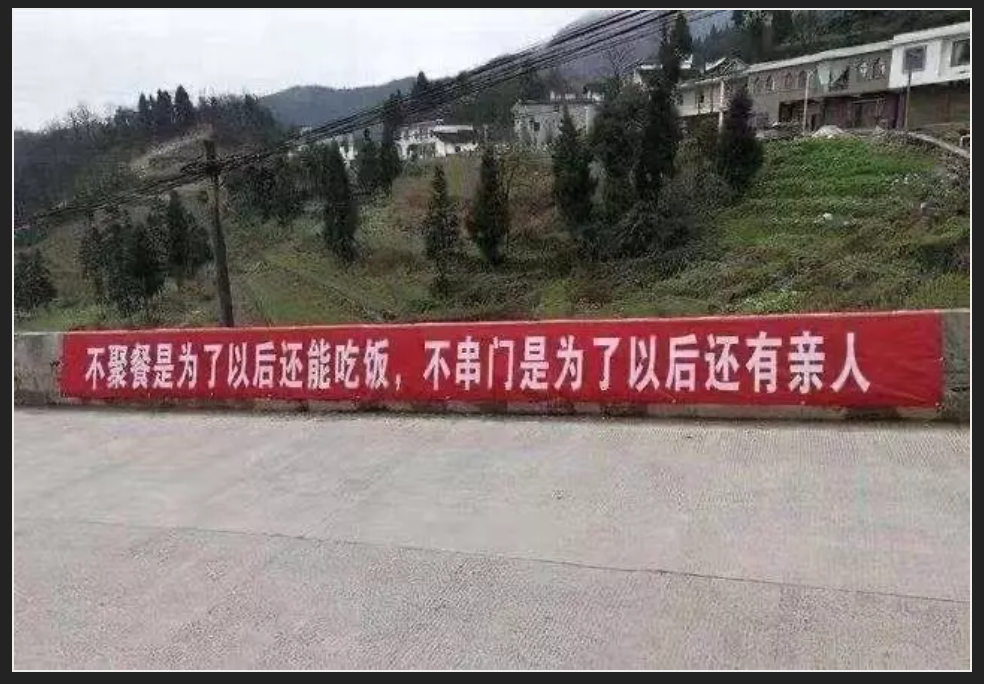
不聚餐是为了以后还能吃饭,

不串门是为了以后还有亲人

Not gathering for a feast is so you can eat in the future,

Not visiting others is so you still have relatives in the future.

[5]

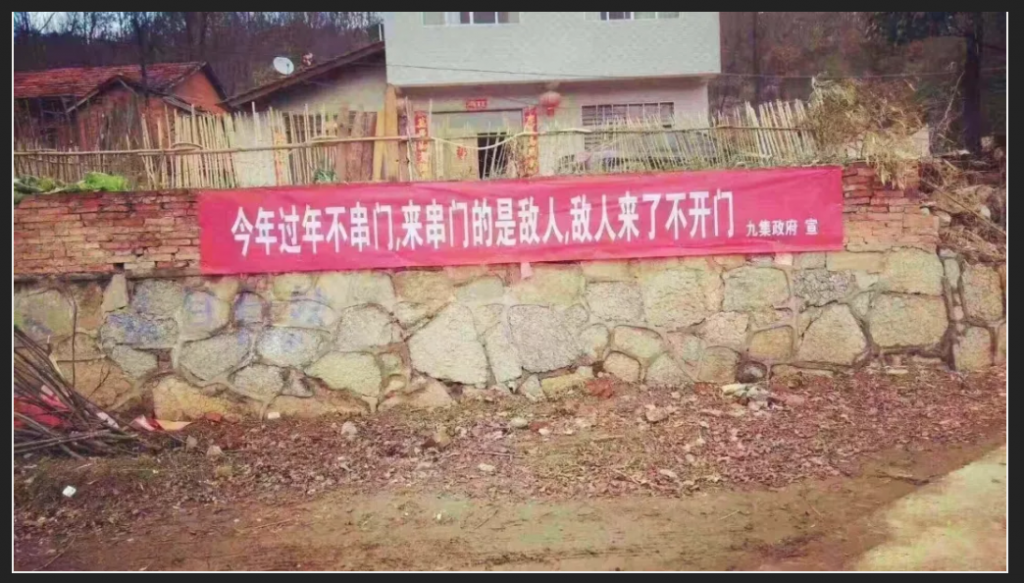
今年过年不串门,

来串门的是敌人

敌人来了不开门

No visits from the New Year this year,

Those who come visiting are enemies.

We don’t open the door for enemies.

[6]

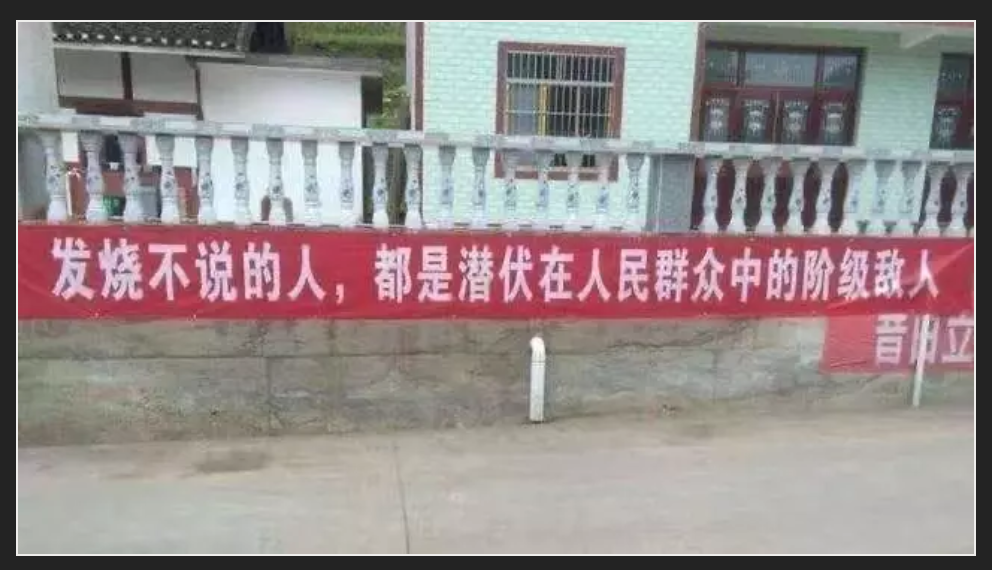
发烧不说的人,

都是潜伏在人民群众中的阶级敌人

Those who don’t mention their fever,

Are class enemies lurking among the people.

[7]

老实在家防感染,

丈人来了也得撵”

Earnestly prevent the infection of your home,

Casting out even your in-laws if they come.

[8]

本户有武汉返乡人员,请勿相互来往!

This house has a returnee from Wuhan,

Please do not come visit!

The Truth About “Dramatic Action”

“As far as I know, trying to contain a city of 11 million people is new to science.” This was how Dr. Gauden Galea, the World Health Organization’s country representative in China, described the situation facing the city of Wuhan when asked late last week for his update on the coronavirus outbreak.

It was clear from Galea’s remarks that the total containment of Wuhan, the city where I have lived for the past few decades, was not a course of action the WHO had recommended. Nor did the organization have any clear view on whether such an action would prove effective in limiting the spread of the disease. “It has not been tried before as a public health measure,” he said, “so we cannot at this stage say it will or will not work.”

I am now one of 11 million people in Wuhan who are living through this grand experiment, a measure that, Galea also said, shows “a very strong public health commitment and a willingness to take dramatic action.” From inside the curtain that now encloses my city, I wish to offer my thoughts on this “dramatic action,” and to judge what we have actually seen and experienced in terms of commitment to public health.

Closing Up the Cities

At 2AM on January 23, authorities in Wuhan suddenly issued the order to close off the city. According to the order, from 10AM that same day, all public buses, subways, ferries, long-distance buses and other transport services would be suspended; the airport and train stations would be shuttered. At this point, the WHO might have had reservations about the necessity and effectiveness of this strategy – but in any case, is was irreversible, and it would soon extend to neighboring cities as well.

In less than two days, up to noon on January 24, a total of 14 cities in Hubei province would be brought into the quarantine zone. These cities, with a population of around 35 million, include: Huanggang (黄冈) and E’zhou (鄂州), were quickly brought under the order for closure. More cities followed: Chibi (赤壁), Xiantao (仙桃), Zhijiang (枝江), Qianjiang (潜江), Xianning (咸宁), Huangshi (黄石), Enshi (恩施)、Dangyang (当阳), Jingzhou (荆州), Jingmen (荆门) and Xiaogan (孝感).

This was no longer a city under lockdown, but effectively an entire province under quarantine.

Galea and other foreign experts have expressed a sense of awe about the boldness of the quarantine in Hubei province. Over the weekend, the New York Times quoted Dr. William Schaffner, an expert on infectious disease from Vanderbilt University, as saying that the lockdown is a “public health experiment, the scale of which has not been done before.” Schaffner was clearly astonished: “Logistically, it’s stunning, and it was done so quickly.”

China’s capacity to impress with such grand gestures calls to mind talk of the “Chinese miracle,” often used to describe the performance of the country’s economy over four decades. But is it fair to regard this case of large-scale quarantine also as a “Chinese miracle” in public health?

Shutting People’s Mouths

Everyone must understand, first of all, that this epidemic was allowed to spread for a period of more than forty days before any of the abovementioned cities were closed off, or any decisive action taken. In fact, if we look at the main efforts undertaken by the leadership, and by provincial and city governments in particular, these were focused mostly not on the containment of the epidemic itself, but on the containment and suppression of information about the disease.

The early suppression of news about the epidemic is now fairly common knowledge among Chinese, and many people view this failure to grapple openly with the outbreak as the chief reason why it was later seen as necessary to take the “dramatic action” of closing down my city and many others.

The direct cause of all of this trouble is of course the new coronavirus that has spread now from Wuhan across the globe and has everybody talking. Up to January 24, in Hubei province alone, there were 549 admitted cases of the virus. Among these there have been 24 deaths. But the real numbers are still unknown.

According to reports from Caixin Media, one of China’s leading professional news outlets, the entire situation began on December 8, with the discovery of the first known case of an infected patient in Wuhan, a stall operator from the Huanan Seafood Market. The Huanan Seafood Market is a large-scale wet market, with an area about the size of seven football pitches and more than 1,000 stalls. The market has a constant flow of customers, making it the ideal place for the spread of infectious disease. A seafood market only in name, it sells a wide array of live animals, including hedgehogs, civet cats, peacocks, bamboo rats and other types of wild animals. At this market, the nearly inexhaustible appetite, and insatiable greed and curiosity of Chinese diners is on full display.

The number of infected people rose rapidly, reaching 27 people within a short period of time. Health professionals in Wuhan began suspecting in early December that this was an unknown infectious disease, not unlike the Severe Acute Respiratory Syndrome (SARS) that emerged in southern China in 2003. The ghost of SARS seemed to wander Wuhan in December, and rumors spread farther and farther afield of a new disease on the prowl.

China is a society closely monitored by the government, and the shadow of Big Brother is everywhere. Social media in particular are subject to very close surveillance. So when the authorities detected chatter about the re-emergence of SARS, or of a similar unknown outbreak, they took two major steps initially. First, they tried to ensure that this new outbreak remained a secret; second, they put the stability preservation system into effect (启动稳控机制). On December 30, the Wuhan Health Commission (武汉市卫建委) issued an order to hospitals, clinics and other healthcare units strictly prohibiting the release of any information about treatment of this new disease. As late as December 31, the government in Wuhan was still saying publicly that there were no cases of human-to-human transmission, and that no medical personnel had become infected.

Science Versus Politics

The period from December 8 to December 31 was a crucial 23-day period. During this time, scientists in China were not in fact idle, but raced against the clock trying to trace the virus – and their performance was remarkable. Meng Xin (孟昕), a researcher at the Chinese Center for Disease Control and Prevention, has since disclosed:

So originally they [NOTE: Meng is referring here to the government] had one ace card in their hand. My colleagues worked hard through the night, and within one week had managed to: successfully isolate the disease, sequence the coronavirus genome (测完了序列), and confirmed the origin of the disease. In less than two weeks, they had developed test reagents and had distributed them to provincial CDCs, and they had reviewed anywhere from dozens to hundreds of specimens from Wuhan (the specific number is still unknown), actions that would earn unanimous praise from international colleagues and the World Health Organization, and that would save precious time in the prevention and control of the epidemic.

Meng is referring here specifically to the actions taken by scientists in Beijing. But Shanghai scientists were not far behind. According to a report in Health News (健康报), the official publication of China’s National Health Commission, the Shanghai Public Health Clinical Center (上海市公共卫生临床中心) had isolated a new strain of coronavirus by January 5, within just 10 days of its receiving samples from patients in Wuhan on December 26, and scientists at the center had obtained the entire genome sequence.

On January 11, on the basis of the latest research developments in Beijing and Shanghai, China officially confirmed that this new coronavirus was the pathogen causing the Wuhan pneumonia epidemic, and it shared the new coronavirus gene sequence information with the WHO.

But while the Chinese authorities informed the World Health Organization about these developments at the earliest opportunity, they did not inform their own people, but instead maintained strict secrecy. This meant no progress was made on prevention and control.

As the researcher Meng Xin put it:

The ace card [provided by scientists] was still played very poorly, because at the first opportunity politics came into play and directed strict confidentiality requirements – this can’t be talked about, that can’t be talked about, we must maintain stability, and so on. So the test reports were locked into the safety deposit box.

Here is how the situation looked from our perspective on the ground as Chinese citizens, and as residents of Wuhan.

On January 12, the Wuhan Municipal Health Construction Commission announced that there were no new cases and no close contacts as of the 11th.

On January 13, the Wuhan Municipal Health Construction Commission announced that there were no new cases and no close contacts as of the 12th.

On January 14, the Wuhan Municipal Health Construction Commission announced that there were no new cases and no close contacts as of the 13th.

On January 15, the Wuhan Municipal Health Construction Commission announced that there were no new cases and no close contacts as of the 14th.

On January 16, the Wuhan Municipal Health Construction Commission announced that there were no new cases and no close contacts as of the 15th.

Politics first. Stability preservation first. In such an environment, science can only sit by and watch. The scientific results could not be clearer, and the authorities likely had a decent grasp of the real situation. But nevertheless they could not speak the truth, and they spared no effort in keeping the outbreak under wraps. Front-line doctors who spoke up about the outbreak were taken in for questioning. Eight Wuhan citizens who dared to post about the outbreak online were summoned by the police and singled out in public announcements through official media in order to terrify the public and force people to remain quiet.

The focus of restrictions was to prevent the truth of human-to-human transmission of the coronavirus from getting out. Wuhan officials continued to emphasize through January 14 that no clear evidence of human-to-human transmission had been found. Later, officials had to admit that there was evidence of what they called “limited human-to-human transmission.” Wang Guangfa (王广发), a member of the expert group from Beijing, came out and stressed that the disease was “preventable and controllable.” In light of these statements, the public remained unaware and unconcerned.

Politics as Usual

Up to January 17, tourism authorities in Wuhan continued to launch the “Spring Festival Culture Benefitting the People Campaign” (春节文化惠民活动), issuing hundreds of thousands of free tickets to attractions in Wuhan in order to encourage tourists from all over the country to come to the area for sightseeing. Through to January 19, Baibuting Garden (武汉市百步亭社区), an area advertised as a model residential community in Wuhan, was still holding a Spring Festival banquet celebration for its 40,000 residents. There was no attempt to stem the flow of people to Wuhan from all over the country and around the world. During what was the most critical phase for controlling the outbreak, Wuhan was essentially an open city owing to the efforts of local officials to keep a lid on the story.

The ignoring of the outbreak by Party and government officials can be seen clearly in the agendas of local officials in Hubei province. On January 11, after the disease was confirmed as a new strain of coronavirus, until January 20, when General Secretary Xi Jinping issued a notice on response and control of the outbreak, Hubei provincial officials and Wuhan city officials had no meetings or events having to do with the coronavirus outbreak.

From January 12-17, these officials were all busy prioritizing the provincial and city-level meetings of the people’s congresses and political consultative conferences, the so-called “two meetings” (两会) – the biggest local political meetings of the year. In all likelihood this is reason why, as outlined above, no new cases of the virus were reported – because a “harmonious” public opinion environment had to be created for the “two meetings.”

On January 18, a Saturday, there were no events scheduled by provincial or city officials, and this was most likely a day of rest. On January 19th, leaders at the provincial and city levels had their respective itineraries, but no officials voiced concern about the outbreak. The provincial Party secretary, Jiang Chaoliang (蒋超良), had three events on his schedule: a meeting with the Yangtze River Water Conservancy Commission; a meeting with retired cadres; and an appearance at a Spring Festival event for the military. His itinerary the next day: a visit with poor families in Daye City. Provincial governor Wang Xiaodong (王晓东) accompanied Jiang Chaoliang on his visits on January 19, and had nothing on his itinerary the next day.

Wuhan Party Secretary Ma Guoqiang (马国强) spent the day on January 19 attending a meeting of the Grass-roots Party Building Review and Appraisal Council. On January 20, he presided over a meeting of the Municipal Standing Committee. But the agenda did not touch on the coronavirus outbreak, focusing instead on language from the central and provincial Party leadership on “remaining true to our original aspiration, keeping firmly to our mission” (不忘初心, 牢记使命), this being a key phrase of Xi Jinping’s to talk about keeping to the path of socialism with Chinese characteristics and pushing for the so-called “great rejuvenation of the Chinese nation.”

The only official who had any event related to the coronavirus outbreak on his agenda was Wuhan’s number two, mayor Zhou Xianwang (周先旺), who on January 20 attended a working meeting of the Epidemic Prevention and Control Command Center (疫情防控指挥部). This was on the same day that Xi Jinping finally issued his official instructions on dealing with the outbreak.

It was only after the conclusion of the provincial and city-level sessions of the “two meetings” that the authorities in Hubei province resumed reporting new disease cases, so that on the night of January 19 the number given suddenly rose to 136 new cases. But even with this dramatic increase from previous numbers, the leadership remained conservative and close-mouthed about the outbreak.

Even on January 21, the day after Xi Jinping’s instructions were conveyed nationwide on January 20, the provincial Party and government leadership went ahead with a grand Spring Festival Banquet in the Hongshan Assembly Hall, with performances from the provincial song and dance troupe. According to Party media reports, preparation for the banquet had top priority for the leadership and the Provincial Department of Culture and Tourism: “Lei Wenjie, the department’s secretary and director, personally reviewed various performance plans, provided guidance for the draft program, and reviewed the compositions and rehearsals for the show in person.” Reports even gave what now seem quite suggestive details, saying that the performers had “overcome a host of difficulties to achieve a perfect performance, including coming from long distances, enduring colds, stuffy noses, and bodily discomfort.”

As the province’s top leader, Secretary Jiang Chaoliang, and Governor Wang Xiaodong (王晓东) sat with row upon row of Party and government officials, they were the very image of peace and calm. But when news of the banquet was posted online, it met with a wave of anger as internet users bitterly criticized them for inaction. One user mocked these officials online with the choice words: “These public servants who need not concern themselves with the virus, reward themselves with flowers in the back courtyard.”

The Voice of Calm

The true turning point came as Zhong Nanshan (钟南山), the well-known Chinese pulmonologist who identified the SARS virus in 2003, paid a visit to Wuhan. On January 18, Zhong received orders in Guangzhou to head urgently to Wuhan. But even though Zhong was an esteemed member of the Chinese Academy of Engineering, and even though he was under urgent orders to become involved in a matter of national concern, his rank was apparently too low to merit special transport arrangements of any kind. Instead, he was forced to take a high-speed train in the evening, fighting against crowds heading home for the Spring Festival. He spent the entire journey settled in a corner of the dining car.

Looking back now, it’s clear that Zhong Nanshan’s orders at the time were not at all about researching the outbreak. As I’ve said, by this point scientists in Beijing and Shanghai had already made critical breakthroughs on that front, identifying and sequencing the pathogen in record time, and developing diagnostic kits. Unfortunately, the efforts of these scientists were largely snuffed out by the black box of Chinese politics.

Zhong Nanshan was brought into the picture because there was no way to really and truly turn the tide without the appearance somehow of a third party with sufficient credibility to break through the paper windows of reporting on the epidemic to that point – someone who could reveal the full nature of the epidemic to the public, and somehow reassure them. As Meng Xin, the Chinese Center for Disease Control and Prevention researcher, wrote: “Nothing could be done to hold back [the truth about the outbreak]. Our best bet was to have Old Dr. Zhong, this great god, come out and reveal something of the real facts of the situation, and try to calm people’s nerves.”
But the authorities still were not prepared to admit the full truth. There was no admission that the outbreak had been concealed, that there had been serious delays in reporting, that a “super-spreader” had infected more than 14 health workers in the city, or that hospitals in Wuhan were suffering shortages of critical resources. Zhong Nanshan simply came out and broke the news that the virus was now spreading from person to person. Beyond that, he said nothing.

And so it was that the seriousness of what was happening in Wuhan broke upon the nation, and my city became a city under lockdown – not out of an overriding concern for public health, but out of a conviction that politics and stability preservation must always come first.

The Ghost City

The quarantine of the city of Wuhan can be read as a sign of desperation at the top of the Party leadership, and at the provincial and city levels it was an unavoidable measure. There has been some talk that the closing off of Wuhan and much of Hubei province came after many other provinces and cities made an urgent request to the central authorities to take more urgent action to control the situation in Hubei and prevent people from Wuhan other cities from traveling all over the country.

Wuhan was the first to announce the closure of the city, but this was not at all done in a decisive way, but rather in a foot-dragging and non-committal way. Nothing whatsoever, to my mind, merits the suggestion from Dr. William Schaffner that, “Logistically, it’s stunning.” One might imagine this action was taken with some form of wartime control logic, but this was not actually the case at all. The order was issued at 2AM on January 23, but was not officially implemented until 10AM, which opened up an eight-hour window in which people who managed to learn of the situation could make a swift exit, taking to the expressways in their private cars.

We can be sure that a substantial number of the people who left the city at this point – some estimates are of as many as one million – were already by this point carriers of the coronavirus. This includes many people who had failed to obtain treatment in the city, and were hoping to find treatment elsewhere. Media have since reported cases of patients from Wuhan being successfully treated and discharged from hospitals in Shanghai, for example, providing a glimpse of what happened in that brief window between the announcement of the quarantine and its actual implementation.

Another aspect of the Wuhan quarantine has been its hasty nature. Even now, after several days of quarantine, no specific plan has been issued, suggesting no preparations were made at all before the announcement. What should be done to settle or assist the estimated one million refugees from Wuhan who made it out before the quarantine was implemented? During the quarantine period, how would food, water and other basic necessities be provided to residents of the city? How would medical personnel at hospitals and clinics be provided with the medicines and other essentials? How would the authorities deal with urgent transportation needs, such as medical staff getting to and from work and patients getting to hospitals for medical treatment? How would law and order be maintained? The government has so far offered no explanation for how these and many other urgent questions are being dealt with.

In the absence of answers, what we have is the shutting off and shutting down of a city, plain and simple. A quarantine that means 11 million people are trapped within their city. No one seems to have considered how public order will be maintained, and how our lives here in Wuhan will be supported.

This is the situation in Wuhan, Hubei’s capital city. We can suppose that the situation is no better, and is possibly worse, in the other cities that have similarly come under quarantine. Of the fourteen cities under facing lockdown, there are so far no exceptions in terms of the announcement of plans or preparations. They are equally in the dark, having become fourteen isolated islands, home to an estimated 35 million helpless citizens.

The results of this are already becoming clear. First, we are seeing a shortage of supplies of essential household goods in Wuhan, and inflation is out of control. The city was closed off early in the morning on January 23, and by noon the price of vegetables had already skyrocketed, some vegetables priced up to hundreds of yuan per half-kilo. By afternoon that same day, many supermarkets in the city had been entirely cleaned out. Fortunately, this is perhaps the one time during the year, with the arrival of the Spring Festival, that Chinese families tend to have reserve supplies at home to prepare for festivities. But if fresh supplies are not made available soon, it’s possible many families will not have enough to eat.

Another major problem right now is that major hospitals and frontline medical staff do not have sufficient supplies of protective equipment as they work overtime to treat a flood of patients. Even the best hospitals in Hubei, such as Tongji Hospital and Xiehe Hospital, cannot escape this basic problem. They have reported that even masks are in short supply.
In some cases, frontline medical personnel were unable to eat their New Year’s Eve meals last Friday, one of the most important meals of the year. This was not because there was no food to eat, but because their protective masks are single-use, and must be changed out any time they are removed, lest they become ineffective. But there were already an insufficient number of masks by the weekend, and so medical personnel didn’t dare remove them. More serious even than the shortage of protective equipment is the fact that many frontline medical personnel are exhausted and on the verge of collapse due to extreme mental and physical strain.

Another issue that has so far not been addressed is the fact that there are roughly one million Wuhan residents who managed to leave the city and who are now essentially refugees without any proper means of finding shelter or care, and who risk being chased down and harassed by local governments and communities out of fear. In some cases, they may present a real risk in spreading the virus. In other cases, they may face brutal treatment as refugees and outcasts.  

Wuhan under quarantine has already begun to feel like a ghost city. From New Year’s Eve into New Year’s Day, you couldn’t hear a single firecracker going off. I have lived in this city for decades already, and this is the first time that the Chinese New Year has passed without the sound of fireworks. The entire city is silent. The traffic lanes, usually jammed with vehicles, are empty. All public places are now inaccessible. No one is associating or organizing get togethers. There is no sense of community. No public life. We are all atomized individuals, living in isolation in our own homes, passing the time watching the television, or glued to our mobiles.

In this dead silence, fear spreads. Senior government officials are certainly living in fear. And just how afraid are they? After announcing the closure of the city, they failed to present contingency plans of any kind; and they have failed since to offer up any plans for future action. At a crucial point last Friday, on the eve of the New Year, none of them dared stand with front-line medical personnel in Hubei’s hospitals, or to offer them meals or encouragement of any kind.  

They can’t possibly be ignorant of the fact that such signs of leadership are the only way they can offer a thread of confidence to those on the front lines, and to the millions who are trapped in this sad city. And yet, they somehow find it impossible to take such steps. They appear not to have the courage.

And there may be a reason for this. Why? Because there are already concrete examples that deepen their sense of dread. On January 22, Huang Mouhong (黄谋宏), the deputy director of the Hubei Provincial Department of Commerce, was diagnosed with the coronavirus. Before this, there was news that Wang Guangfa, the expert who had flown to Wuhan from Beijing and announced that the disease was “preventable and controllable,” had been confirmed as infected shortly after his return to the capital.

In fact, both the provincial and municipal governments have already effectively been shut down, and to a large extent can be said to now be only caretaker governments (看守政府). These cowardly and incompetent governments obviously cannot take on the necessary responsibility of governing in what has already become essentially a state of war. This leaves the public in a state of deep concern and uncertainty.

On January 22, Zhang Ouya (张欧亚), a journalist for the official Hubei Daily newspaper, clearly at the end of his rope, fairly shouted online: “Wuhan must immediately change out its commanders” (武汉必须当机立断换帅了). For a brief time, this furious call proliferated online. Another meme was rapidly born, like a mutating virus, across social media. The word “coronavirus”, or guānzhuàng bìngdú (冠状病毒), was replaced with the identical-sounding “official virus” (官状病毒), mocking the cowardice and ineffectiveness of the government and of high-level officials.

We may find it hard to suppress a bitter laugh over such an acts of inventive criticism. But such a story cannot have a happy ending in China’s stability-obsessed political environment – where anything can be stopped. Zhang Ouya’s post was quickly expunged. The Party leadership of the Hubei Daily Media Group, Zhang’s employer, wrote a letter of apology to the Municipal Party Committee expressing its “deepest apologies” for Zhang Ouya’s “incorrect remarks.” The group also made clear that it was starting “relevant procedures” to hold Zhang accountable.

At the same time, while carrying on an investigation of Wuhan’s Huanan Seafood Market, where the outbreak originated, Xiao Hui (萧辉), a reporter for Caixin Media, was surrounded and beaten by four security guards. Caixin journalist Wang Heyan (王和岩), one of the finest investigative reporters working in China today, contacted several doctors in Wuhan in order to verify infections among medical staff, but was not allowed to meet with her sources. The Chinese Center for Disease Control and Prevention has issued an order saying that: “[Medical personnel must not, under any condition, accept media interviews, and must not leak information about the outbreak to the outside. Noone can accept interviews, even if journalists promise anonymity and agree to protect their sources.”

What will tomorrow bring? Here in Wuhan, 11 million of us are waiting — not for dramatic action, but for openness and a real plan of action.

Party Media Focus Away From Outbreak

As it grapples with the Wuhan coronavirus outbreak, China is now dealing with the most serious infectious disease crisis since the 2003 outbreak of Severe Acute Respiratory Syndrome (SARS). Many experts agree that China’s monitoring and response systems have progressed a great deal since the cover up that year proved a major embarrassment to the government and prompted a rethink of policies to deal with so-called “sudden-breaking incidents,” or tufa shijian (突发事件). 

SARS in 2003 and the window of relative openness that followed the humiliating revelations of a cover up, the first great challenge to face the Hu Jintao administration, offered a new generation of Chinese media opportunities to break out professionally. The year was in many ways the culmination of changes happening progressively in the Chinese media through the second half of the 1990s.

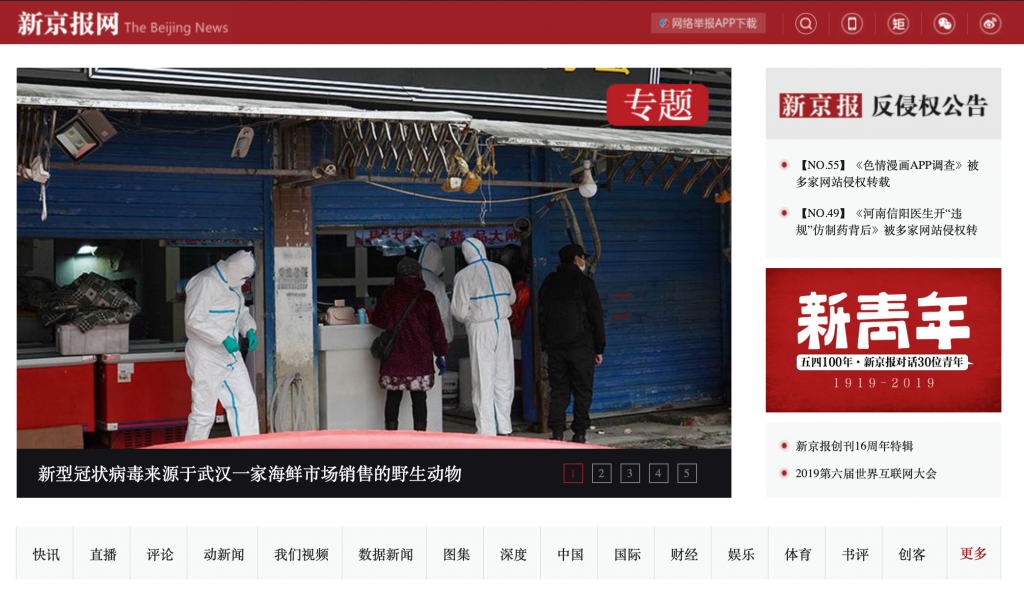
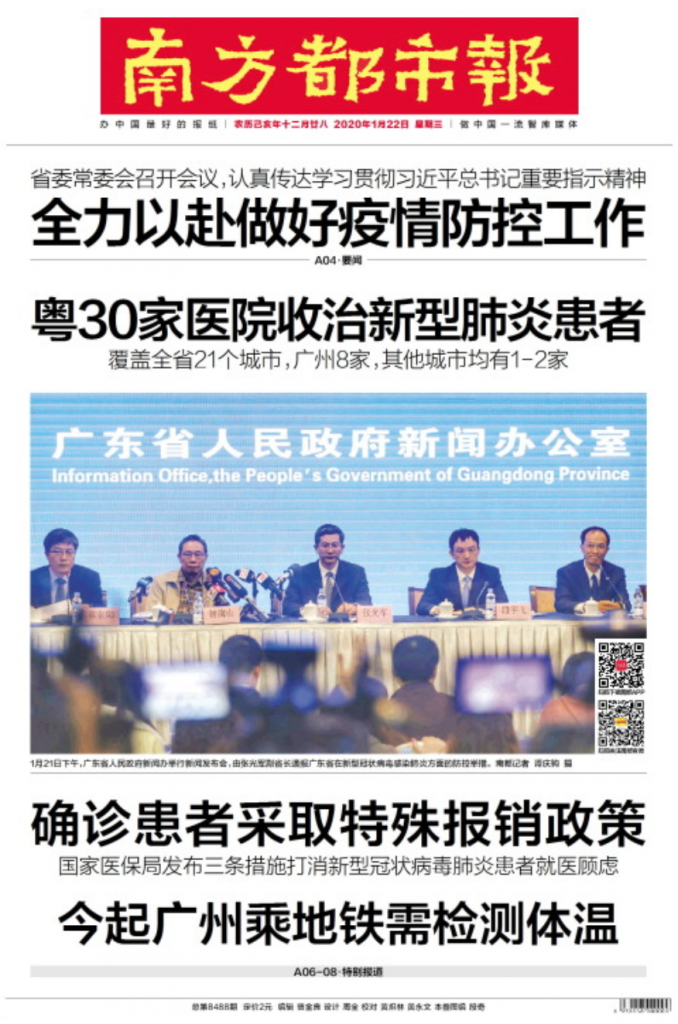
This year we can see the difference clearly enough if we visit the websites and front pages (and news apps) of major commercial media such as The Beijing News, Southern Metropolis Daily and The Paper.  

Here is what you see today if you visit the website of The Beijing News, for example. The coronavirus outbreak is the top story, completely dominating the photo feature space with scenes from Wuhan.

Reporting at The Beijing News comes not just from official Xinhua News Agency releases, or from “mainstream” (in the official sense) Party media such as China Central Television. There are bylines from the newspaper’s own reporters, one interviewing an infectious disease expert in Wuhan, another offering current updates on the situation in various cities, another reporting statements from health officials in Beijing. There are reports from the ground in Wuhan, and also from Hong Kong.

This is not to say, of course, that the coverage is comprehensive, or that it necessarily offers a full balance of perspectives. Official sources of information seem to take precedence.

But in lieu of a more detailed content study – which we’re not attempting here – we can say that the story is front and center at The Beijing News. The story that most concerns people right now is the story receiving the most attention.

The same is true if we look at the front page of Guangzhou’s Southern Metropolis Daily today. Sure, official sources dominate here, the focus apparently on reporting the official numbers and official actions being taken. But all of the bold headlines on the front page deal with the coronavirus outbreak.

At The Paper (澎湃), the headlines on the website and news app again focus on the coronavirus outbreak, with scores of stories, national and local, dominating the page, to the point it seems there is no other news to talk about.

But of course there is other “news” to talk about if your point of reference is the burning priorities of the Chinese Communist Party, and not necessarily the issues of clear and present concern to the public.

This most recent infectious disease crisis, with its echoes of SARS, once again exposes the basic nature of China’s Party media outlets, and their interest in “serving the Party” over the public interest – the domination of the “Party nature” (党性) over the “people nature” (人民性), to reference the debate over news values that raged in the late 1980s between then People’s Daily editor in chief Hu Jiwei (胡绩伟), a proponent of liberalization of the press, and the hardliner Hu Qiaomu (胡乔木).

If we look today at central Party media, we can see the Party agenda obliviously playing out right in the midst of this latest health crisis.

At the People’s Daily Online today, the epidemic appears but is pushed down below six other stories of quite questionable news relevance – unless one understands the way CCP leaders define priority and relevance.

The report that gets top billing at the site today is about a gathering yesterday of former senior officials ahead of the Spring Festival. It is essentially just a list of names, including Jiang Zemin, Hu Jintao and Zhu Rongji, that ends with expressions of support for Xi Jinping: “The old comrades expressed their thanks and high assessment of how the Party with Comrade Xi Jinping at its core had led the whole Party, the whole army and all the people’s of the country in realizing historic achievements, and they voiced their heartfelt support for Secretary Xi Jinping as the core of the CCP and of the whole Party.”

Why would such a story be emphasized over a national health crisis? The reason is not necessarily distraction, though the leadership certainly wishes everyone could look away. This story is there to serve the paramount purpose of reiterating Xi Jinping’s power and status, one of the primary roles played by Party media.

Second billing goes to a story about Xi Jinping sending a congratulatory letter to the China-Italy year of culture and tourism in Rome, along with Italian President Sergio Mattarella. Again, there is little real news value for the public, but the chief objective here is to show Xi Jinping engaged internationally. The third story at the top of People’s Daily Online, a report about Xi Jinping’s visit to Myanmar, serves the same purpose, to show Xi as a leader engaged in the region. The report, full of Xi governing concepts, talks of the goal of “opening a new era of community of common destiny between China and Myanmar” (开辟中缅命运共同体的新时代), a reference to one of Xi’s core foreign policy terminologies.

Three more stories follow these, about Wang Yang and religion, about Wang Huning and culture, and about Han Zheng at the World Economic Forum, before we even get to any acknowledgment whatsoever that China is facing a new disease outbreak. 

The first acknowledgment we have is a report about a press conference this morning in Beijing in which Liu Wei (李斌), head of China’s National Health Commission, spoke about the latest situation and the government’s priorities. The second is a commentary in which the writer urges all members of society to consider the common good in light of the epidemic, and not to take actions out of personal interest that risk further spreading disease. The commentary talks about a number of reports that have infuriated some Chinese, like reports that even after the extent of the situation was known tourism authorities in Wuhan had issued 200,000 free travel coupons to tourist sites around the city, effectively encouraging crowds that could further spread the disease.

And what of local Party newspapers and websites?

Here is the front page today of Tianjin Daily, the official mouthpiece of the municipal Party committee there. It is virtually identical to the People’s Daily, first emphasizing next to the masthead Xi Jinping’s visit to Myanmar, then a big headline about Xi visiting Kunming and offering his New Year’s greetings.

Two stories about the coronavirus outbreak are squeezed into the bottom one-fifth of the front page, the first on Xi Jinping’s instructions and the second, quite predictably, about the actions being taken by the top leader of the municipality, Secretary Li Hongzhong (李鸿忠). This is very typical Party treatment, focusing on official actions (and away from details and human stories) with sensitivity to national and local power dynamics. Mention Xi Jinping first, then the local Party leadership.

If we turn to Beijing Daily, the official Party mouthpiece of top Party leaders in the capital city, we can find the most hard-headed example of focus shifting and insensibility among official Party media outlets. The front page of the newspaper today does not deal at all with the coronavirus outbreak.

The top stories in the Beijing Daily are, in order of layout:

  • Xi Jinping’s visit to Myanmar and building of a “community of common destiny”
  • A story (with jump to page three) about Xi Jinping emphasizing a “strong military” during his visit in Yunnan province
  • Xi Jinping’s positive New Year’s message to people during his visit in Yunnan
  • A report about Beijing’s top leader, Cai Qi (蔡奇) meeting with “old comrades”
  • A report about a city-level conference of the Party leadership

One might suggest that Party media at the local and national levels do not have their priorities straight. But these pages are clear declarations of priority, and they point to the very nature of the so-called “Party nature.” It is only that the sense of dissonance becomes more pronounced when the country faces a real and pressing crisis that should dominate the news.

Tracing the “People’s Leader”

Earlier this month, CMP looked at the recent resurgence of “people’s leader,” or renmin lingxiu (人民领袖), in China’s official Party media as a term signaling the strong position of China’s top leader, Xi Jinping. We showed how the term, which first emerged in reference to Xi in April 2017, peaked briefly in the first half of 2018 before waning again – most likely as a reflection of the difficulties facing China in the midst of the trade war with the United States.

Students of Chinese political discourse will know that the term “people’s leader” was used to refer to Mao Zedong, and it still has a strong association with Mao’s rule. But where did the term actually originate in Chinese?

We took a brief jaunt back through available digital media archives to see if we could answer this question, beginning our search in the People’s Daily, which CMP co-director Qian Gang has referred to as the Chinese Communist Party’s “dictionary of red speech” (红色词典). First published on May 15, 1946, the newspaper can provide a fairly clear indication of how and when “people’s leader” was used in the history of the Chinese Communist Party.

In fact, we find that within its first week, on May 20, 1946, the paper published an article in which “people’s leader” appeared.

图片包含 文字, 报纸, 收据
描述已自动生成

The article refers not to Mao Zedong, but to Ulanhu, the Mongolian Communist commander who secured Inner Mongolia for the Chinese Communist Party during the Chinese Civil War, and who during his career was nicknamed the “Mongolian King.” Ulanhu served as China’s vice-premier from 1956 until his purging at the outset of the Cultural Revolution in 1966.

图片包含 男士, 人员, 眼镜, 戴着
描述已自动生成
Mongolian Communist commander Ulanhu. Wikimedia Commons.

In 1946, at the time of the People’s Daily article – which we should remember was more than three years before the founding of the People’s Republic of China – Ulanhu was known by his Chinese name, Yun Ze (云泽). The article reported on the formation of the autonomous regional government, and it called Yun Ze “the Mongolian people’s leader.”

Early uses of the term “people’s leader” in the People’s Daily indicate that its meaning was quite broad. The term could be used to praise figures past and present from all over the world. Among those referred to as the “people’s leader” in those early days, in fact, there was even American president Abraham Lincoln.

In Asia the title was used for Sanzō Nosaka, founder of the Japanese Communist Party, North Korean leader Kim Il-sung, North Vietnam’s Ho Chi Minh, and the Mongolian commander Khorloogiin Choibalsan. Europe had its “people’s leaders” as well. There was of course Stalin in the Soviet Union, Bulgarian communist leader Georgi Dimitrov, Poland’s Bolesław Bierut, Czechoslovakia’s Klement Gottwald, and Romania’s Gheorghe Gheorghiu-Dej.

It is true that “people’s leader” was used most liberally in the history of the People’s Daily to refer to Chairman Mao Zedong, with Marshall Zhu De coming in a distant second. But for Mao Zedong, the terms “people’s leader” and “great leader” (伟大领袖) were both used, and after the founding of the People’s Republic of China, “great leader” was the term most often applied to Mao. In Chinese political rhetoric, there is a greater sense of respect and power vested in “great leader” than in “people’s leader.” So against “great leader,” we find comparatively few references to “people’s leader Mao Zedong” (人民领袖毛泽东).

Before the founding of the PRC, we can find references to Mao as the “people’s leader” in other publications run by the Chinese Communist Party. Below is an article appearing in a magazine published by the Party in Shandong province in 1946, the headline reading: “The People’s Leader Loves Us Deeply.”

In 1948, the official magazine of the Huabei Military Region of the People’s Liberation Army also used the term, with a headline that read: “People’s Leader Chairman Mao.”

We can even find the term appearing in Hong Kong, as in the 1948 article below from the magazine Masses (群众), published in the then British colony by the Chinese Communist Party. “The Great People’s Leader,” the headline reads.

But to see how and when the term “people’s leader” might have entered the Chinese language, we need to go beyond the media and political culture of the Chinese Communist Party. So what about media from Taiwan and the Republican Era?

Looking further afield, we can find articles like this one in the June 3, 1955, edition of Taiwan’s United Daily News, which reports that a number of “anti-communist people’s leaders” had visited Taiwan. This use takes the term out of the revolutionary tradition (with Soviet echoes) of such leaders as Mao Zedong and Ulanhu.

图片包含 文字, 报纸
描述已自动生成

Looking further back into media of the Republican Era, we can find other examples, like the following one dated to 1948 from Chinese-American Weekly, a magazine sympathetic to the Kuomintang Party that was published in New York. The headline you see in the article below refers to Nationalist military leader Fu Zuoyi as the “people’s leader.”

The Chinese-American Weekly article comes months before Fu’s secret December 1948 negotiations with the CCP.

But the earliest example we could find of “people’s leader” in the Chinese language dates back to August 4, 1934, and appears in Central Daily (中央日报), a Kuomintang-run paper first published in Shanghai in 1924.

The news report that follows comes just three days after the death of German President Paul von Hindenburg, who had been Hitler’s only check on power, and reports that Germany is to hold a national referendum – referring of course to the August 19, 1934, referendum to merge the offices of president and chancellor, which would give Hitler supreme power.

The small headline immediately to the left of the largest headline reads: “Hitler Says He Will Drop Presidential Title and Be Called People’s Leader” (希氏表示废总统称号仅称人民领袖). This title, “people’s leader,” is familiar outside the Chinese language as the German word “Volksführer.”

Shortly after the German referendum, Shanghai’s China Monthly (中华月报) reported the story and published a photograph of Hitler. The caption under the photograph read: “Achieving a decisive victory through referendum on August 19th, German people’s leader and chancellor Hitler.”

图片包含 文字, 照片, 报纸
描述已自动生成

So it seems the earliest references we can find in digitally available Chinese-language media sources to the notion of the “people’s leader” are translations of the German “Volksführer” dating to Hitler’s rise as supreme leader. This is certainly not an etymology China’s present leaders would welcome, particularly given highly sensitive references in the social media space to “Xitler” (习特勒).  

But the end of the digital trail is certainly not the end of the trail. In his study of the vocabulary used to describe authoritarian leaders in the 20th century, Russian historian Boris Kolinitskii noted that Russian lawyer and revolutionary Alexander Kerensky was referred to as “leader of the people” as early as March 1917, predating the personality cults and related vocabularies used for Lenin and Stalin.

In 1918, at a period when Lenin was busy consolidating power with his inner circle of Stalin and Trotsky his close confederates, Russian poet Osip Mandelstam wrote in “Twilight of Freedom“:

Let us praise the momentous burden
that the people’s leader assumes, in tears.
Let us praise the twilight burden of power,
its weight too great to be borne.

Li Yuzhuo (李玉贞), a historian specializing in the Soviet era, wrote for the journal Yanhuang Chunqiu about Yefim Alekseevich Pridvorov (pen name Demyan Bedny), the Soviet poet and satirist, as one of the earliest figures in Soviet literature to “fix the image” of Stalin, and perhaps the first to refer to him as “people’s leader” in the 1920s.

It makes sense that the term “people’s leader” would have currency within the political culture of the Chinese Communist Party as an import from the revolutionary tradition of the Soviet Union. One can imagine there must have been references to the “people’s leader,” drawn from Soviet newspapers and from contemporary literature appearing in Chinese translation in newspapers, magazines and journals in the years around the founding of the CCP in July 1921 — references that were simply beyond our fingertips for this brief search.

In any case, while the term “people’s leader” has appeared in various contexts throughout its history in the Chinese language — even in reference to Abraham Lincoln, various Asian leaders and Republican anti-communists — its century-long association with authoritarianism and the personality cult should be clear. This is the history that rattles the nerves of many Chinese, both inside and outside the Party, who caution that the line was drawn back in 1982 when the Party’s Charter was amended to prohibit personality cults.

We don’t yet know of course whether Xi Jinping will work to further blur the lines, or cross them. For now, it seems, he is attempting to consolidate his image and position around the notion of the “people’s leader,” the term’s history hidden to most. If he can manage to consolidate this position and title, could Xi Jinping reach for greater rhetorical and real heights — like status as “great leader”?

The history of CCP political discourse shows us that titles and honorifics can be difficult to hold.

A quick search of “people’s leader” over the past week suggests Xi might not even be holding this title in the short term. One of the only references to the term in the past week comes from Tianjin, which seems to be one of the most vocal local leaderships in support of Xi. In his speech to the third plenum of the municipality’s 17th local congress, Party Secretary Li Hongzhong (李鸿忠) spoke of “bathing in the warm sunshine of the care of the people’s leader” (沐浴着人民领袖亲切关怀的温暖阳光).

In an era of digital information, how effectively can such echoes of the past century be sold to savvy and often cynical consumers? We shall have to see.

Aristocratic Character?

In recent days in China a buzz of speculation has surrounded an article published on January 10 by the Study Times, a publication of the Central Party School, the training academy for Party leaders. At issue is the suggestion in the article that Xi Jinping, the General Secretary of the Chinese Communist Party, has “an aristocratic character” (贵族气质). Such language apparently shocked many readers, judging from comments on social media.

图片包含 文字, 报纸
描述已自动生成

Called “Comrade [Xi] Jinping Stresses that We Must Be People Who Flow With the New Era” (近平同志强调要敢做时代的弄潮人), the article in question was an interview with Lin Bin (林彬), the former deputy head of the government office in the city of Fuzhou, corresponding to Xi Jinping’s time in the leadership there in the early 1990s. Lin is currently the CEO of The Straits Publishing and Distribution Group, a state-run company.

In the interview, Lin relates a story of how several friends, knowing he had served with Xi Jinping in Fujian province, had asked for his impressions of the leader.

I said: “Do you want the long version, or the short version?”

My friends asked: “What’s the short version?”

I said: “The short version is that I can sum up my impression of him in eight words — the feelings of the people, an aristocratic character. I’ll just say that, and you can glean what you will.”

Why would this word, “aristocratic,” cause such a buzz of speculation?

First of all, we have to understand that within the political culture of the Chinese Communist Party, language is not at all flippant or incidental. There is no such thing (not if one is disciplined) as off the cuff, though leaders with sufficient strength might have greater latitude in toying with language – like Mao Zedong and his poetic reference to flatulence. While the Party’s discourse may be fluid to a certain extent, there is an unmistakable orthodoxy, reflected clearly in the Party media and in official documents. Second, we need to understand that the word “aristocrat,” which suggests distance and differentiation from the people, is not a word of praise within CCP discourse.

And so people had to ask: Wasn’t it an act of scarcely veiled criticism for a high-level official to praise Xi Jinping as having an “aristocratic character”?

In Chinese, this question surrounded what we refer to as “high-level black” (高级黑), this being a political term meaning to satirize in a guarded or euphemistic manner, sometimes through overwrought praise. A close cousin of this act of poor discourse discipline is “low-level red” (低级红) – referring essentially to acts of sycophantic ingratiation (to borrow from John King Fairbank and Merle Goldman) that are so overwrought as to become humorous or invite disdain, undermining the Party’s credibility.  

When Chinese in the context of the CCP’s political culture talk about “aristocrats,” this means something very different from the word in a Western context. It is political terminology that is tantamount in most cases to an accusation of “confusion” (混乱), or fundamental problems in attitude or conduct.

Over a century ago, in 1919, 26 year-old Mao Zedong wrote a short essay of around 2,000 characters called “The Great Union of the Masses” (民众的大联合) in which the word “aristocrat” appeared 14 times. “Since ancient times,” he wrote, “there have been various forms of union including the union of those in power, the union of the aristocracy, and the union of capitalists.”

The People’s Daily wrote back in 1966 that: “Chairman Mao published many splendid revolutionary essays in the Jianghu Commentary magazine that he launched and edited in Changsha, and he raised many slogans of struggle and full-fledged revolution about striking down the old world, and making the aristocracy and the capitalists quake before the people.”

If we search back over the 74-year history of the People’s Daily, we can see many different types of “aristocrat”: the “decadent aristocrat” (没落贵族); the “feudal aristocrat” (封建贵族); the “aristocratic landlord class” (地主贵族阶级); the “capitalist aristocrat” (贵族资本家); the “children of aristocracy” (贵族子弟); the “elite aristocrat” (精神贵族); the “imperial aristocracy” (皇室贵族); the “aristocratic class” (贵族阶层); the “aristocratic serf masters” (贵族农奴主); “aristocratization” (贵族化); “aristocratic dictatorship” (贵族专政); the “aristocratic caste system” (贵族等级制度); the “aristocratic hereditary system” (贵族世袭制), and so on.

The bottom line is that none of these are appellations any leader would wish for within the mainstream political discourse of the Chinese Communist Party.

Let’s consider just a couple of examples that were used quite frequently in the history of the CCP. One of the most prominent is “aristocratic grandfather” (贵族老爷), a term that was equivalent in the eyes of the Party to “the exploitative classes” (剥削阶级).

One story in the People’s Daily dating back to October 1979, right as the cusp of the reform era, tells how the military commander Peng Dehuai, known for his spartan style of living, once learned of several villas in a scenic area outside the capital that had been given over to the use of certain senior officials, but sat empty most of the year. After he learned of this, Peng went off in the middle of the night to keep watch over the villas. His personal secretary urged him to get some sleep, but Peng refused. “He ignored him and said to himself, ‘There are those who would have us become aristocratic grandfathers, like ministers serving the monarch. I’m afraid people don’t realize that these are temples built for the new imperial ministers of today!”

Another common term was “aristocratic classes” (贵族阶层). At the Second Plenum of the Eighth Party Congress in 1956, Liu Shaoqi warned: “Given the situation in several socialist countries, it seems national leaders could become a special class, a new aristocratic class.” At the same Party meeting, Mao Zedong said: “We must be alert against fostering a new bureaucracy, a new noble class separated from the people.”

Within the mainstream political discourse, the term “new aristocracy” is often used to refer to the emergence of a new elite class within the CCP owing to problems of corruption, which you can see in the headline of the following People’s Daily article.

图片包含 文字
描述已自动生成

The references above should suffice to show that the “aristocrat” is not a term of praise within the dominant political discourse in China, but rather is quite categorically a word with negative associations. But now, puzzlingly, we have this word being applied to Xi Jinping.

In February 2019, the Central Committee of the CCP issued a “New Opinion on the Strengthening of the Party’s Political Building” (关于加强党的政治建设的意见), which made a point as it elucidated the so-called “Two Protections” (两个维护) – protecting General Secretary Xi Jinping as the “core,” and protecting the unified central authority of the CCP Central Committee – of clarifying several instances of “incorrect language” (错误言行). The document emphasized that, “[Party members] must not engage in any form of ‘low-level red’ or ‘high-level black,’ and absolutely must not act in a two-faced manner toward the Central Committee, engage in double-dealing, or engage in ‘pseudo-loyalty.’”

For leaders inclined to comment on Xi Jinping’s “aristocratic character,” this might be a time for reflection.

Debating China's Historic Wildfire

For months now, fires across Australia have drawn the attention of the world, demanding people sit up and take notice of climate change and ecological crisis as well as hard questions about disaster response and readiness.

Meanwhile, in the Chinese social media space, an article comparing Australia’s unprecedented crisis to a major forest fire that occurred in China in 1987 itself fanned a wildfire over the weekend – raising questions about factual news reporting over self-aggrandizing propaganda.

The article, called “Without this Australian Fire, I Wouldn’t Know the Awesomeness of China 33 Years Ago!” (没有澳洲这场大火,我都不知道中国33年前这么牛逼!), characterized the 1987 Daxing’anling Wildfire, a devastating tragedy that had bitter lessons for China, as a moment of great heroism. All of the failings, pain and loss of the 1987 fire were twisted in the article into evidence of the “awesomeness of China 33 years ago,” contrasted with the supposed incompetence of the Australian government.

An excerpt of the article on WeChat criticizing Australia’s response to recent wildfires, and praising China: “Perhaps certain countries are more developed and more advanced than we are in certain areas. But I don’t see in them the responsibility and action that a country should have. They say pretty things about ‘freedom and democracy,’ but they do nothing about refugees.”

Despite the distressing level of ignorance the article showed toward history, it quickly attracted more than 100,000 views, and an image from the backend of the WeChat platform shared in private chat groups showed that by Sunday afternoon the article had been read 23 million times, and “liked” 300,000 times. These numbers are still climbing.

As a researcher of journalism and mass communication, I am familiar with the 1987 Daxing’anling Wildfire because the reporting of this story was a major event in Chinese media history. I still remember sitting in a classroom at Peking University and listening to news editors who had been involved in the story discussing the event.

A Human Disaster

On May 6, 1987, Daxing’anling prefecture in China’s northeastern Heilongjiang province experienced the most serious large-scale forest fire in the history of the People’s Republic of China. The fire raged for close to a month, swallowing up more than a million hectares of forest, a fifth of the total forest area in the prefecture. Close to 200 lives were lost in the fires, and more than 50,000 people were displaced.

On May 14, after the fire had raged for a week, the China Youth Daily newspaper sent a reporters to the scene to report the story. China Youth Daily, a paper published by the Chinese Communist Youth League, had substantial credibility and influence at the time. Before the paper’s journalists set out for Heilongjiang, they made a solemn promise to themselves: “We must remember not to take this tragic song and sing it as a hymn of praise!”

Why would they make such a promise? The reason, as the newspaper later made clear in its own summary of its reports, was that up to that time disaster reporting in China had been all about “handling funerals as happy events, greeting small misfortunes with small hymns, and treating major tragedies and great victories.”

“In the magical writings of journalists, the catastrophe often becomes a triumph of communism,” they wrote. “This was at the time the entrenched way of doing things in disaster reporting.”

But in the new climate of reform and opening, as respect grew for the value of factual reporting, a number of aspiring professional journalists were unsatisfied with this way of working. Yang Lang (杨浪), the domestic affairs editor at China Youth Daily responsible for the Daxing’anling reports, said at the time: “Everyone recognizes that a disaster is a disaster. Turning a disaster into a triumphal hymn is heaping disaster on top of disaster.”

Following these principles, journalists on the front lines in Daxing’anling went in search of the facts and tried to report the truth. Through the reports they filed, we saw clearly that the origin and spread of the fires had much to do with local officials and with bureaucratic work styles. We saw how local country leaders in the area of the fire had sent out truckloads of people to sweep and tidy up the streets to ready them for visiting officials from Beijing, even as the fires were raging. We even saw, amid the rubble of the county seat of Mohe, a single red-brick building standing alone, miraculously saved from the devastation. This was the home of the county chief and the fire department head, and local residents had told reporters that the home had been spared because the fire department head had dispatched fire trucks and a bulldozer to the scene to protect it.

These reports, the newspaper said in its own assessment, relayed to the public with a deafening sound that this was not just a natural disaster but a human disaster (人祸). “This is us—our severe bureaucratism and our rigid system have made us bureaucratic. Even as we are spared, this fire consumes us.”

The China Youth Daily series contained three reports in all. The headlines were: “The Red Warning” (红色的警告); “The Black Sigh” (黑色的咏叹); and “The Green Sorrow” (绿色的悲哀). People referred to the series at the time as the “three color reports” (三色报道). They were widely praised, and they earned the newspaper a special award that year for best national news reporting.

“The Black Sigh,” one of three reports put out by China Youth Daily on the Heilongjiang wildfires in 1987.

One reader in Hubei province wrote a letter to China Youth Daily saying: “In the past, I always thought that journalists in our country were just in the business of pretending everything is fine, but after reading these reports I strongly feel you reporters are worthy soldiers of our times.”

In Chinese media history, the “three color reports” occupy an extremely important position. They are a milestone in disaster reporting, marking the return of disaster reports to the plane of factual reporting, respecting news values.

In fact, China Youth Daily was not the only newspaper at the time to report the Daxing’anling fire in a new spirit of thoughtfulness. Even the Party’s official People’s Daily published reports of this kind. As veteran People’s Daily journalist Zhu Huaxin (祝华新) has recalled, “the People’s Daily published 64 consecutive news reports and commentaries [on the fire], and within one month 22 news articles on the fire appeared on the front page.”

One of these reports directly questioned the idea that the disaster had been inevitable: “Many facts suggest that the fire was not a natural disaster whose containment was beyond our powers, and that this terrible, heart-wrenching misfortune should not have happened; or if it indeed it had to happen, it should not have resulted in such calamitous losses.”

The People’s Daily also addressed the question of the red-brick house belonging to the country chief and the fire department head. Journalist Wei Yanan (魏亚南) filled in a key detail of this story – that two homes to the right and left of the chief’s red-brick house had been demolished in order to help protect it.

A disaster is a disaster, as Yang Liang said. And turning a disaster into a hymn of praise is heaping disaster on top of disaster.

Reporting Against the Odds

Under the circumstances of that time in China, it was not easy to make breakthroughs in reporting. While there was talk of the need for liberation of thought, there were also of course very real restrictions and difficulties to work through for news media.

Jia Yong (贾永), a journalist who took part in reporting at the time as an intern at China Youth Daily, later continued to work as a journalist, serving for a time as director of the People’s Liberation Army desk at the official Xinhua News Agency. He later said in a piece looking back on the Daxing’anling fire that in fact the whole reporting process was extremely difficult, because many local leaders and offices worked with a “news control” mentality.

But the China Youth Daily reporters did not give up in the face of these restrictions. “With the exception of Lei Shumai (雷收麦), who was almost 40, the other three of us were young, had experience reporting through adversity on the front lines, and we were up to the challenge,” Jia Yong said. “We worked hard and with full confidence to get first-hand materials – at the scene of the fire, at the cemeteries, in the ruins, from local broadcasters, hose operators, bulldozer operators. During the day we toughened our skins and visited local government offices, and at night we were together with those who had been displaced by the disaster, sleeping together in cold tents with 40 or more people.”

Jia Yong said they felt they had to face danger and difficulty to get to the story “in order to protect the people’s right to know about this major event.” And their efforts were repaid: “More and more affected people who at first did not dare voice their anger opened up to us and told us the real situation,” he said.

Ye Yan  (叶研), a reporter who later won China’s Fan Changjiang News Award, recalled that he had photographed a group of people at a local dining hall eating a meal together, and as a result was stopped in the road by a group of about 20 officials, including the head of the tourism office. He and several other reporters we set on and beaten by the group. “It was nothing for them to attack people,” he said. “And we were taken in by the Public Security Bureau for two days of questioning.”

After more than a month in Heilongjiang, the journalists returned to the newsroom to write their stories. This was at the height of the hot summer in Beijing, and an article in China Youth Daily later recalled the lengths the reporters had gone to to finish their stories. “Lei Shumai and Jia Yong were living in an underground room near the China Youth Daily newsroom that cost 35 cents a night, and together they consumed 40 bags of instant noodles. To make sure they didn’t have stomach problems, Jia Yong used a grain coupon to buy five kilograms of garlic.”

Twisted Histories

The WeChat public account that ran “Without this Australian Fire, I Wouldn’t Know the Awesomeness of China 33 Years Ago!” this past week is called “Youth Courtyard” (青年大院). In fact, this is the new name for an account that was previously shut down on the platform.

If we click into the “Youth Courtyard” account and go into the information section, we can see that the operator is “Beijing Fuguang Yuejin Cuture and Media Company Limited” (北京浮光跃金文化传媒有限公司). And when we click the name of this company we find that the account is the new name for the previous account “90s Tonight” (今夜90后). In fact, it does not really hide this fact. In fact, at  the top of the article itself and in the subhead, you can clearly see mention of “90’s Tonight.”

Screenshot of the “90s Tonight” public account article praising China’s handling of wildfires in Heilongjiang province in 1987 and criticizing Australia and the West.

For some readers, this may not ring a bell. Others will know that “90s Tonight” is the same outfit that published another controversial article in 2018 about teen idol Yang Chaoyue (杨超越) that drew over 100,000 reads, and later faced accusations of fabrication along with a detailed analysis from Newslab.

Later, this same public account  ran an article with the headline, “That 17 Year-Old Shanghai Youth Decided to Commit Suicide by Jumping off the Bridge” (那个17岁的上海少年决定跳桥自杀), in which it engaged in pure speculation about the facts behind the suicide in April of a teenager who jumped from the Lupu Bridge. The public account was subsequently shut down.

Searching job search websites we can see that this company behind “90s Tonight” proudly declaring recently that it is “starting up again as a completely new public account.” But while the account is a new one, it seems that the tactics and flavor are the same ones we are familiar with.

What should particularly distress us all is to see that this attitude of “greeting small misfortunes with small hymns, and treating major tragedies and great victories,” which was rejected by Chinese journalists 33 years ago, is now, in the traffic-oriented social media environment of the 21st century, being plucked off the garbage heap of history by this “90s Tonight” public account.

To the team behind “90s Tonight,” I wish to say: The professionalism with which journalists like Yang Lang, Lei Shumai, Li Weizhong, Ye Yan, Jia Yong, Wei Yanan and others worked to dig out the facts and get at the truth, exposing our maladies – therein lies the true awesomeness of what happened 33 years ago. And to employ cheap emotional language to cynically draw traffic is a most irresponsible exploitation of that tragedy.