Early last year, as the initial public offering of his company in Zhejiang approached, an executive received a disturbing communication from a financial social media account. It contained a list of damaging claims about his company and invited him to respond to prevent the publication of a damning expose. He reached out to the account, and in the end agreed to pay just over 4,000 dollars to make the problem disappear.
The executive later told a reporter for a state-run judicial newspaper that “most of the claims were false” (an odd phrasing that suggests some of them could have been true). In any case, he chose to pay the money, fearing that negative coverage ahead of the IPO might invite regulatory scrutiny and possibly even derail the listing.
The executive’s recounting of this act of extortion was among several cases shared last week in a report by the Procuratorate Daily (检察日报), the official newspaper of China’s top prosecutorial authority, and republished by “Capital News” (长安街知事), a prominent WeChat account run by the state-run Beijing Daily (北京日报). As has been general practice in such cases in the past, the cases were framed in China’s state media as instances of bad actors polluting the social media ecosystem.
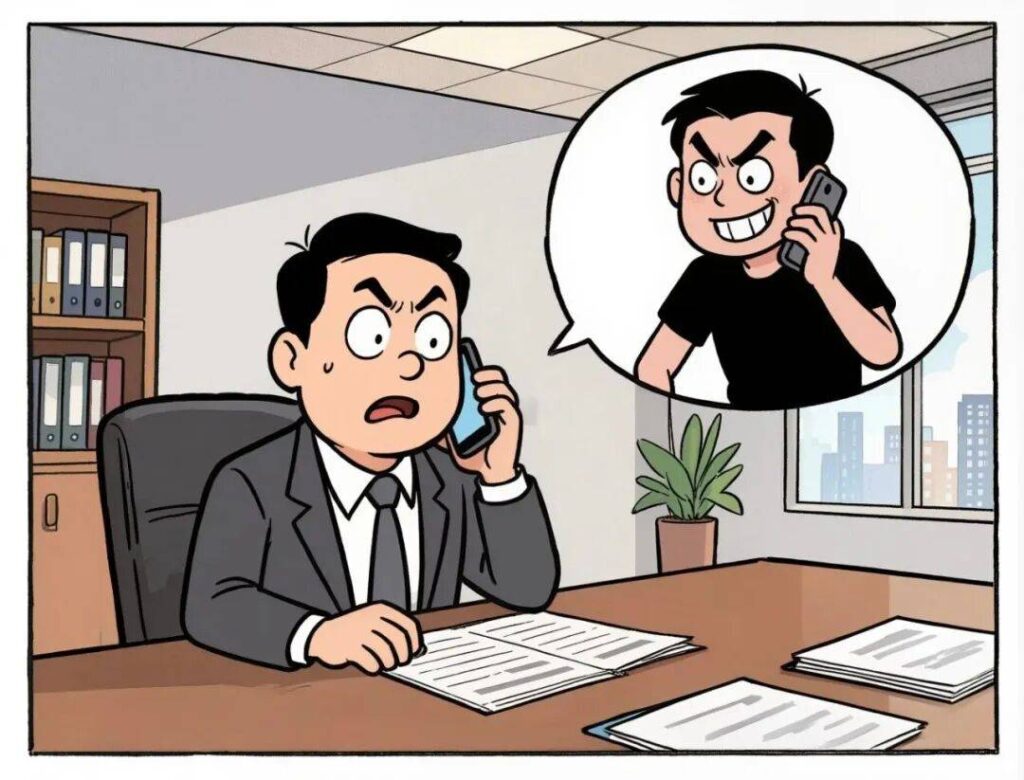
Such cases in China, however, as CMP has previously documented, are about more than just isolated bad actors. They reflect a media system in which the stringent controls imposed on the press by the Chinese Communist Party constantly enforce the understanding that the Party’s interests are paramount — and that within those unmovable lines, everything else is transactional. The power to expose and the power to make things disappear are goods to be bought and sold. Nowhere in this equation does the public interest factor in.
The scheme reported in the Procuratorate Daily story is only the latest variation on a longstanding practice known in China as “news extortion” (新闻敲诈), in which media operators — or those posing as them — threaten to publish damaging material about a company unless paid to stay silent (through what are often called “hush fees”). The practice has persisted for decades, enabled by a media environment in which the power to publish can function as a form of leverage.
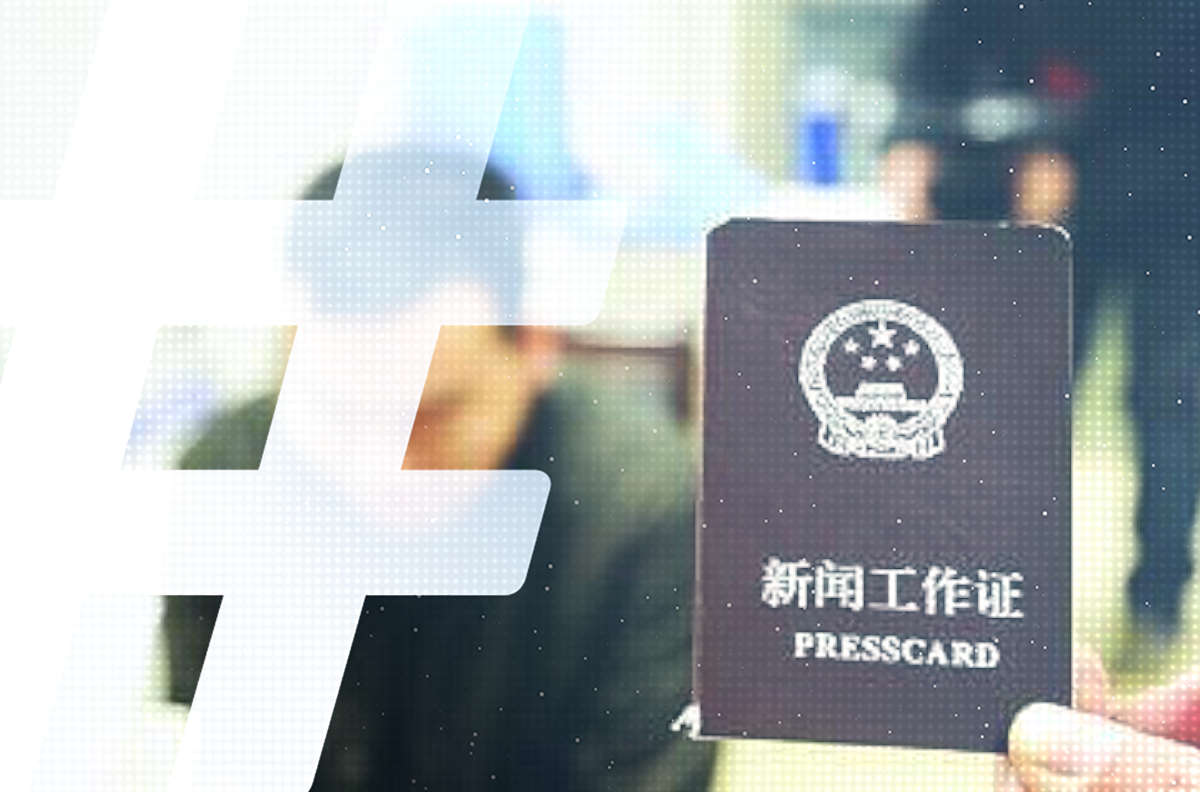
While state media and prosecutors routinely put the blame in such cases on “fake reporters” (假记者) and, more recently, online bad actors, it should be emphasized that some of the most prominent cases in the past have implicated journalists at state-run outlets — including, most notoriously a case nearly a quarter century ago in which four reporters from the country’s official Xinhua News Agency accepted cash and gold to suppress coverage of a deadly mine explosion.
In the intervening decades, the problem seems only to have worsened, and has now expanded alongside a booming industry of public relations service providers that pledge to make negative public opinion go away.
Less than two years ago, when China’s Supreme People’s Procuratorate made a cautionary release about the problem of news extortion that listed five classic cases, two of these involved credentialed journalists at news outlets, while another involved someone impersonating a reporter for a provincial-level state outlet — a reminder that the problem is closely linked to media power structures, and has never been confined to scammers on the internet and social media.
Naturally, as social media accounts have become central to information consumption in China, they are increasingly implicated in such cases. This release followed another five-point memo two years earlier from the Cyberspace Administration of China (CAC), which shuttered a string of social media accounts found to be extorting companies under the guise of negative reporting, part of what the CAC described as a sustained campaign to maintain “high pressure” against such conduct and protect a healthy business environment.
In the most recent case this year, the Procuratorate Daily report identified the account behind the scheme as “Cai Molai” (财某来), operated by three individuals surnamed Song, Wang, and Yang, who between February and May last year reportedly sent “negative information verification letters” (负面信息求证函) to more than 180 companies nationwide. Among the more outstanding instances, an unidentified high-tech company in Shandong province paid out 50,000 yuan, just under 7,000 dollars, to make the accusations disappear. The three were convicted in Zhejiang courts in March, the newspaper reported, and given jail sentences of up to 15 months.
In an environment where the role of media controls cannot be openly discussed, and where the very notion of public interest media has been defined as a political taboo, “news extortion” and related media crimes are routinely framed as an issue of bad actors exploiting corporate vulnerability to reputational damage. Chen Yu (陈宇), a partner at a Beijing law firm that has advised companies facing such risks, has written that companies must abandon the instinct to pay up, and instead must raise legal challenges. This, he writes, is the only way to “fundamentally eradicate ‘news extortion,’ this parasite on the body of the information society.”
This is perhaps a comfortingly simple notion: that this is about the eradication of a parasite from the body of news and information. But the deeper secret behind the persistence of news extortion is about the monopolization of political power, and its treatment within the context of journalism and reporting as a resource to be exchanged — not as a right to be guaranteed and protected.