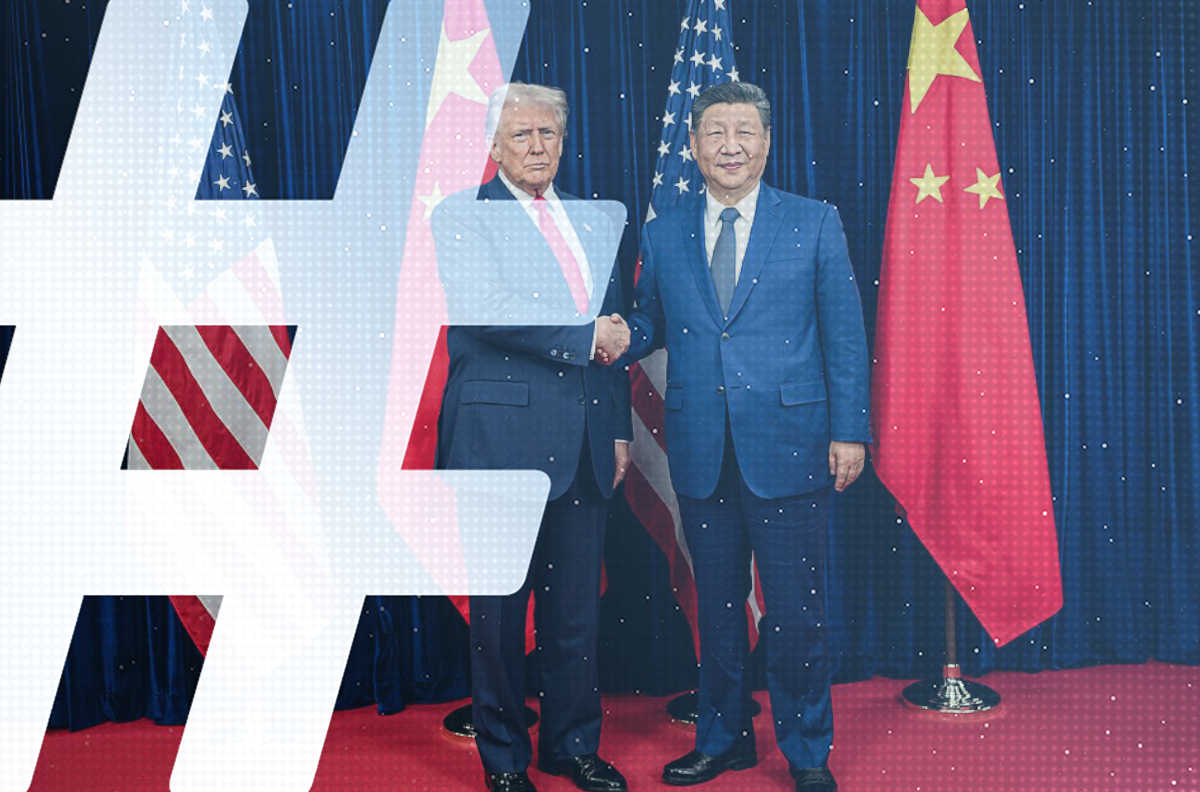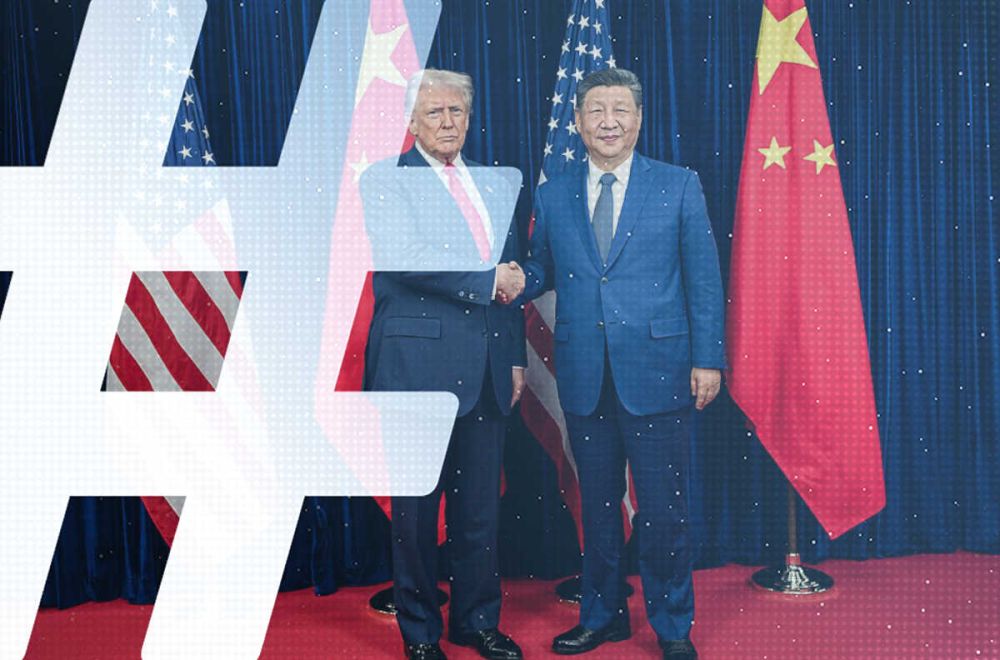
In global news today, and certainly in China news, there is just one story topping the headlines — the state visit of Donald Trump to Beijing, the first visit by a US president in nearly 10 years. Is that story splashed across the front page of the official newspaper of the ruling Chinese Communist Party? Of course not.
Trump arrived in China aboard Air Force One late yesterday, and yet the People’s Daily (人民日报) today occupies its prime space with niggling ideological points about Chinese-style modernization and combating “formalism” (形式主义), the party’s term to criticise bureaucratic box-ticking. It moves on to “red genes,” a buzzword about keeping to and cherishing the Party’s political tradition. The myopia continues on page two, where grain security, regional economic development in southwestern Yunnan province, and the use of AI technology at a port in the city of Ningbo are marched out for readers.
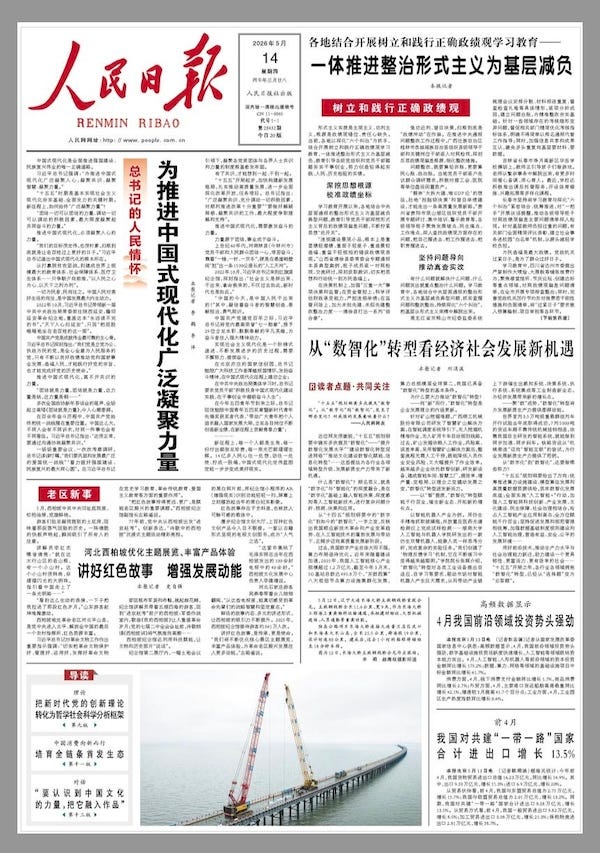
How do we explain such journalistic obtuseness on such an important news day, when so much is riding on what media across the world are calling “high-stakes talks”? The simplest answer is that the People’s Daily is not a newspaper, not in the way many of us generally understand newspapers or news outlets — as the “eyes and ears” of society, drawing public attention to the points that matter most. In the party’s own formulation, the People’s Daily is the “mouth and throat” of the leadership. And today, when diplomacy is live and the outcomes uncertain — and, yes, high-stakes — this official voice must speak cautiously.
Only on page three does the United States finally make its appearance. But there is no mention at all of Trump or his entourage. Instead, the focus is on “civic exchange” (民间交往) between the two countries, the more grassroots-level engagement that Chinese leaders like to call people-to-people exchange.
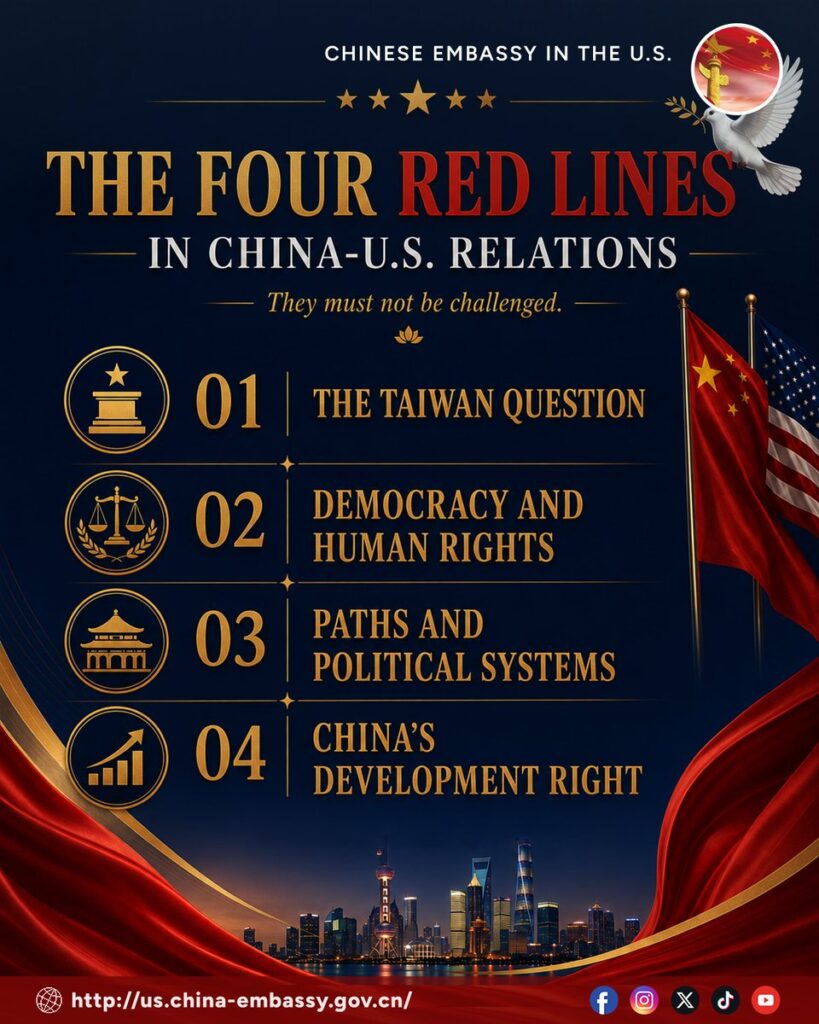
The piece of apparent second priority on this same page is a letter from Xie Feng (谢锋), China’s ambassador to the United States, written in measured tones to sketch the boundaries of what the CCP leadership hopes these talks will address. The letter refers to these as the “four red lines” (四条红线) in the relationship — meaning “the Taiwan question,” democracy and human rights, China’s development rights, and fundamental differences in political systems.
These cautions, which state media and the Ministry of Foreign Affairs have pressed in recent days, are not called “red lines” in the headline or high up in the piece, another sign of the cautious but firm posture. “With sails raised high to break great waves, we climb new peaks to open new horizons,” Xie Feng writes lyrically at the finish, before concluding with a basketful of official diplomatic buzzwords. “We look forward, under the strategic guidance of the two heads of state, to exploring the right path of mutual respect, peaceful coexistence, and win-win cooperation.”
Next up on the page is the obligatory foreign voice. Not surprisingly, it is the familiar figure of Robert Lawrence Kuhn, an American commentator who regularly features on Chinese state media, closely mirroring CCP talking points. Kuhn strikes a carefully optimistic note, expressing confidence in the summit while calling for “practical expectations” (务实预期). “I have an optimistic attitude toward this meeting of heads of state,” Kuhn says, hitting exactly the note China’s leaders are certainly hoping for today. “I am full of confidence.”
On the next page, the People’s Daily returns to myopic form. Page four offers a teachers’ forum on the spirit of education, a Xi Jinping-inflected essay urging young people to create new achievements at their respective posts, and a piece on grassroots disaster preparedness across China’s provinces. There is also a mention of the WorldSkills Competition (WSC), coming to Shanghai in a distant four months.
The paper is done talking about America. It appears nowhere in the pages that follow, not even on the commentary and international pages.
The front page of tomorrow’s edition will surely be an explosion of photographs, with stiff handshakes and strolls down the red carpet. Very probably, a readout on Trump’s visit will appear in the “newspaper eye” (报眼), that position of pride to the right of the People’s Daily masthead. There may be further signs, somewhere in those pages, of how China wishes to frame the meeting, and its hoped-for outcomes.
Today? The mouthpiece would rather not say.