In January 2026, Chinese Foreign Ministry spokesperson Mao Ning stated that “the Arctic concerns the overall interests of the international community” (北极涉及国际社会整体利益). The comment came as US President Donald Trump renewed threats to acquire Greenland, citing the need to prevent Chinese and Russian control of the Arctic. Responding to reporters, Mao added that China’s Arctic activities “aim to promote peace, stability and sustainable development” and “are in accordance with international law” (旨在促进北极和平、稳定和可持续发展,符合国际法). She concluded pointedly: “The US should not pursue its own interests by using other countries as a pretext.” The exchange underscored how the Polar Silk Road has become entangled with great power competition over strategic territory and critical minerals, particularly Greenland’s rare earth deposits.
The concept of the Polar Silk Road emerged gradually in China between 2015 and 2018. Preliminary references appeared in China-Russia bilateral statements from 2015-2016, which mentioned “strengthening cooperation in the development and utilization of the Northern Sea Route” (加强北方海航道开发利用合作). In June 2017, China’s National Development and Reform Commission introduced the precursor concept of an “Arctic Blue Economic Passage” (北极蓝色经济通道) in its vision document for a maritime Belt and Road.
Xi Jinping (习近平) formally launched the term on the international stage on July 4, 2017, during a meeting with Russian Prime Minister Dmitry Medvedev in Moscow, proposing to “jointly build a Silk Road on the ice” (共同打造冰上丝绸之路). He reiterated the concept in November 2017 when Medvedev visited Beijing, linking it explicitly to Belt and Road coordination with Russia’s Eurasian Economic Union, a grouping including Kazakhstan, Kyrgyzstan, Armenia, and Belarus that has been a geopolitical success for Russia but largely an economic failure. In December 2017, Russian President Vladimir Putin reciprocated by inviting Chinese participation in building Arctic transportation corridors. That same month, the Yamal Liquefied Natural Gas project — a 27 billion dollar joint venture in which Chinese companies hold stakes — began production, becoming the Polar Silk Road’s first tangible achievement.
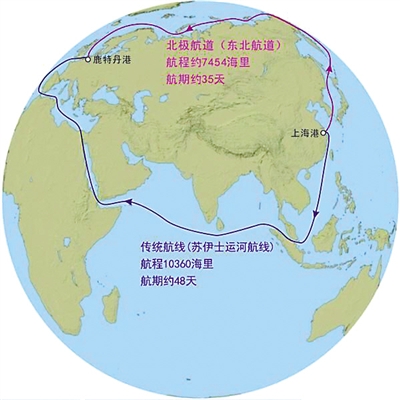
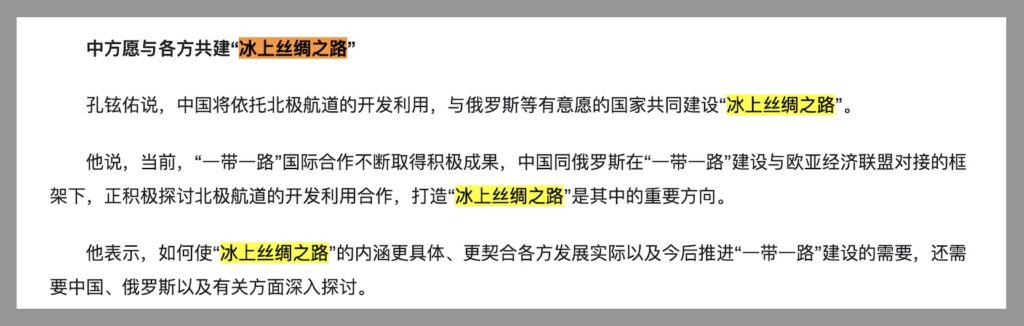
The Polar Silk Road received its authoritative definition on January 26, 2018, when China’s State Council Information Office released China’s Arctic Policy (中国的北极政策), the country’s first comprehensive Arctic white paper. The document stated: “China hopes to work with all parties to build a ‘Polar Silk Road’ through developing the Arctic shipping routes” (中国愿依托北极航道的开发利用,与各方共建冰上丝绸之路). It positioned China as a “near-Arctic state” (近北极国家) and “important stakeholder” in Arctic affairs, articulating participation principles of “respect, cooperation, win-win results, and sustainability” (尊重/合作/共赢/可持续). Foreign Ministry Vice Minister Kong Xuanyou (孔铉佑) explained at the white paper’s release that while the concept’s specific content required further Sino-Russian consultation, it centered on developing shipping routes that could reduce distances to Europe by 25-55 percent compared to traditional southern passages.
People’s Daily coverage in early 2018 emphasized economic opportunity and climate research cooperation. Another January 2018 article called “‘Polar Silk Road’ Attracts World Attention” (冰上丝绸之路吸引世界目光) quoted Shanghai International Studies Institute scholar Yang Jian (杨剑), who noted that “opening Arctic routes will promote overall growth of the circumpolar economic zone” (北极航道开通将促进环北极经济圈的整体增长), highlighting China’s potential contributions to regional infrastructure and digital connectivity.
International responses at that time ranged from cautious interest to outright skepticism. Iceland and Finland initially explored connections between the Polar Silk Road and their Arctic infrastructure plans, and the official Xinhua News Agency reporting in early 2018 that Arctic Circle Assembly Chairman and former Icelandic President Ólafur Ragnar Grímsson stated he looked forward to China expanding Sino-Icelandic scientific cooperation into areas such as glaciology and new energy.”
However, Western political players, security experts and think tanks quickly raised concerns.
A Center for Strategic and International Studies report in February 2018 by Jane Nakano and William Li noted that while China emphasized “peaceful utilization” of the Arctic, its policy was driven by energy, commercial, and geopolitical considerations. On the geopolitical side, the authors stressed that “each comes with a caveat,” noting that Arctic shipping routes could allow China to bypass routes dominated by the US Navy and traditional chokepoints such as the Suez Canal and the Strait of Malacca. It remained unclear, they said, whether Beijing would commit major resources to building Arctic infrastructure comparable to its Belt and Road projects elsewhere — making the long-term strategic impact of the so-called Polar Silk Road uncertain. “The Arctic offers abundant resources, as well as commercial and geopolitical incentives, suggesting that the region could become a Chinese development hot spot,” they concluded. “It may, however, be only a small piece of the larger geopolitical narrative China is pursuing as it seeks to be recognized as a responsible major power with growing global reach at a time when the United States is backing away from international commitments.”
Nordic enthusiasm cooled considerably as geopolitical tensions intensified. In September 2018, a Chinese company was sidelined from involvement in upgrades to airports in Greenland as its interest in the territory prompted controversy in Denmark. A report from Arctic Today noted that “[the] Greenlandic Parliament’s pro-Danish decision has defused possible international controversy between the US, Denmark, and Greenland over Chinese investment in an island closely guarded by the US military thanks to its air base at Thule.” Denmark and the United States pressured Greenland to reject Chinese investment proposals, particularly in rare earth mining, as concerns grew over rising economic diplomacy from China.
Awareness of the issue was also growing in Canada. A joint paper in December 2018 from Canada’s School of Public Policy and the Canadian Global Affairs Institute, noted that “[managed] incorrectly, Chinese activity might leave the Asian power with a degree of de facto control over the Arctic, damaging Canadian sovereignty and imperiling the country’s ability to manage this increasingly important region on Canadian terms.”
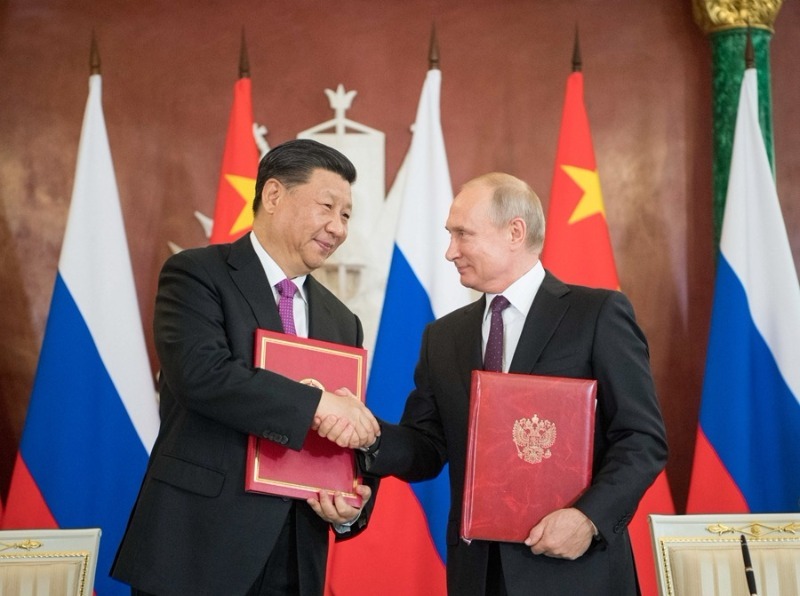
Despite growing reticence in the West, China continued to push the concept of the “Polar Silk Road.” Meeting with Finnish President Sauli Niinistö at the Great Hall of the People in Beijing in January 2019, Xi Jinping was quoted by Xinhua as saying that “the two sides should make full use of the convenience brought by China–Europe freight trains and other mechanisms to promote two-way trade, carry out trilateral cooperation, and explore opportunities for cooperation in projects such as the development of Arctic shipping routes, jointly building a ‘Polar Silk Road’ and promoting connectivity across the Eurasian continent.” A June 2019 report from the government-run China Daily newspaper bore the headline, over an image of Xi Jinping and Vladimir Putin shaking hands and smiling: “China and Russia Deepen Arctic Cooperation — the ‘Polar Silk Road’ Lets the World Share the Benefits.”
Much of the coverage lingered on the benefits of shortened trade routes that might benefit both partners. A report in Hong Kong’s Chinese government-linked CRNTT in November 2019 reported that the Polar Silk Road as pursued by the partners would “not only provide Moscow with a new commercial frontier, but will also give Beijing a relatively independent trade route outside of the Suez Canal and the Strait of Malacca, while at the same time directly linking China with geographically distant economies.”
Beyond growing concerns in the West, however, Russia’s 2022 invasion of Ukraine was a blow to China’s ambitions, effectively suspending practical Polar Silk Road cooperation between the two countries. Western sanctions cut off Chinese access to Arctic projects through Russian partnerships, while Arctic Council cooperation froze.
State media coverage and official academic scholarship in China have emphasized pushback against the country’s polar ambitions as a matter of Western prejudice and misunderstanding. In an article for a journal published by Ocean University of China in June 2024, scholar Gao Fei (高飞) noted “significant shifts in the geopolitical landscape of the Arctic” during the Biden Administration, and said that China’s growing involvement in the region had been labeled in the West as “Polar Orientalism.” In fact, this is a complete misreading of the debate in Europe, where some commentators have noted and criticized distortions and fears over growing Polar engagement by “the East.” The term “polar Orientalism,” in fact, was introduced by Mark Nuttall and Klaus Dodds in their 2019 book The Arctic: What Everyone Needs to Know. In January 2025, Chinese media reported that US and Danish officials had lobbied against selling Greenland’s Tanbreez rare earth mine to Chinese companies, with the eventual American buyer paying “far less than Chinese companies offered” (远低于中企的出价), according to a report from Shanghai-based Observer Network (观察者网) that was highly critical of the actions of the US.
The geopolitical tug-of-war in January 2026 over US interest in Greenland and China’s Arctic ambitions prompted Chinese state media to emphasize another official phrase: the “Arctic China Threat Theory” (北极中国威胁论). A January 2026 Global Times editorial accused Western media of hyping the concept to “confuse the public” (混淆视听), claiming that portrayals of China’s Arctic activities as military threats represented “Cold War thinking and hegemonic logic” (冷战思维和霸权逻辑). Employing typical official rhetoric, the commentary characterized China as a “supporter of multilateral Arctic governance” (北极地区多边治理的支持者) and a “responsible major power” (负责任大国) while positioning US concerns about Chinese Arctic presence as diversionary tactics serving American strategic interests in Greenland.
