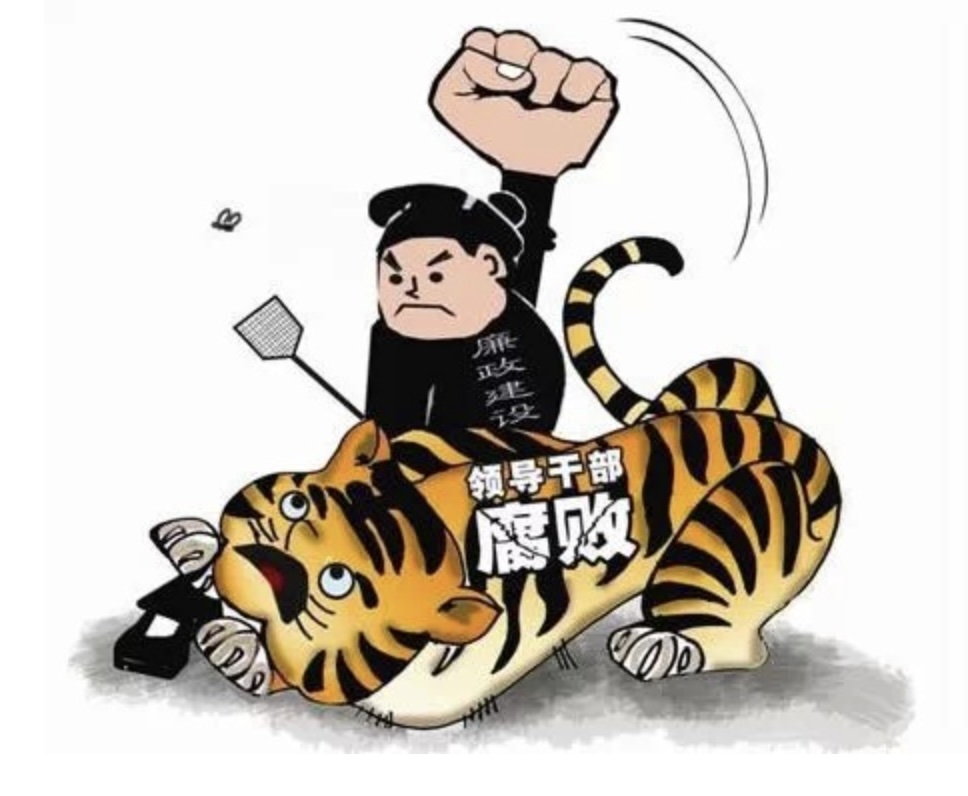
From the early 2000s through to the outset of the 2010s, the principle of “supervision by public opinion” (舆论监督), or yulun jiandu, gave more enterprising journalists cover to pursue critical reporting — even investigative reporting — with the idea that media reporting could push forward social and institutional progress. In China’s highly controlled journalism climate today, where hard news is virtually impossible and critical reporting is most often off limits, media that do pursue supervision-style reporting generally turn to smaller topics beneath the level of public power, a practice long described as “swatting at flies and letting the tigers run free.”
But a strongly-worded commentary last week in Chinese Social Sciences Today (中国社会科学报), a daily newspaper published by the Chinese Academy of Social Sciences (CASS), the flagship academic research institution of China’s Party-state, took media to task for meddling in small matters — suggesting they should not ” interfere in academic affairs,” but instead should set their sights higher. “Supervision by public opinion should be directed primarily at public power, public affairs, and public order,” said the commentary, which at no point made the root incident of the dispute in question clear. “Its starting point should be positive and constructive, with emphasis on those cases that seriously violate major Party and state policies, or involve major problems in social life.”
The Chinese Social Sciences Today article clearly illustrated the bind facing Chinese journalists who attempt serious reporting in Xi Jinping’s China. On the one hand, strict controls on the press mean they are unable to touch the tigers that matter. On the other hand, they are told to avoid the sort of critical coverage, such as investigations into local or corporate malfeasance, that can upset economic development or social order.
Twelve years ago, in what state media reported as a tough turn on corruption, Xi Jinping declared that flies and tigers must be pursued all at once. At no time in the reform era, however, has it been more difficult for China’s media to pursue any story, big or small.
Despite the pretense in the April 21 commentary of keeping media out of academic affairs, it is important to bear in mind that CASS itself is a powerful state institution — a tiger in its own right. The commentary was attributed only to “a commentator from this paper” (本报评论员), suggesting this was a critical view representing at least the official position of a paper published by CASS, and likely the consensus among senior CASS leaders.
The omission of any mention of the case involved seemed to suggest that readers within the CASS leadership and community would already be familiar with what the commentary referred to only as “disputes over academic viewpoints” (学术观点争论).
In reference to such disputes, the commentary insisted that media should not deploy their “soft power” (软权力) to pressure scholars, and that in-depth reporting — or what it dismissively referred to as “so-called in-depth reporting” (所谓的“深度报道”) — cannot substitute for serious academic criticism. Proper media oversight, it said, using the Chinese phrase for “supervision by public opinion,” should be “directed primarily at public power, public affairs, and public order.” It should not, it said, be directed at scholarly debate.
In a further enticing hint about the incident at the center, the commentary warned that courts in China had already ruled against media outlets that “publicly demean scholars” (公开贬低学者), determining that such conduct amounts to reputational infringement. The piece closed by suggesting that media must “keep to their boundaries” (恪守边界), ensuring that academic criticism is a matter of objectivity and rationality, not driven by “social sentiment.”
For journalists in China today, there are boundaries above and boundaries below, and boundaries to the left and the right. For the country’s tigers and flies alike, “supervision by public opinion” is constantly suspended — and the horizons are boundless.