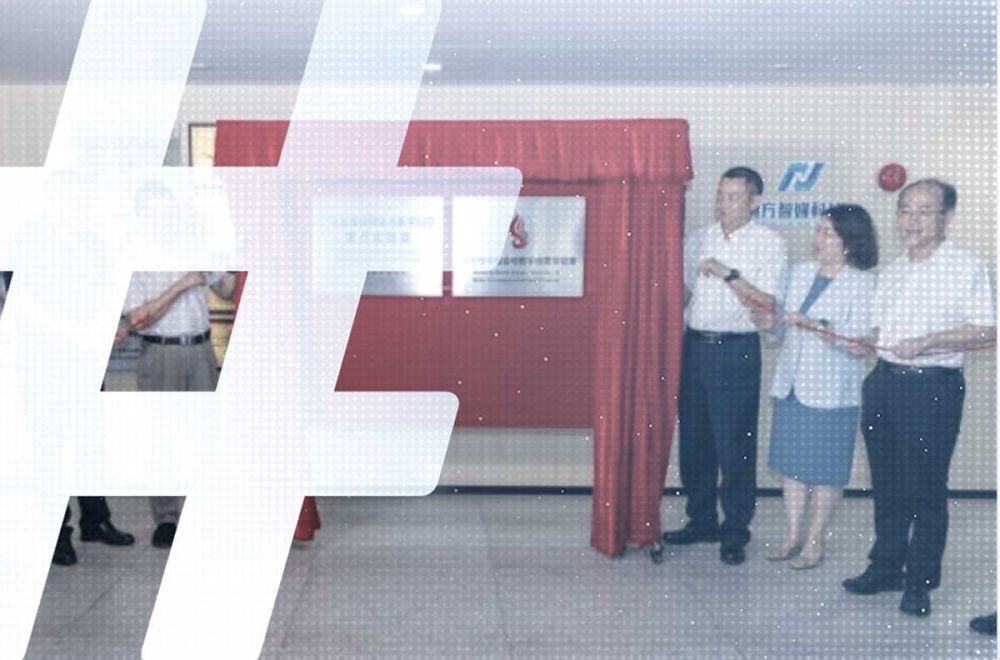
With the unveiling of a pair of glistening signs on May 29, Nanfang Media Group (南方报业传媒集团) formally launched a joint laboratory with Guangdong University of Technology focused on AI-driven media, digital creativity, and content safety.
The lab, a joint venture between a major provincial media group and a technical university, is a notable example of the horizontal cooperation between media organizations, academic institutions, and technology companies that the China Media Project has referred to as Centralization+ — a push over the past decade by the CCP to reinvent external propaganda by leveraging local and regional media capacity alongside central resources and coordination.
The Nanfang group, as it is widely known, built a reputation for strong, freewheeling journalism through its newspapers and magazines — including the Southern Metropolis Daily (南方都市報) and Southern Weekly (南方週末) — from the early 2000s. That reputation made the 2013 Southern Weekly protests, when staff openly pushed back against encroaching censorship, a watershed moment.
According to a report on the cooperation by the Nanfang Group, the lab aims to push forward AI-driven targeting of news and information content toward audiences — though it was not clear exactly what this means in practice. It also said the deal would encourage the building of shared technical infrastructure to support media modernization across Guangdong’s provincial and local outlets, a goal that is in line with Xi Jinping’s policy on bringing the “mainstream” press system (meaning here controlled by the CCP) into the modern era.
Liu Qiyu (刘启宇), the group’s party secretary and president, spoke at the launch. Like most bosses of major CCP media, Liu has been explicit about his group’s mission as aligned with the interests of the Party-state. In an April 2025 speech, he argued, echoing the leadership, that the group must operate “under the precondition of grasping the correct political direction, public opinion guidance, and the correct value orientation.” In this context, “public opinion guidance” (舆论导向) is a term, essentially a broad application of censorship and propaganda, that dates back to the aftermath of the 1989 Tiananmen crackdown, and consolidated the conviction that the press must work to steer public opinion in the Party’s favor and thus preserve the regime.
Senior officials from the Guangdong provincial propaganda office, the provincial cyberspace authority, and the provincial science and technology department attended the May 29 launch, alongside representatives from technology firms including Tencent, Huawei, and Alibaba.