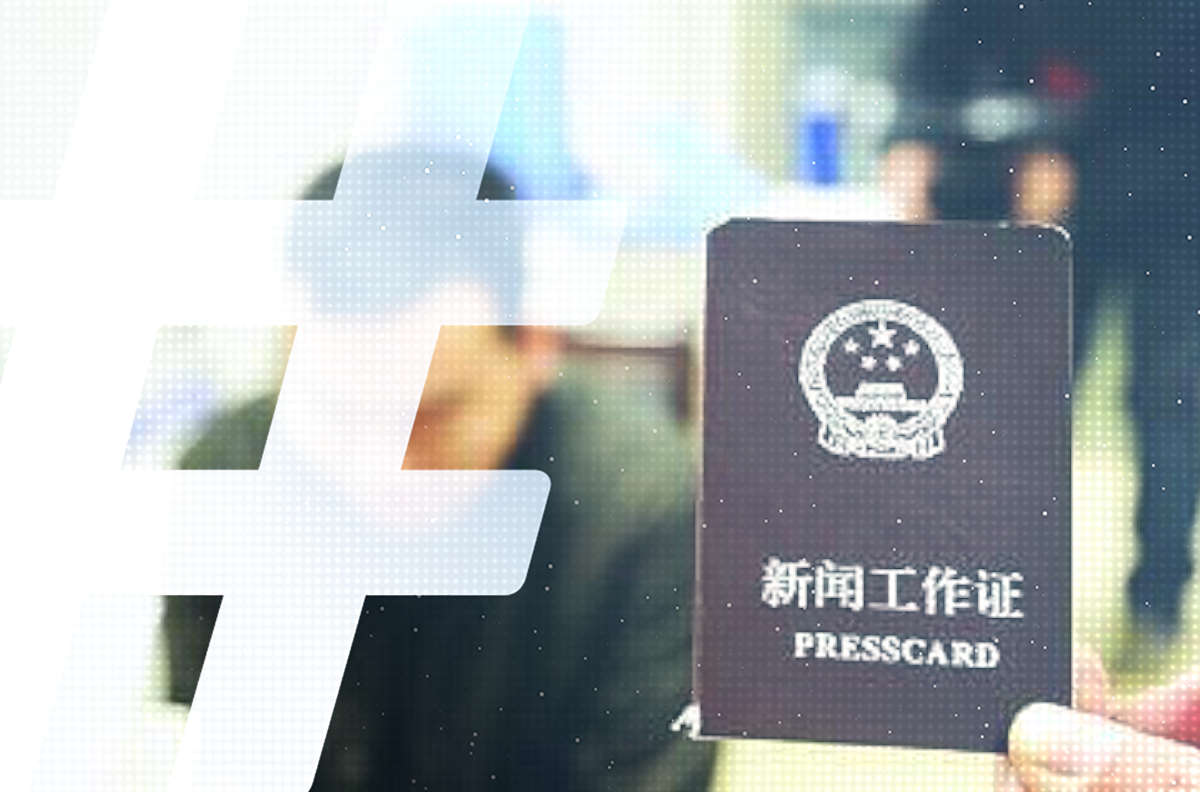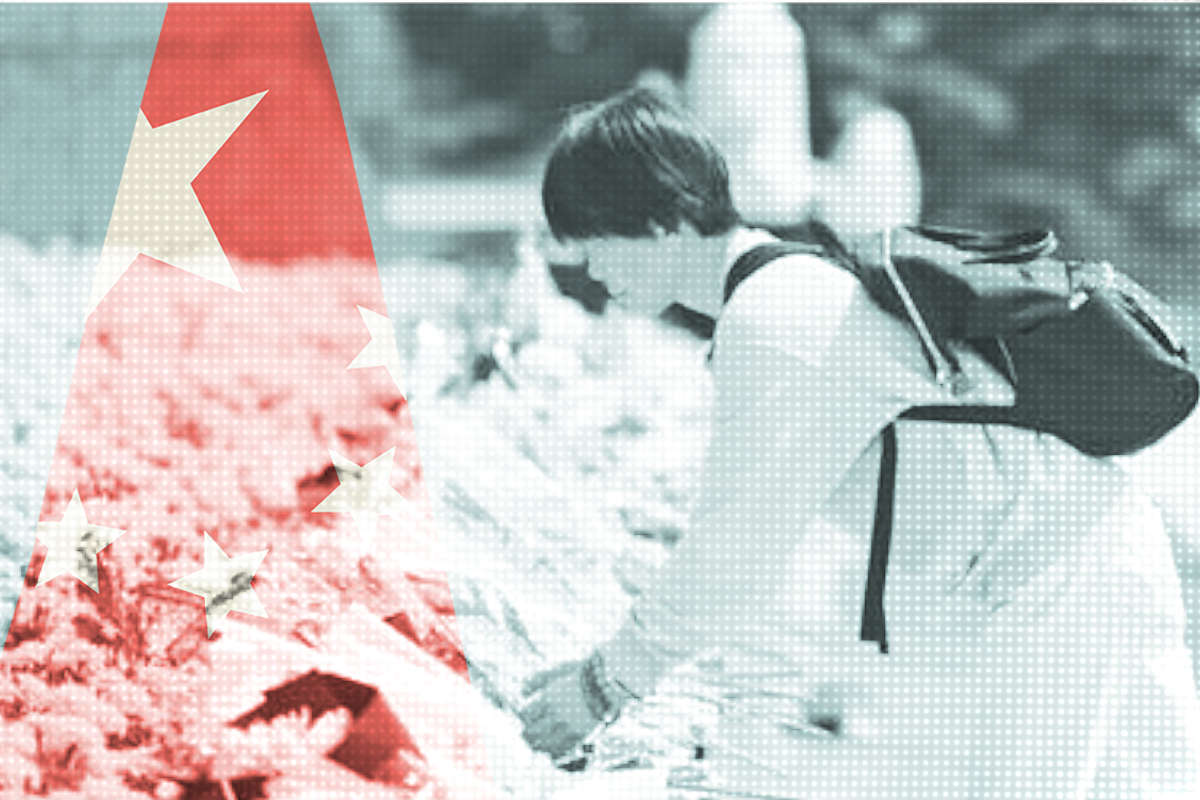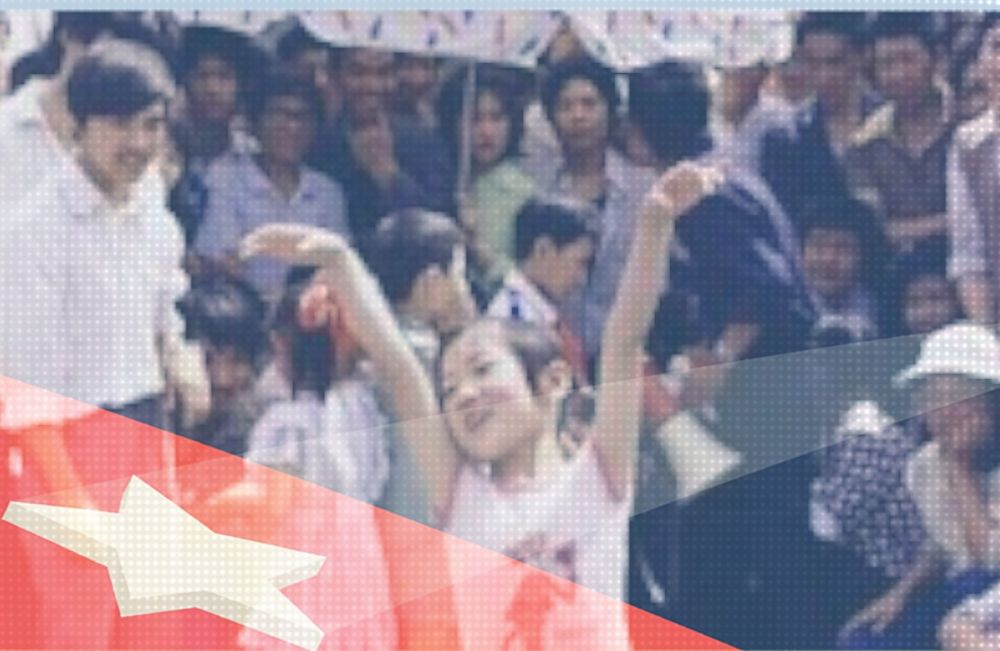
Today, June 1, is International Children’s Day, a holiday rooted in the Soviet-era Eastern Bloc and observed since 1950 across communist and non-aligned countries as a celebration — at least nominally — of childhood. But this week also marks the 37th anniversary of the brutal crackdown on large-scale protests for political reform in China. And among the many victims, estimated in the hundreds, were children and teenagers, including 17-year-old Jiang Jielian (蒋捷连). One of the first confirmed dead, the student was shot on the night of June 3, 1989. His mother, retired university professor Ding Zilin (丁子霖), went on to found the Tiananmen Mothers (天安门母亲), an advocacy group representing the parents and family members of those killed.
As June 1 arrived in 1989, Tiananmen Square was the place to celebrate the day. Cognizant of the holiday as signaling what sort of future the nation’s children would inherit, the protesting students organized their own Children’s Day celebrations, allowing children to climb the square’s Monument to the People’s Heroes and receive unofficial certificates marking the occasion. UPI correspondent Jervina Lao reported at the time that “thousands of children and their parents marked International Children’s Day Thursday by visiting students occupying Tiananmen Square, undeterred by martial law and the cancellation of official observances.”
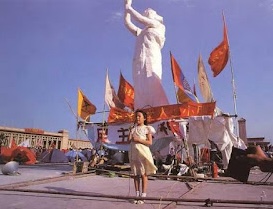
The deep sensitivity surrounding the juxtaposition of International Children’s Day and June Fourth means that for the Chinese Communist Party, this will be a week of profound and insistent amnesia. And part of that act of erasure is the noisy affirmation of the party’s power over the future of China’s youth.
This is the context needed to understand the most prominent piece on the front page of the CCP’s official newspaper today — a letter in which China’s leader, Xi Jinping, honors Children’s Day by urging the young to “inherit and pass on red genes” (传承红色基因), dedicating themselves to the future of the Party. “We hope you will hold high the Pioneer flag and follow the Party,” Xi wrote in the People’s Daily, “inherit and pass on red genes, grow in knowledge and ability, temper your will and character, be red children of the Party and the people, and run the historical relay race well on the new journey.”
The term “red genes” (红色基因) refers to the revolutionary spirit and history of the CCP as a kind of political and cultural inheritance. Though the phrase emerged around 2008, it has become a signature of Xi Jinping’s leadership, with all but two among hundreds of headline appearances in the People’s Daily occurring after Xi’s rise to power.
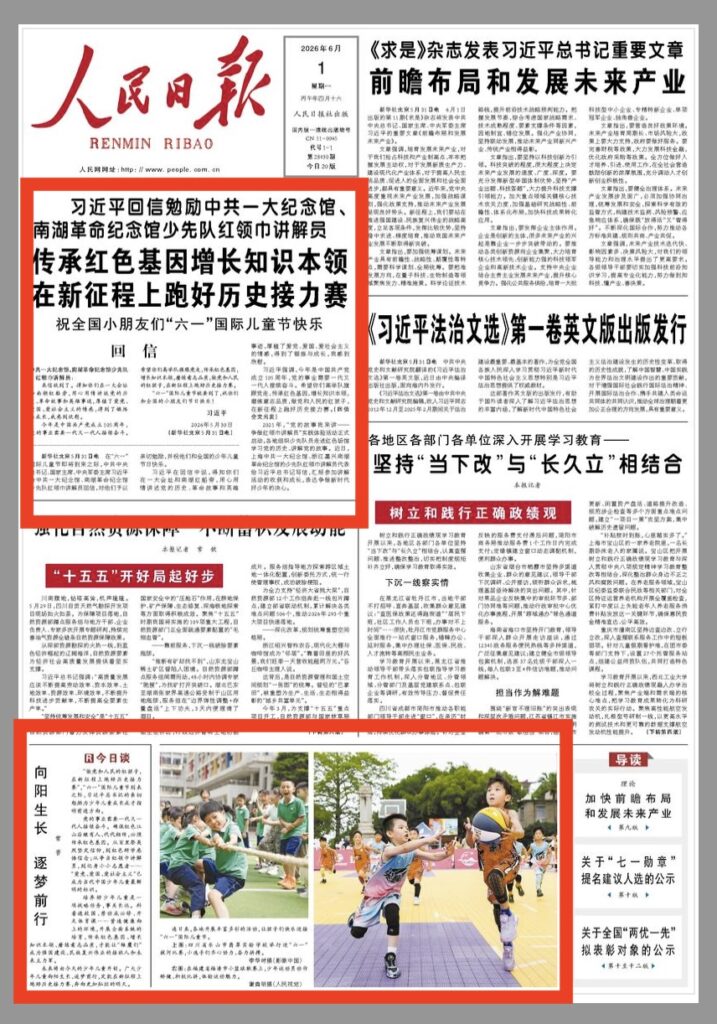
Xi’s letter was addressed to child docents from the Young Pioneers (少先队), the CCP’s mass organization for children ages six to fourteen. Under a program introduced in 2021 jointly by three core CCP bodies, these children have been trained to recite party history to visitors at CCP historical sites across the country, with the stated goal of ensuring “red genes are passed down generation to generation” (确保红色基因代代相传).
The sentimentalizing of the party’s power as “red genes” and a “red heritage” is echoed today across party-state media. Shanghai’s official Liberation Daily quotes one child recipient of Xi’s letter calling it “the greatest Children’s Day gift I have ever received.” Across official outlets, that messaging is interwoven with more traditional sentiment about the innocence of childhood. A piece from Xinhua News Agency reviews the games of childhood before the advent of the internet — hopscotch, tug-of-war, tag — accompanied by watercolor illustrations evoking a simpler time.
This projection of innocence around the quaint notion of “red genes” and the celebration of the carefree childhood is meant to reinforce another kind of innocence, the idea that the party is blameless in the murder of innocent young students and other peaceful protesters 37 years ago this week. There will be no coverage of the June Fourth anniversary in China’s domestic media, and acts of furtive commemoration in the online space will be obliterated in real time by the world’s most sophisticated system of censorship and public opinion manipulation — born in large part out of the tragedy of 1989.
Nowhere in the world is safe from the leadership’s efforts to enforce silence and efface all efforts to remember. Yesterday, Wang Dan (王丹), a student leader of the 1989 Tiananmen protests, reported on Instagram that the entrance to the June Fourth Museum in New York, which commemorates the victims of the crackdown, had been defaced with graffiti. “On the eve of the June Fourth commemoration,” he wrote, “an incident like this requires little imagination as to motive.”
However the CCP may choose to define its DNA, the senseless murder of students in Beijing in the late evening of June 3 and the early morning of June 4 cannot be forgotten as a part of its legacy. Crucial to the act of remembering is the refusal to accept the language of the leadership at face value — including today’s sentimental exchange on “red genes.” The party’s violence against language has always been core to its violence against its own people. “The regime’s tactics of amnesia began right after the massacre with language manipulation,” Perry Link observed in his 2004 essay on the Tiananmen Mothers. “The first step was truth-inversion: army units using tanks and machine guns to slaughter unarmed citizens were officially described the following day as ‘heroes of the people’ controlling ‘rioters’ and pacifying ‘dregs of society.'”
This week, as you think of the children, dare to read between the lines. But most of all — dare to remember.