In its 2025 social responsibility report, an annual exercise required of all Chinese media outlets, China Daily lists external communication as one of four defined categories of its broader political responsibility. How is China’s flagship English-language state paper retooling that strategic priority, which the leadership also calls “external propaganda,” for an AI era?
In a recent piece for Qiushi (求是), the Chinese Communist Party’s flagship theoretical journal, China Daily president and editor-in-chief Qu Yingpu (曲莹璞) writes that artificial intelligence is shifting from a tool that helps state media better parse and understand global audiences to one that can directly do the work of reaching those audiences. Qu describes this as AI evolving from a “cognitive tool” (认知工具) to an “action tool” (行动工具).
What does that “action tool” role look like in practice? China Daily‘s 2025 social responsibility report provides one example.
In November 2025, Japanese Prime Minister Sanae Takaichi told the National Diet, the country’s legislature, that Japan would face an “existential crisis” if China attacked Taiwan, triggering a diplomatic feud between the two countries. In response, China Daily‘s in-house AI Inspiration Studio (AI灵感工作室) produced a rapid-response commentary video reacting to Japan’s defense buildup, which Chinese state media have in recent months framed as a revival of “neo-militarism” (新型军国主义). The video, titled “The Ghost of Militarism Will Only Lure Japan Into the Abyss” (军国主义幽灵只会把日本诱入深渊), combined political cartoon animation with AI-generated imagery, a format the report calls “current-affairs cartoon plus AI creativity” (时政漫画+AI创意). The report claims the video reached more than seventy million views.
The AI studio’s objective, it appears, is to create quick turnaround rapid responses to breaking global flashpoints and discussions. That responsiveness is what Qu means when he talks about “action tools.” And this approach has been evident in other cases this year.
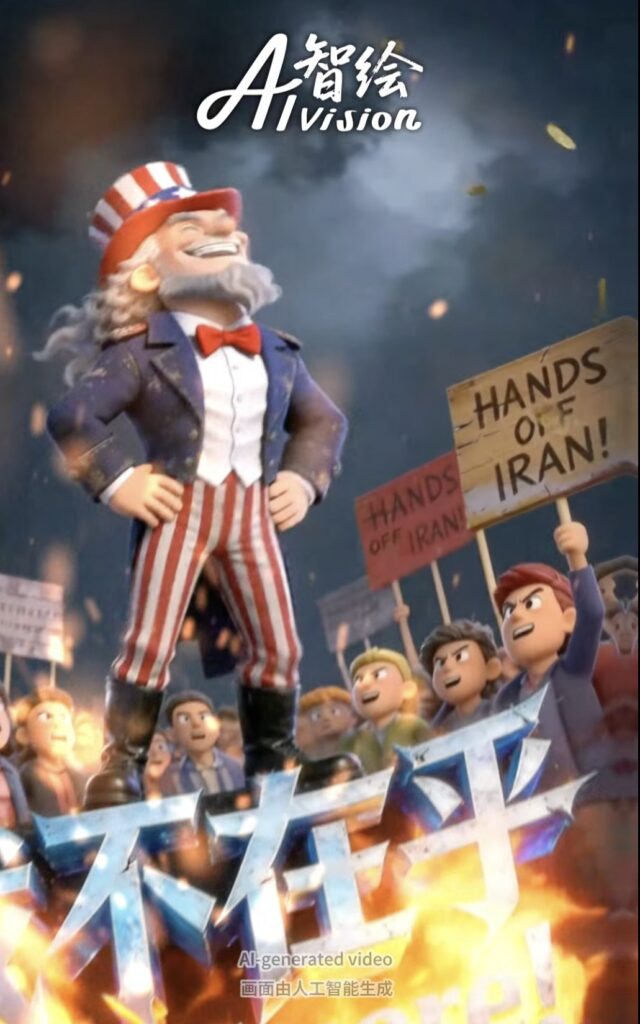
On January 23, 2026, the White House posted an AI-generated image of Trump walking alongside a penguin in Greenland, captioned “Embrace the Penguin,” reigniting the dispute over Trump’s bid to acquire the Danish territory (where there are no penguins). China Daily responded the same day with an AI-generated video called “I Don’t Care” and featuring an animated Uncle Sam, grinning and cackling, set to a song declaring “I don’t care what you say!” The video goes beyond Greenland, invoking other Trump-era grievances including global tariffs and threats against Iran.
Qu’s essay frames this shift in AI application within three pillars of institutional overhaul. The first pillar, “deep integration” (深度融合), calls for merging China Daily‘s newspaper, website, and social media operations into a single production system, following the general pattern of media transition pushed across China’s state-run media under Xi Jinping. “Integration,” or “convergence,” has been a buzzword in China’s state media system since around 2014, and this decade-long push toward digital transformation has more recently become part of a national strategy to leverage provinces and cities in service of external propaganda, what CMP has termed “Centralization+.”
The second pillar, “AI-driven operations” (数智驱动), is about applying AI directly across this digital ecosystem. Qu mentions specific new initiatives and experiments, including an AI-generated persona named Yuanxi (元曦), which he calls a “digital employee” (数字员工), along with AI agents (智能体), digital museums (数字博物馆), and virtual exhibition halls (云展厅). All of these aim explicitly, he says, to reach broader and more diverse global audiences.
China Daily has already moved on the AI-agent front specifically, contracting Tencent Cloud in 2024 to build what the companies call a “communication agent” (传播智能体) system for automating news production and content review. Other central state media have pursued similar tools under their own branding. Xinhua News Agency launched an AI current-affairs agent called “Xinhua Yudian” (新华语典), less than two weeks ago.
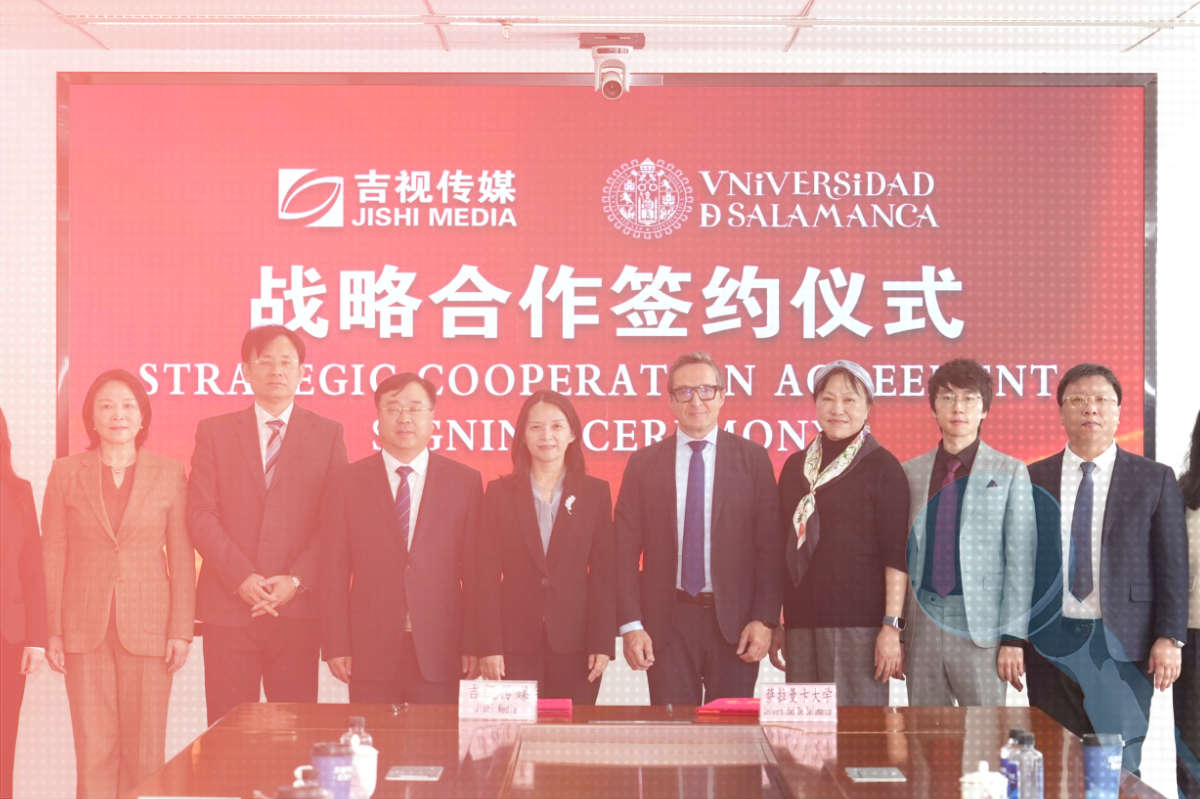
The third pillar, “ecosystem operation” (生态运营), is about building partnerships with government ministries, think tanks, and universities abroad. China Daily has already built ties in this mold. It leads the South and Southeast Asian Media Network, a state-backed media coalition launched in January 2024 in collaboration with a provincial-level international communication center, or ICC, in Yunnan. According to state media, that network has drawn more than ninety overseas and domestic media organizations pledging to cooperate on content-sharing and resource pooling.
This network, one among many, is an example of how state media like China Daily work at the leadership’s direction to build broader, global networks of cooperation, networks that can then be used to distribute the products of the “action tool” approach Qu describes. This key strategy of ecosystem creation and operation globally is being applied across China’s vast and growing external propaganda infrastructure. In an analysis last month, CMP’s Lingua Sinica looked at how the ICC in Chongqing was prioritizing the building of “friends” networks internationally, including with major influencers, in its hiring of talent.
AI-Enabled Rapid Response
Qu’s piece in Qiushi makes clear that what AI is now making possible is the rapid production of video and other content in response to international news stories, with the potential to cater and cadence media products so that they can have maximum impact. Even with the power of AI, however, it is worth pausing to understand how difficult successful messaging can be — particularly as it emerges from rigid political and media cultures like that in China.
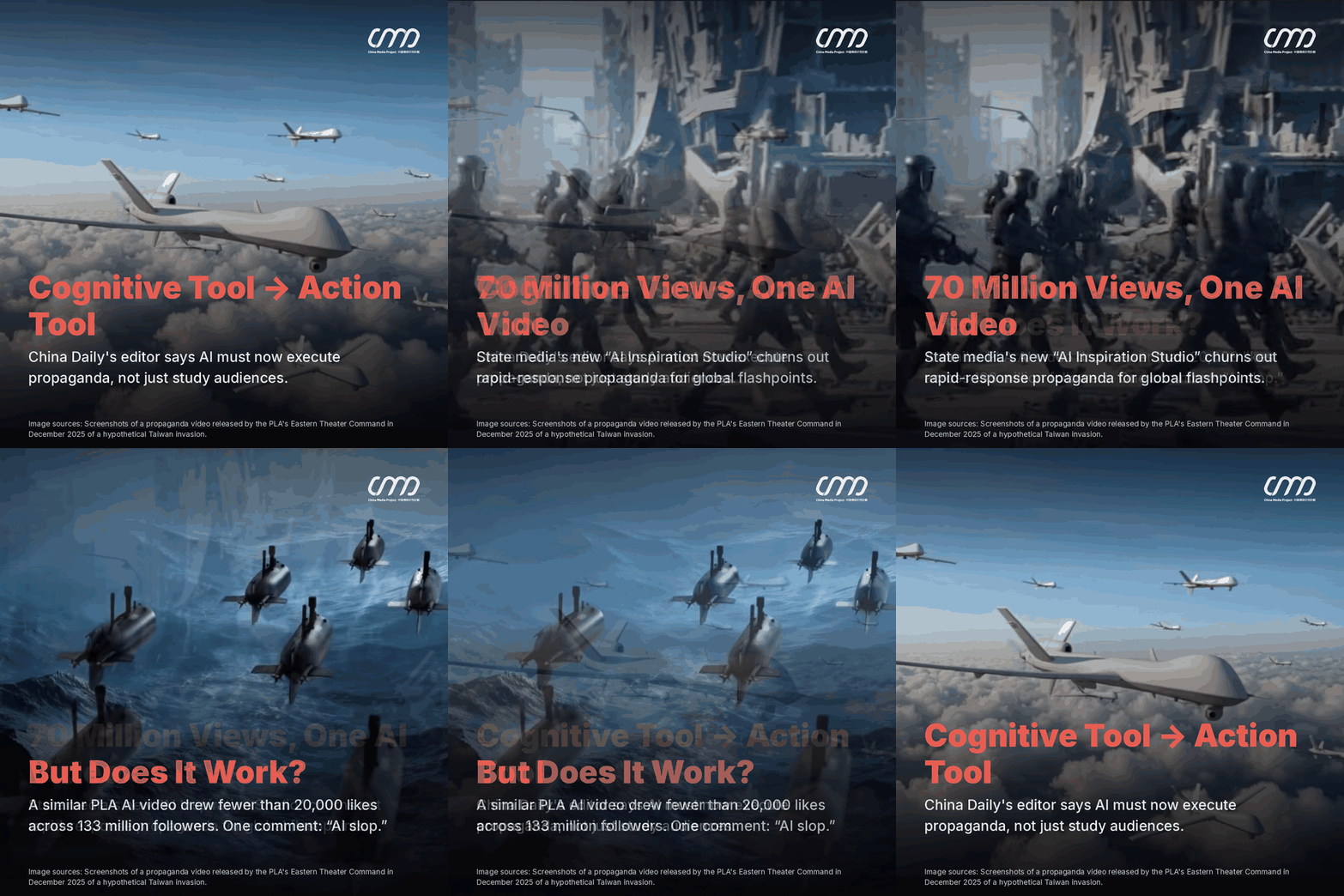
In December last year, AI enabled the rapid production by the PLA’s Eastern Theater Command of a dramatic animated propaganda video of shark-like torpedoes and bee-like micro-drones, and android soldiers, being mobilized to “thwart Taiwanese indepedence.” The video was shared across the full array of state media social accounts overseas, like the Global Times and CCTV on Facebook, and CGTN on YouTube. But the combined “likes” for the video on all three of these accounts, which have a combined 133 million followers and subscribers, according to account statistics, was less than 20,000. A common remark in the comment section on YouTube was to dismiss the video as “AI slop.” “My god, Chinese propaganda is made by old men who don’t have a clue,” read another comment.
AI may enable greater responsiveness and “action.” But can the political culture respond with equal deftness of message?
Qu concludes his Qiushi piece by noting that this expanded role for AI comes with the usual conditions. New technologies, he writes, may only be deployed once proven “safe, reliable, and controllable” (安全、可靠、可控). They can and must be used, he says, but only “on the basis of maintaining a strict hold on the political direction” (严把政治方向).
And there, once again, is the rub that has always exerted downward pressure on creativity in China’s media space. Everyone seizing their “action tools” in China Daily‘s AI Inspiration Studio will be asking themselves: Is this OK?