More than three decades ago, the man who would later become Taiwan’s first democratically elected president sat down with a celebrated Japanese writer and spoke of “the sorrow of being born Taiwanese.” Lee Teng-hui (李登辉), the then Kuomintang (KMT) chairman who had been born in Taiwan during the period of Japanese colonial rule, was describing the tragedy of Taiwan’s repeated foreign occupations and historical lack of self-rule. “Even the KMT is a foreign regime,” he said in the 1994 interview.
For many in Taiwan, the interview represented a new national consciousness emerging amid a democratic transition. Two years later, Lee would be elected to the country’s top political post in a fully democratic process.
But in the debut episode of The Long Watch (交锋), a Chinese spy drama released last month, Lee’s words become something else entirely. They are the catalyst for dramatic action, with the underlying message that Taiwan is an inalienable part of Chinese territory. The words are a warning to all Chinese — and a call to action.
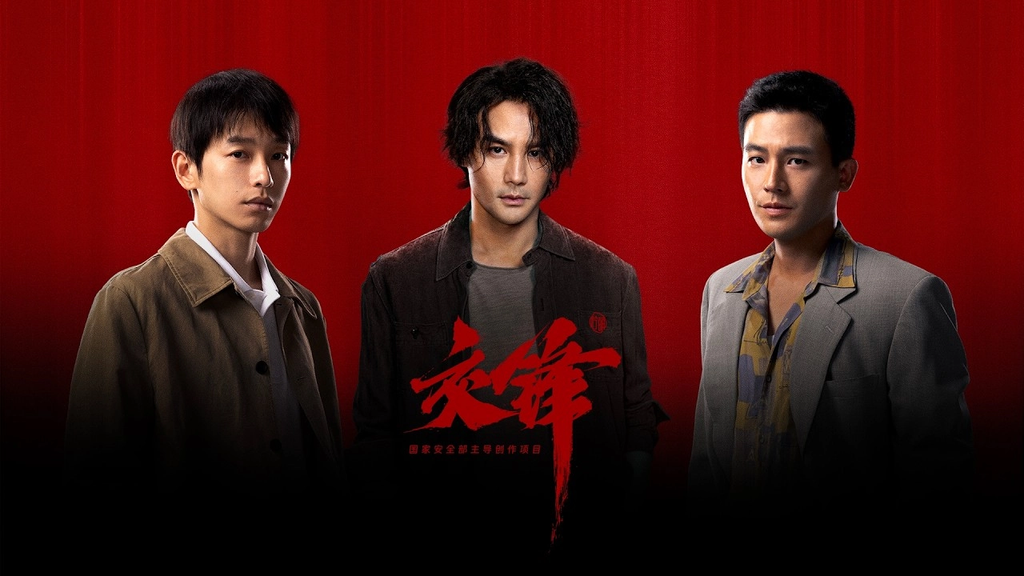
Spearheaded by and co-produced with China’s Ministry of State Security, or MSS, the organ responsible for the country’s domestic and foreign intelligence and security affairs, The Long Watch is no ordinary spy drama. Its widespread release — and popular success — is a case study in how the role of China’s top spy agency has expanded under the current leadership. No longer is the secretive MSS focused only on domestic enforcement of political security, the harassment of overseas dissidents, economic espionage and hacking. It is an entertainment giant, working in newly creative ways to build national security consciousness on behalf of the Chinese Communist Party — so that the public is attracted, and even electrified, by its core messages.
As the MSS itself asserted in an article last week, the public plays an important role in creating a “solid foundation” for national security, it said, adding that integrating the security agency’s efforts with the life of the public is now a key principle driving national security work.
Capitalizing on Crisis
In the opening scene of The Long Watch, a Chinese news broadcaster reads Lee Teng-hui’s words, calling them “incitement of ethnic division and separatism,” before shifting focus to its three key characters — undercover MSS agents in a Hong Kong dim sum cafe. The action unfolds in the run-up to the “Third Taiwan Strait Crisis” between 1995 and 1996, precipitated when the United States granted Lee a visitor visa to speak at his alma mater, Cornell University, a move the PRC interpreted as encouraging Taiwanese separatism.
The Long Watch — or Jiaofeng in Chinese, meaning “clash of swords” — topped the nation’s weekly ratings on all channels after all episodes were released in September, according to the country’s television data monitoring platform Kuyun (酷云). The drama topped prime-time TV ratings during its premiere on September 6, the state-run CCTV, one of the show’s broadcasters, reported. The series draws inspiration from real intelligence missions that took place in China and Taiwan during the mid-1990s, blended with fictional characters and locations.
China, which sees Taiwan as an “inalienable part of its territory,” largely bases its “sovereignty” claim over Taiwan on the island’s partial annexation by the Qing dynasty in 1683. The CCP has never ruled the island. But in recent years, the PRC has stepped up its coercion of Taiwan through regular military exercises and threats to unify by force if necessary. Chinese and Taiwanese leadership have not spoken directly since the election of then-President Tsai Ing-wen of the Democratic Progressive Party in 2016, despite DPP efforts to resume communication.
The release of The Long Watch coincides with the more recent escalation in espionage allegations across the Taiwan Strait. In a 2020 press conference, the Chinese government’s Taiwan Affairs Office spokesperson Zhu Fenglian (朱凤莲) suggested that Taiwan’s “intelligence agencies” have “engaged extensively in intelligence theft and subversive activities.” In 2023, a revision to the counter-espionage law expanded the Chinese government’s power to target security risks. Questioned about the risk of visiting China, Ma Xiaoguang (马晓光), another Taiwan Affairs Office spokesperson, said during a 2023 press conference that the law’s intention was to “provide peaceful and integrated development of cross-strait relations.”
Though open-source data on Taiwanese spies in China is limited, the MSS claimed in 2024 that it had cracked over a thousand cases involving Taiwanese espionage activities. In response, Taiwan’s Mainland Affairs Council said that the CCP abused its power by detaining people who do not conform to its political ideology. According to Taiwan’s National Security Bureau, 58 people were accused of providing intelligence tips to Chinese officials between last year and March this year. This June, Taiwan launched a website for Chinese nationals to offer intelligence tips, which was then condemned by China, which said it would take countermeasures.
People Indicted in Chinese Espionage Cases in Taiwan
Hover or tap a year
In the past, Chinese spy dramas have rarely touched on espionage activities in the period after the Kuomintang, the Chinese Nationalist Party, retreated to the island after losing the civil war with the Chinese Communist Party (CCP) in 1949.
But in September last year, another series, Silent Honor (沉默的荣耀) broke new ground as the first TV drama on CCP espionage operations in Taiwan set in the year 1949. It was also a breakout success, according to statistics from China’s National Radio and Television Administration (NRTA), which claimed it attracted 960 million viewers on its television debut.
A workshop on Silent Honor was held by the NRTA on October 25 last year, the same day that China marked its newly established “Taiwan Retrocession Day,” marking the end of Japanese colonial rule at the close of the Second World War. Joined by the central and provincial propaganda offices, the NRTA workshop emphasized the need to “tell good stories” (讲好故事) and commemorate the heroes. But the message just behind was unmistakable: Taiwan’s history is China’s history, and China’s national sovereignty over Taiwan is a matter of “firm will” (坚定意志).
"Every Citizen's Responsibility"
Silent Honor was also produced under the “direction” (主导) of the MSS. But whereas that production is set in an era few are alive to remember, The Long Watch’s focus on the modern period feels far more relevant to contemporary audiences. Both productions represent a significant development in the MSS’ efforts to reach the public directly through the media.
A closer look at the promotion surrounding The Long Watch paints a picture of this campaign’s core message. Across stories in state media, as well as in other official outlets, in press conferences, and in MSS social media posts, a common thread emerges — that national security is “every citizen’s responsibility.”
For example, the People’s Daily, the Party’s official mouthpiece, ran six dedicated articles about the series last month alone, spanning reviews, commentaries, and interviews with actors. One article notes that the show’s realism is what sets it apart from other spy dramas released in recent years. This was possible, says the article, only thanks to cooperation with the MSS, which aided the producers by providing them with research materials and access to security officers for interviews. Another commentary notes that the series’ realistic narratives “break down barriers” between popular understandings about spies and the reality of national security work, leaving readers with a call to action:
“The small acts of perseverance by countless ordinary people have built the most solid grassroots barrier for national security. 12339 [the phone number and online platform opened by the MSS for whistleblowing tips] is no longer just a cold number, but an important channel for the whole nation to participate in safeguarding national security.”
The MSS has undergone a significant transformation under Xi Jinping, reshuffling its leadership structure and beefing up its capacity and scope of work over the past decade. Introduced in 2014, Xi’s “Comprehensive National Security Concept” (总体国家安全观總), as scholar Sheena Chestnut Greitens writes, pays close attention to “the risks of internal destabilization due to foreign subversion and infiltration,” particularly from Taiwan, Hong Kong, and Macau.
The same year, a new counter-espionage law was passed and then further revised in 2023 to expand the definition of espionage and mandate further public education and awareness campaigns on national security threats. Soon after, the MSS began to experiment with creative ways to reach the public. It opened a WeChat account that provides updates on the country’s espionage challenges and released a comic series based on true counter-espionage stories in 2024. And in 2025, it deployed its own AI anchor, “Agent 012339,” a reference to its own intelligence hotline. Ambitious television productions now seem to have entered the agency’s playbook for successful outreach campaigns.
While agencies like the Taiwan Affairs Office and Taiwan-facing PRC media have taken aim at Taiwanese audiences in promoting the series, the success of this national security propaganda push has so far been limited to China. For its part, Taiwan has developed its own ways to counterbalance China’s unification narrative through the media. Released in August last year, the government-subsidized TV drama Zero Day Attack, which depicted a Chinese military invasion scenario, faced stiff criticism from Chinese authorities months ahead of release as well as after, panned as a tool of “cognitive warfare” and incitement of political resistance against China.
For China’s leaders, it seems, a drama unfolding from any other perspective is simply not entertaining.