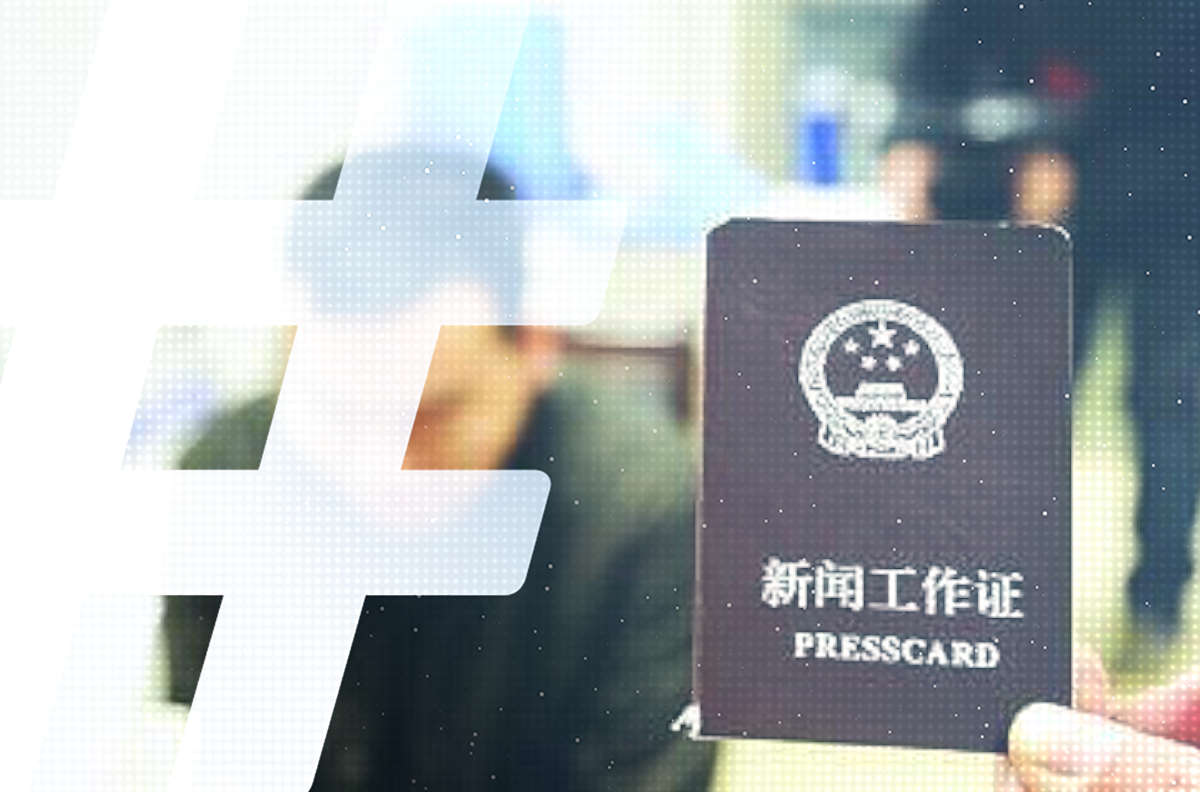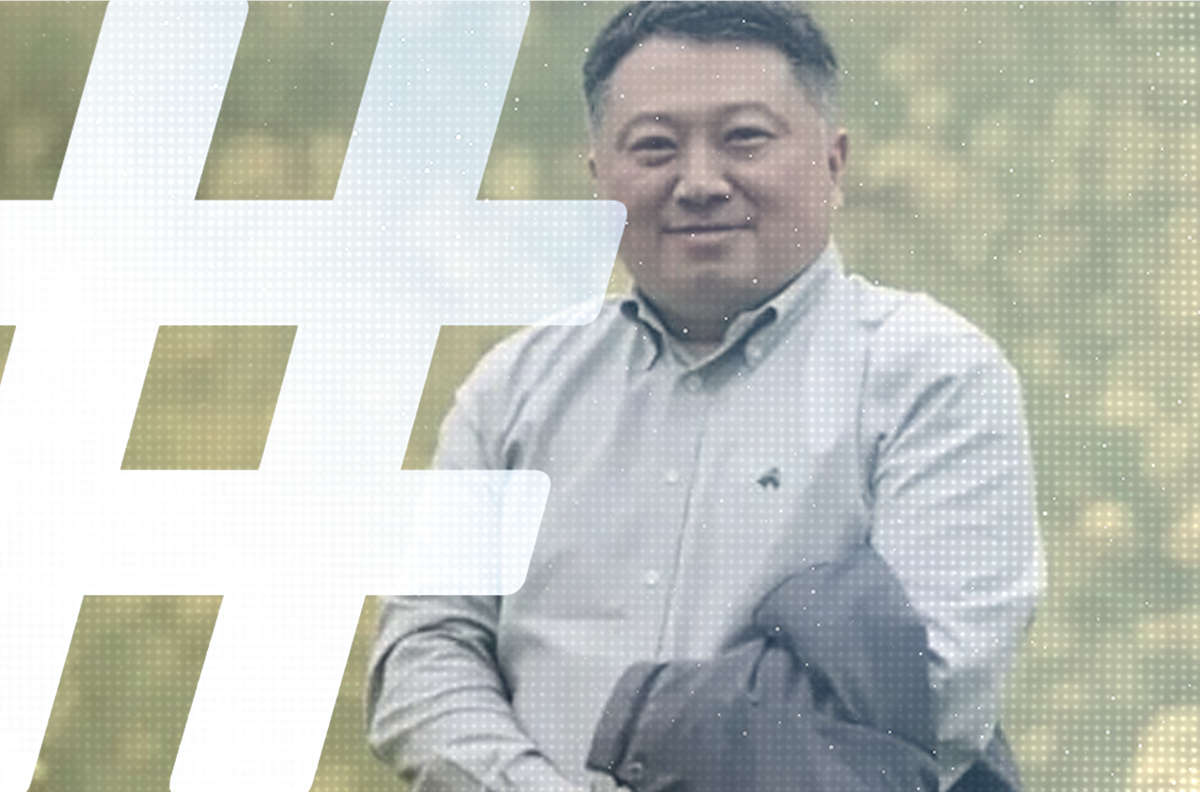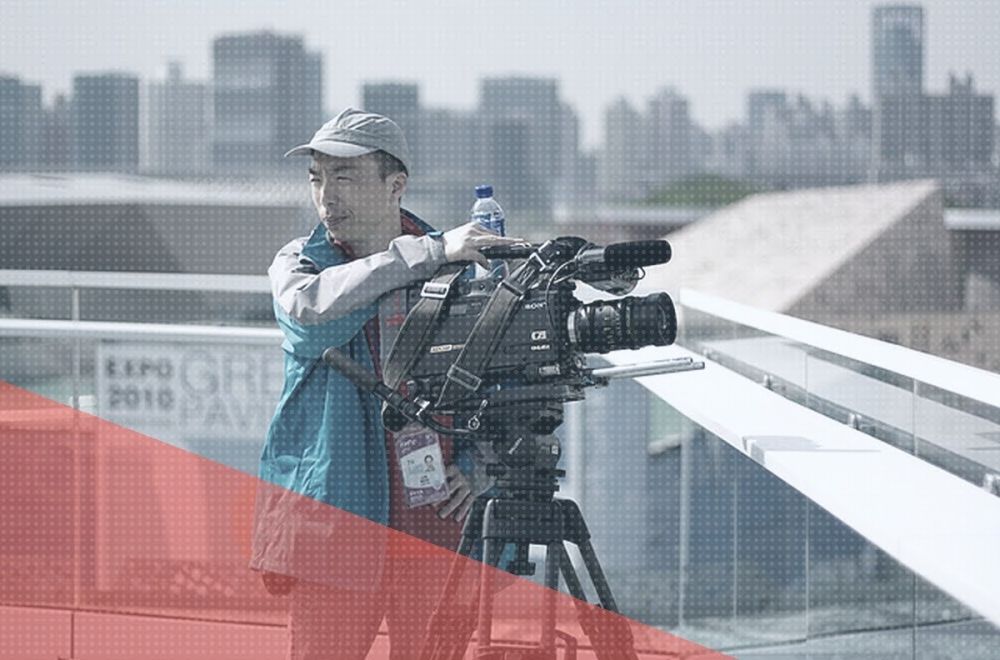
“Many of our interviews aren’t done on the spot these days,” says Wu Ting, a journalist who works in television news production at Jiangxi Television, a provincial-level state broadcaster in China. “Instead, higher-ups set the direction for us in meetings ahead of time, and we just complete the filming on-site.” This may seem a surprising admission from a working journalist, but it is not an isolated phenomenon, Wu told Tian Jian.
In recent years, the way some media outlets in China conduct interviews has changed. No longer do interviews need to unfold before the camera lens. Rather, their basic framework can often be set before the recording ever begins. At some television stations and for documentary-style feature segments, interviewees receive talking points before taping and some are even required to recite lines prepared for them. The interview, in other words, is no longer something generated on the spot. It is a programmed output.
The trend is expanding across many kinds of programming, says Wu, including current affairs reporting, segments on social issues and profile interviews. “If we can find someone who is willing to go on camera and say things the way we want, all the better,” she says. “We go back to them again and again, and give them a few hundred yuan for travel expenses as compensation.”
To explore this trend, Tian Jian interviewed several media professionals who have worked at Chinese television stations. For reasons of personal safety and to protect their employment, all interviewees in this article except Su Yutong and Liu Dongmei have been identified by pseudonyms.
Huang Miao, director of the news features department at Zhejiang Television, who has also worked on documentary-style programs, said that since the pandemic, public frustration has been growing under pressures like unemployment and mortgage payments. Yet the content, settings and structure of feature interviews must still follow official rules, so what gets said in an interview is often decided ahead of time. “That includes the dialogue between reporters and interviewees,” she said. “Content that once came out of live interaction has been moved up to the planning stage. The on-camera question-and-answer has become more a visual rendering of a set narrative than a process of producing information.”
Because hers is a state-run outlet, Huang said, its reporting must meet the requirements of the propaganda department. “What they want to see is that we ‘sing the main melody’ (唱好主旋律), guide the audience and spread ‘correct thinking,’” she said, referring to Chinese Communist Party language for ideological control. “That means we have to tell interviewees what to say. Some interviewees are given a few fairly standard lines, and they can’t really stray far from them.”
“You can change the tone, but you can’t change the meaning,” she adds.
Risk Management First
Behind this change lies a shift toward what these journalists call “risk management.” In the past, the risks a news story posed in China were dealt with during editing and publication, when stories could be reviewed, revised or rewritten. Today, some of those risks are neutralized before reporting even begins, so that content meets set requirements from the moment it is created.
Su Yutong, a former reporter for Beijing Radio who now lives in Germany, said the practice reflects the climate of public opinion in recent years. “Some interviewees are prone to grumbling and complaining, so sometimes the script is written in advance. The interviewee reads it over first, and then reads it out word for word.”
Such practices are not uncommon in news work, she said. “Sometimes people dig up footage or photos and find they’re several years old. That kind of thing we could see coming. But now even interviews have been reduced to reading from a script. It has reached an extreme.”
Four editors and reporters in Zhejiang, Shaanxi, Beijing and elsewhere told Tian Jian that interviews based on pre-prepared scripts are fairly common. This up-front control can include supplying the range of questions in advance, limiting the direction of answers, setting up frameworks to steer around sensitive topics and, in some cases, handing interviewees ready-made lines. What they say is confined within boundaries drawn beforehand.
Gu Le, an insider at Shanghai Oriental Television, said that controlling what interviewees say has become part of news censorship, with programs going through multiple rounds of review before broadcast. “The most important thing now is to keep anything uncontrollable from appearing. Rather than deleting it later, it’s better to prevent it from appearing in the first place,” Gu said.
Gu pointed to a recent viral interview with motorcycle entrepreneur Zhang Xue as an example. Zhang founded the brand ZXMOTO in 2024, and its bikes won two straight races at the World Superbike Championship round in Portugal in March 2026. In a post-race interview, when a reporter prompted him to thank the Chongqing government for its support, he replied, “Not a single penny.” When another reporter, from the Chongqing Communist Youth League, asked what drove him, he replied, “Why don’t you just tell me what to say, and I’ll say it?” Social media users passed the clip around as a rare case of an interviewee going off script.
According to Pan Yi, a veteran Chinese journalist, this shift has also changed the source of journalists’ professional anxiety. Where they once worried about whether a story would get published, they now worry about whether trouble will follow “the moment words come out of [an interviewee’s] mouth.”
“This kind of pressure has warped journalists’ professional instincts, shifting their focus from uncovering stories to assessing risks,” said Pan. “Today’s journalists are less ‘looking for people’ than ‘looking for characters.’ Our function has been drastically watered down. We’ve been reduced to casting directors for a grand narrative, responsible only for finding interviewees who fit neatly into a predetermined script. As for the risks behind the content, editors-in-chief and media platforms hedge against them through rigorous self-censorship.”
Dai An, a communication scholar at the Communication University of China, said the goal is to head off risks in advance and keep problems from arising during interviews. By filtering out uncertainty at the very start of the process, news production becomes highly “controllable.” “This approach completely stifles the room for authentic expression,” he said. “Complex truths that might otherwise have sparked debate in the newsroom are shut out of view the moment the shutter clicks or the recorder switches on.”
Under this approach, reporters are no longer focused on providing information, but on avoiding statements that deviate from expectations. What can and cannot be said is often settled before the interview begins, and whether a segment airs smoothly depends on whether it stays within those boundaries.
“Scripting” the Editorial Process
As pre-interview controls have tightened, the role of interviewees in Chinese news has also changed. Once seen as sources of information and voices for different viewpoints, they have been folded into predetermined narratives, and their room for expression has noticeably narrowed.
The shift has not gone unnoticed by news consumers. Despite the government’s professed crackdown on fake news, suspicions that reporting and editing are “scripted” have persisted, frequently drawing the attention of the public and international media.
On April 16, 2022, for example, CCTV’s flagship evening newscast, “Xinwen Lianbo,” reported that some supermarkets in Shanghai had reopened during the city’s Covid-19 lockdown, with “ample goods and normal stock.” Internet users later questioned whether the footage had been staged. The next day, the Shanghai Municipal Party Committee’s propaganda office released an official response stating that the footage had been shot on April 15 in Jinshan District, which was “nearing zero-Covid” status. But a photographer using the name “Fei Diwen” (費迪聞) later claimed on WeChat that he had shot the footage himself on March 31 at an RT-Mart supermarket in Yangpu District, and that CCTV had used it without permission.
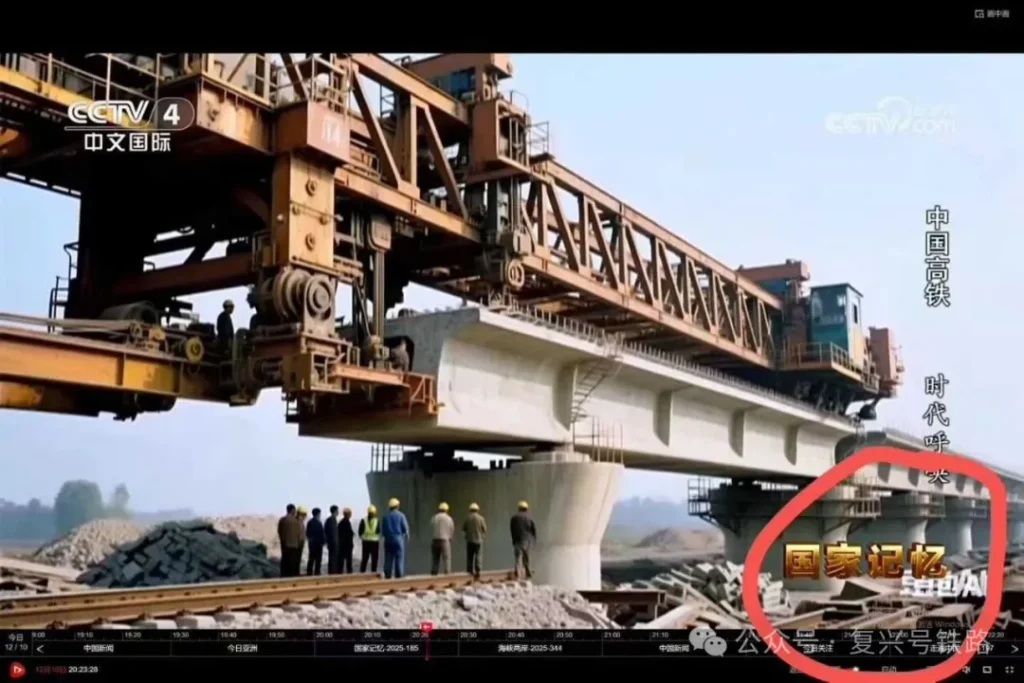
Such controversies are not isolated. On December 10, 2025, CCTV-4’s program “National Memory” (國家記憶) aired the first episode of “The Call of the Times” (時代呼喚), a documentary series about China’s high-speed rail. Some scenes of railway construction bore a “Doubao AI” (豆包) watermark in the lower right corner, the mark of ByteDance’s AI assistant. Railway enthusiasts online noticed that the construction footage “defied common sense.” The episode was then taken down from CCTV’s website — and when it was reposted, the footage had been replaced.
Guo Yajun, a scholar at Peking University’s School of Journalism and Communication, said the phenomenon reflects an adjustment in how news is produced as a whole. “When an interviewee’s statements are controlled in advance, the interview is no longer a process of gathering information, but the confirmation of a predetermined narrative.”
“The media no longer generate content on the spot,” he said. “Instead, they move the uncertainty to the stage before the interview begins.”
Guo said that while this mechanism helps contain public opinion risks in the short term, it will undermine the basic function of news in the long run. “News has traditionally relied on bringing different pieces of information together in pursuit of the truth. Once expression is uniformly restricted, audiences no longer confront reality itself, only a single, filtered version of it. As the public keeps noticing this gap, trust will gradually erode, and the media’s credibility will fall further.”
The Changing Role of Journalists
Faced with preemptive control and predetermined narrative frameworks, journalists are no longer in the business of uncovering information and building narratives. Their job has become managing risk.
Liu Dongmei, a former reporter at Hefei Radio in Anhui province, said that beginning in 2023, the first question before an interview was no longer “what to ask,” but “what not to ask.”
“The station instructed us that preparing for an interview wasn’t just about collecting information and drafting questions, but also about assessing the potential risks posed by the interviewee,” Liu said. “In the end, I could only find interviewees through classmates’ referrals or by approaching people I knew. Since we were on good terms, they would just say, ‘Tell me what you want me to say, and I’ll go along with it.’ I actually felt pretty awkward about it.”
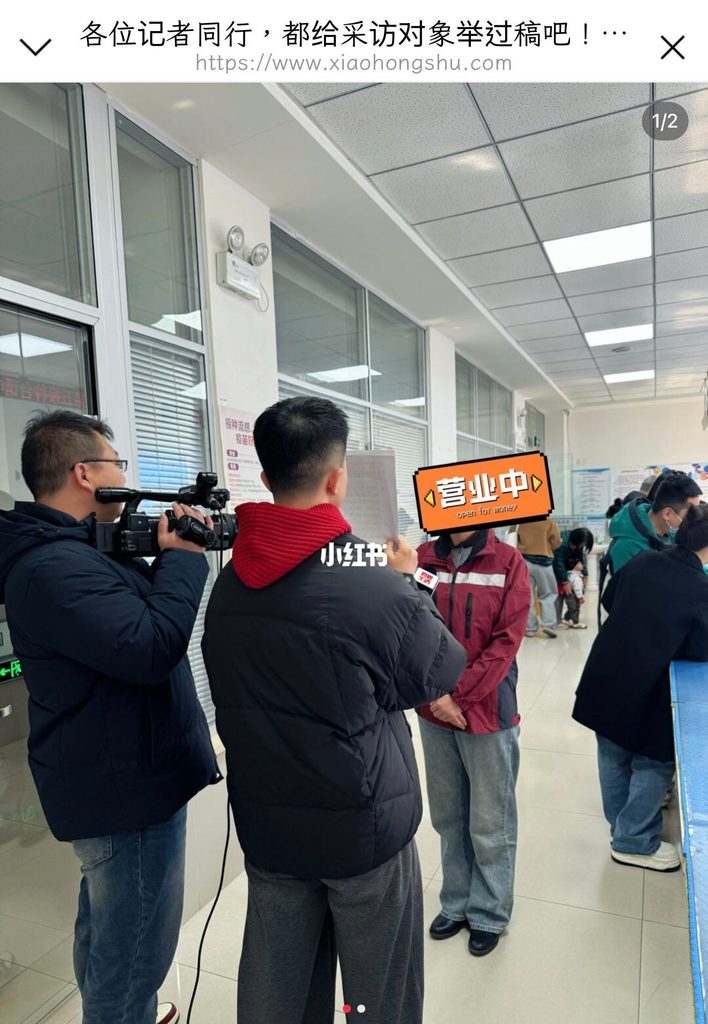
Liu found it hard to adapt. Three months into the job, she quit reporting and moved to another industry. She said that by the time she realized her work was shifting from “identifying questions” to “managing risks,” she had already decided to leave. “Where else — in foreign media, Hong Kong or Taiwan — is news reported like this? You focus only on the risks a story might pose to the station, never on its news value.”
As censorship permeates the day-to-day operations of every media outlet, journalists’ professional roles are being reshaped — from a focus on content to a focus on structure. In the process, journalists are no longer just reporters. They have also become regulatory checkpoints within the news system. Their work is not only to present reality but to ensure that expression stays within the bounds the authorities deem acceptable.
Shifting Boundaries
With the move toward pre-interview preparation and the changing role of journalists, the nature of news storytelling itself has begun to change. Content no longer comes primarily from on-site interaction but is increasingly built on a prearranged framework, producing a more uniform overall presentation.
The Chinese journalists, journalism instructors and media professionals interviewed for this story all described a similar situation in their workplaces: the information that reaches readers often already carries a clear stance and bias, making it hard for some readers to grasp the full course of events in stories about mass incidents or so-called “revenge against society,” a phrase used for random acts of violence.
Liu said that for news and programming, propaganda departments typically draw up a plan in advance that the media must follow. “The ‘preset structure’ of news has been around a long time, and many people have grown used to working this way. Whether they are fresh out of journalism school or reporters with years of experience, they all work within the same framework. That includes the questions and answers, which are settled before the interview takes place. The interview itself is largely just a supplement to what’s already there.”
When the content of an interview is prepared before recording, the way news is produced changes, too. Much of the information no longer comes from the scene, and exchanges between reporters and interviewees often amount to repeating predetermined lines. What audiences ultimately see is often nothing more than a selection of pre-approved statements.
Tian Yu is a freelance journalist covering Chinese-language current affairs and social issues, with a focus on China’s media landscape and public governance. This article originally appeared in Chinese at Tian Jian (田間).