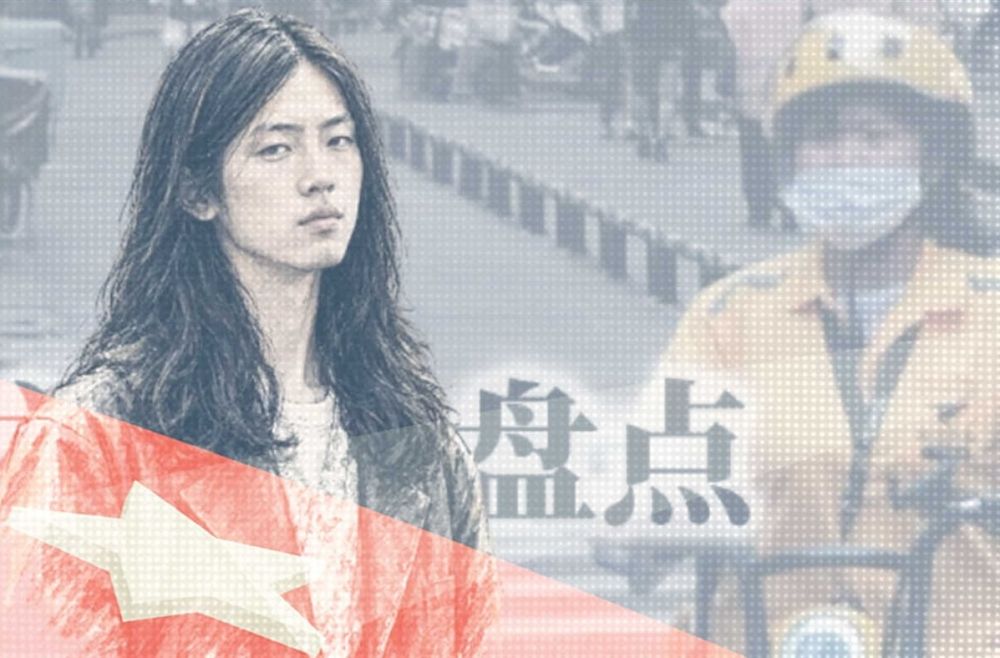
In September, posts began circulating on social media raising concerns that labor rights activist and journalist Feng Rui (冯睿), known also as Xiao Wu (小五), had gone missing. Over the course of several weeks, independent outlets and social media accounts began reporting that Guangzhou police had detained him on September 14 for “picking quarrels and provoking trouble” (寻衅滋事), an often arbitrary and politically-motivated charge used against individuals who challenge Party rule through speech or demonstrations. The Hong Kong daily Ming Pao (明報) confirmed on October 4 that Feng had been detained and had met with a lawyer, but did not specify charges. Some reports circulating online claim that Feng had become ill amid relentless interrogation by investigators and needed a wheelchair to be taken to and from questioning. According to Ming Pao, Feng was released on bail last week, but no official reports by Chinese authorities have been released as of this writing.
Feng Rui’s case comes amid an increasingly precarious labor market and a social security system under strain. As China’s government continues to release growth data whose validity some economists find questionable, viral social media posts of retirement-age individuals searching for employment and eating out of the trash reflect the country’s pessimistic mood.
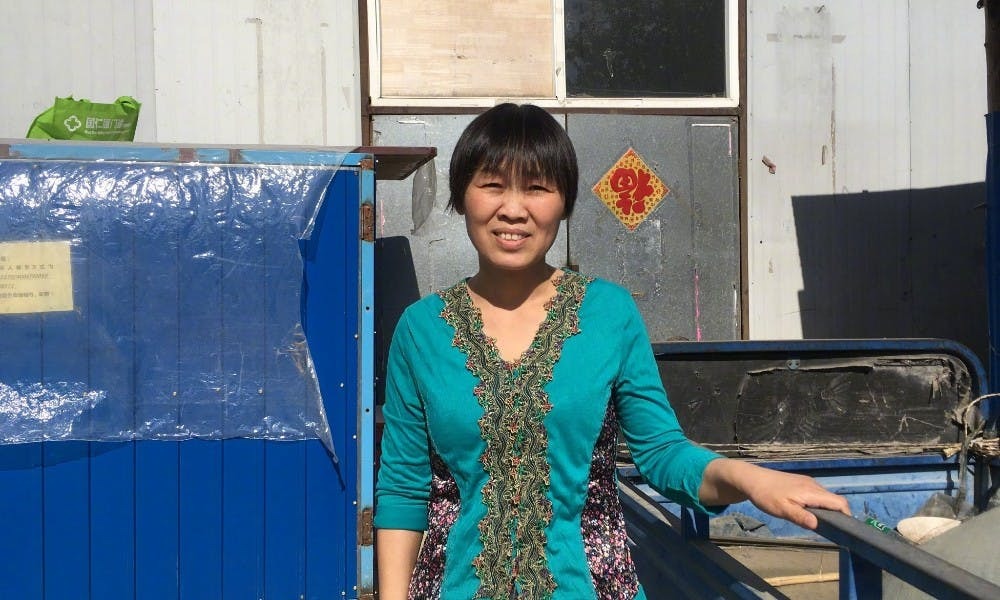
Feng is best known for his WeChat account “East Wind of Chiapas TV” (恰帕斯东风电视机), which covered labor justice issues, including an extensive report on 2025 labor rights incidents in China as documented by himself and several volunteers. The account, which stopped updating in February, took its name from the 1994 socialist Zapatista uprising in the Mexican state of Chiapas. Feng had also long been involved in workers’ rights mobilizations and initiatives across China, including at the grassroots-run Picun “workers home” (皮村工友之家) on the outskirts of Beijing.
Feng’s detention seems to be part of a broader crackdown on labor rights-focused media and reporting in the past several weeks. In September, Hong Guangyu (洪广玉), a former reporter for Beijing Sci-Tech Report (北京科技报), was detained at his home in Xiamen by authorities from Dalian, also on suspicion of “picking quarrels and provoking trouble” (寻衅滋事). In a now-deleted report originally published on October 7, the business and current affairs outlet Caixin (财新) cited sources suggesting that his detention may have been linked to his efforts to defend the rights of farmers in Dalian, who had alleged that pesticides from a local agricultural company were responsible for the death of their cherry trees.
Also earlier this month, China Labor Trends (中国劳动趋势), an independent outlet that aggregated labor data and academic research, announced it would cease publication. It cited the difficulty of maintaining “a long-term, structured approach to addressing social issues, particularly labor issues” in China. “Even if China Labor Trends is finished, and no matter how dire the political climate, societal concern for the plight of workers will not stop,” the publication wrote in its October 1 farewell letter. “Hopefully, when we meet again, we will have found new ways to contribute and make a difference.”
The crackdown has ironically drawn more attention to China’s poor economic and employment situation even as its goal was to prevent social unrest. As the country’s economic growth rate continues to decline, the ongoing suppression of labor rights voices and stifling of information is part of a broader effort by the Party to ensure stability and seize control over worker narratives.
Islands of discontent
The crackdown is hardly exceptional or surprising. Labor-related protests have been among the most-documented grassroots mobilizations in the country. China’s economic liberalization created a host of new problems for Chinese workers, and a new class of migrant workers who left their countryside hometowns to pursue work in the cities; social benefits became dependent on precarious employers — or else were tied to their place of household registration. While labor conditions in factories have improved considerably over the years, wage arrears, unpaid overtime, and long working hours without breaks remain among the most common problems faced by Chinese workers today.
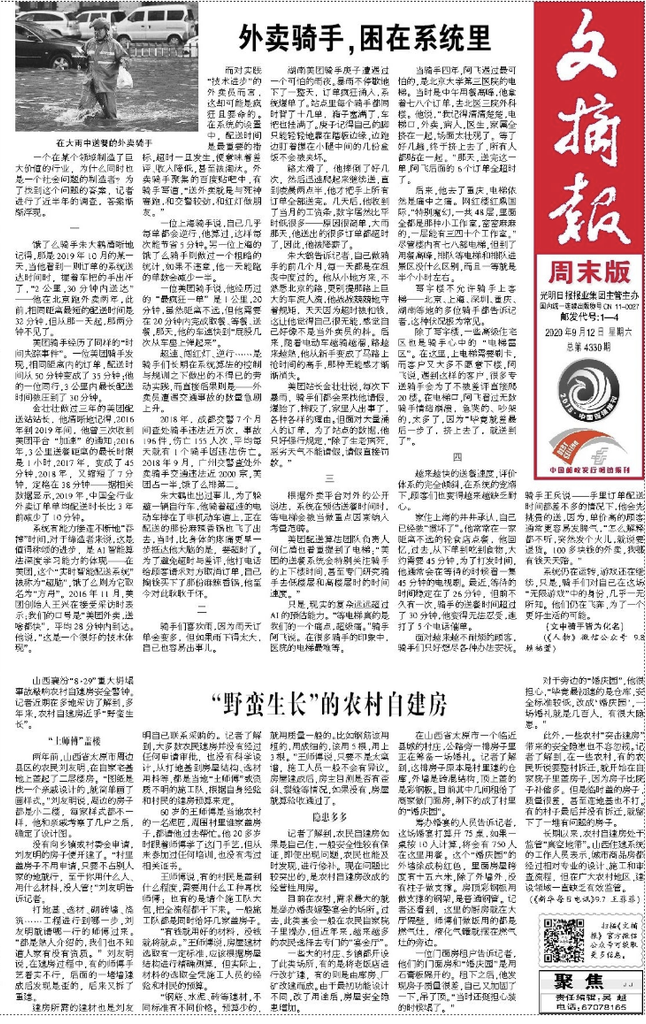
The rise of the gig economy — which now represents more than 40 percent of China’s overall workforce, according to one study — brought its own issues documented extensively by workers themselves online and by investigative journalists. A 2020 investigative report in Portrait magazine (人物), for example, found that food delivery apps were driving a sharp increase in driver accidents, injuries, and deaths through algorithms that placed unreasonable, even impossible, demands on riders. The government issued broad directives toward delivery app companies to ease the intensity of work schedules almost a year later, though extreme conditions continue to be an issue in the sector. Feng’s 2025 report, mentioned above, documented several problems among couriers and food delivery drivers, including sudden deaths after working consecutive excessive shifts.
The combination of a slowing economy and the growing number of highly-educated graduates that far exceeds job vacancies has driven many to gig work — yet even that sector is becoming overcrowded as both blue- and white-collar workers are losing their jobs to automation. After China’s youth unemployment rate rose to 21.3 percent in June 2023, the National Bureau of Statistics suspended the release of figures for several months. When new figures came out in early 2024, the official calculus had changed — with students removed from the count, lowering the headline figure. That statistic now sits at 18 percent as of September 2026, with an overall urban unemployment rate of 5.2 percent.
This poor situation facing workers in China has made spontaneous labor unrest more likely, said Li Qiang (李强), the founder and executive director of China Labor Watch, in an interview with CMP. Now based in the U.S., Li had advocated for worker rights inside Chinese factories before fleeing his country of birth under fear of arrest. He now represents one of the few remaining organizations documenting labor incidents in China.
“For the current government, it’s as if there are two worlds,” said Li. “One is a world of wealthy people, where you can see AI and other things doing really well in China. But there’s also a world of the poor — people without jobs, under growing pressure.”
The challenges of the current environment, he says, are coming to bear on workers across the spectrum, regardless of background: “Whether they’re ordinary workers or white-collar employees at big high-tech companies, they face a lot of pressure and competition at work.” Given the pain being felt in the workplace, says Li, the drive to speak out is natural. “In this environment, everyone wants to improve their own rights and circumstances,” he said.
China’s suppression of labor mobilizations goes hand in hand with pressure on publications and NGOs that document labor incidents across China. The Hong Kong-based China Labour Bulletin, which had documented collective worker actions and strikes across China, shuttered suddenly in 2025, citing financial issues. Lu Yuyu (卢昱宇), an activist and journalist born in Guizhou, documented over 70,000 “mass incidents” (群体性事件), China’s term for protests, including labor strikes, through his outlet “Not the News” (非新闻). Lu was detained by authorities in 2016. He spent four years in prison for “picking quarrels and provoking trouble,” the same charge Feng is allegedly facing.
Silencing Workers’ Voices
A selection of cases in China since 2015 in which people were detained for reporting on or publicizing the grievances of workers.
Lu believes the reason the CCP is placing such significance on Feng’s case — despite his relatively small platform — “is precisely because it is extremely fearful of his ability to ‘piece together’ fragmented and isolated labor incidents,” he told CMP. “By cracking down now, [the Party] is attempting to cut off information channels before workers’ anger gains broader social consensus, ensuring it retains control over the narrative.”
One of the most significant consequences of Feng’s arrest and the closure of China Labor Trends is the disappearing space for interaction and solidarity between workers and journalists, Lu said. “Information will become extremely fragmented, the public will not be able to see the full picture, and laborers fighting for their rights will more easily find themselves on isolated ‘islands.’”
Harmonizing the working class
In 2017, an essay titled “I Am Fan Yusu” (我是范雨素) went viral in China. Written by a woman from Hubei, the autobiographical essay contrasts Fan’s literary ambitions as a child with the ambivalent realities of working life as a single mother in today’s China. In its opening line, Fan compares her life to “a book that’s dreadful to read,” but ultimately ends on a note of optimism: “Can’t you always do something in life? I am incompetent, I am so poor, but I can still do something!”
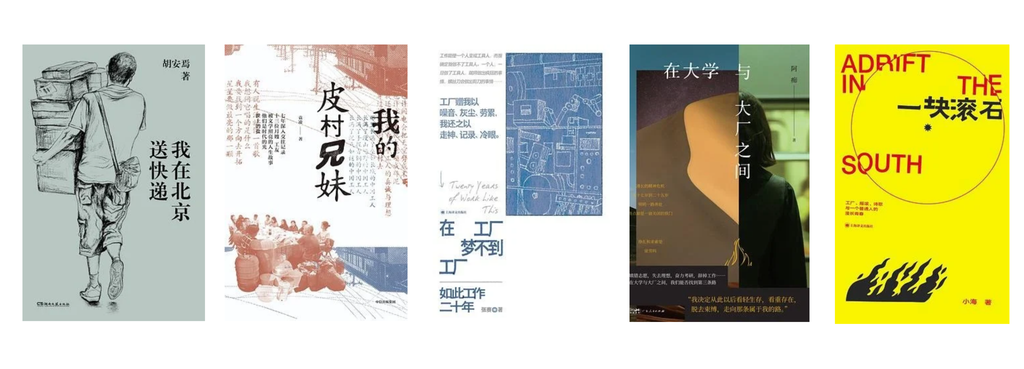
Fan’s essay emerged from a Beijing urban village, Picun, and its grassroots literary group (皮村文学小组). Her essay has become one of the best-known examples of “new workers’ literature” (新工人文学) — also the name of Picun’s literary journal — works written mostly by migrant workers detailing their own experiences of labor and survival. Other works representative of the genre have gained international acclaim, like Hu Anyan’s I Deliver Parcels in Beijing (我在北京送快递) and Xiao Hai’s Adrift in the South (一块滚石).
As the Party strives to maintain stability in the midst of a slowing economy, a discontented workforce, and a digital space increasingly difficult to control, it has presented its own top-down answer to the grassroots “new workers’ literature”: “new popular literature and art” (新大众文艺). First introduced in Party newspapers in early 2025, the term conceptualizes digital amateur content creation about the realities of everyday Chinese life as a new art form, inheriting Mao Zedong’s earlier call for art to serve the people, rather than the elites. Calls to promote the flourishing of “new popular literature and art” were made official government priority in this year’s Two Sessions and the 15th Five-Year Plan. Meanwhile, economic pressure has only intensified on workers and those desperate to find any work they can get. As for Fan Yusu’s beloved Picun, which provided much of the fuel for “new workers’ literature,” its school for the children of migrant workers was forced to close in 2019, and its Culture and Arts Museum of Migrant Laborers (打工文化艺术博物馆) was demolished in 2023.
A Xinhua think tank report paints a romantic picture of benevolent low-wage workers through their online creations “rooted in the soil of reality,” employing “unadorned means to express life and document the era,” listing Fan Yusu and “delivery poet” Wang Jibing (王计兵), who won China’s top poetry prize this year, as prime examples. Evocative of the self-sacrificing “model worker,” the aim of such messaging campaigns, says Lu, is to “‘harmonize’ working class voices, to package systemic exploitation as ‘striving and dedication,’ and to transform workers’ suffering into inspirational ‘positive energy’ stories, thereby diluting increasingly sharp class contradictions.”
These recent efforts in the arts and media seek to co-opt workers’ voices, making them part of a narrative of personal sacrifice for the glory of the nation. The unfortunate reality, however, is that the CCP, which places China’s working class at the heart of its founding narrative and legitimacy, remains very keen to ensure that worker voices from below stay fragmented. Documentation of worker exploitation, or online campaigns to improve working conditions, are highly likely to be censored.