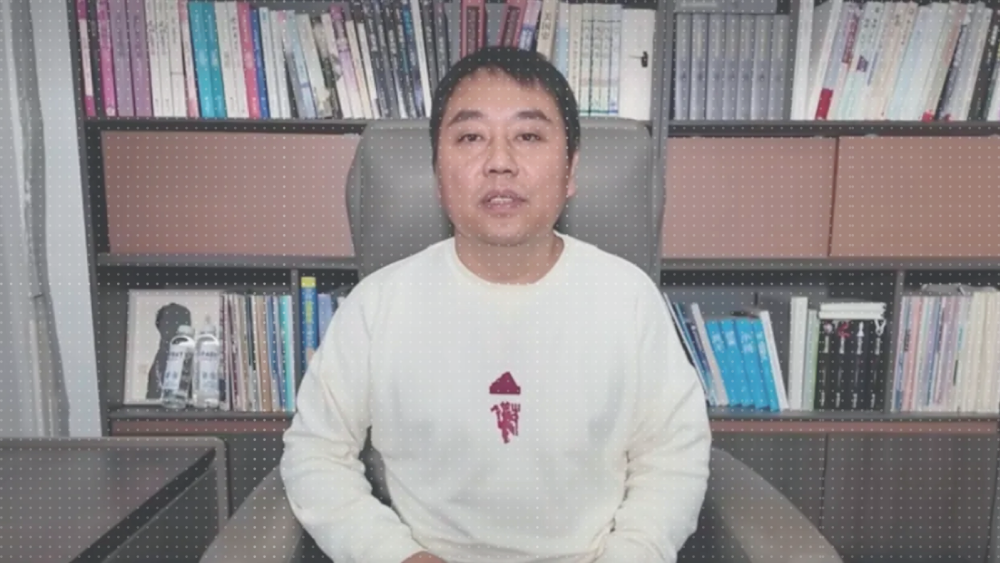
This spring, Fu Song (付松), a former investigative reporter who now regularly updates his public WeChat account Chasing the Moon and Counting Stars (追月数星) with stories of ordinary people seeking redress against local officials, police and courts, stumbled across a major scoop.
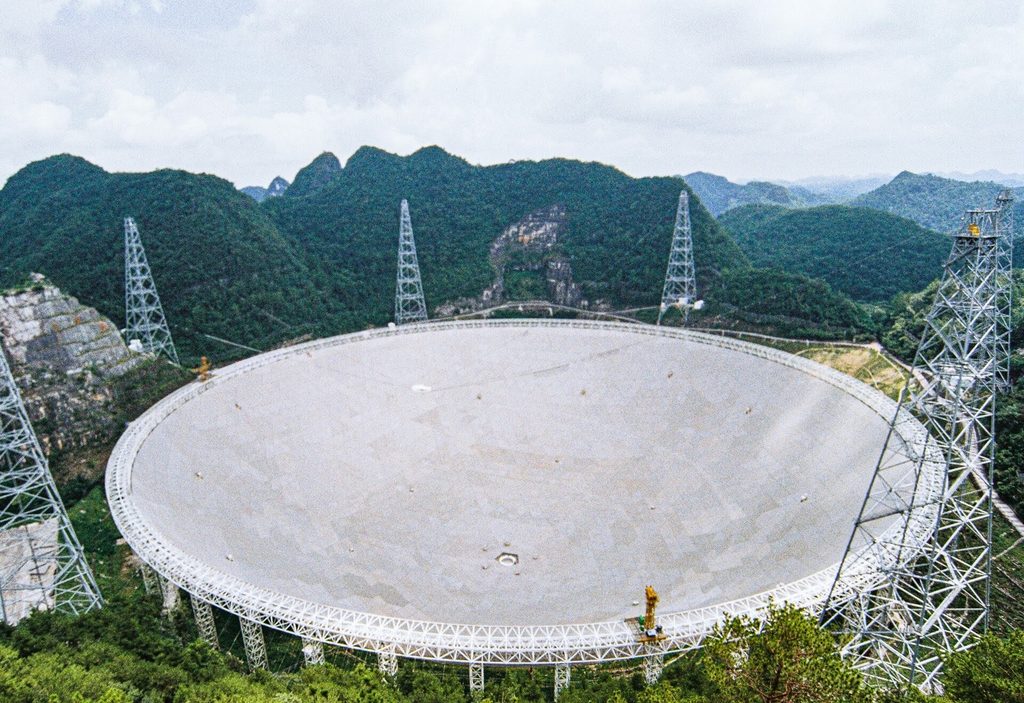
He learned from one of his readers that a national science institution was quietly offering paid access to one of the country’s most highly secured facilities — a remote astronomical observatory nicknamed “China’s Sky Eye” (中国天眼) that is the world’s largest single-dish radio telescope. Fu traveled to the location about two hours’ drive south of Guiyang to check the story out for himself. His investigation, released on his WeChat account in October, made headlines across the country, and prompted China’s top science academy to launch a full investigation.
But Fu’s was not just a simple story of a hard-nosed reporter whose work brought results in the real world. In a post and a video last week, he exposed wave after wave of retaliatory actions against him and his collaborator over the weeks following the investigation. His content is a gripping account of the myriad pitfalls facing Chinese journalists — and the fact that it has since been deleted only punctuates these challenges.
“I felt a wave of dizziness,” said Fu as he related his experiences. “I simply couldn’t understand why the price of making a report under my real name was so high.”
The Investigation
Set in the karst hills of China’s southwestern Guizhou province, the Five-hundred-meter Aperture Spherical Radio Telescope, or FAST, is tucked away in a natural basin, where scientists use it to listen for the subtlest of radio signals from deep space. When FAST was launched in 2019, the provincial government launched protection measures and regulations to prevent electromagnetic interference, which included restrictions on unauthorized phones, tablets, and other devices on-site that could emit radio waves and damage the technology.
But Fu discovered that civilian tech could easily get through the electromagnetic “quiet zone” (静区), as long as one could pay. For as low as 2,688 yuan, or about 400 US dollars, tourists were offered an “exclusive” deal: one night in a twin room at the FAST Light Years Away (中國天眼光年之外酒店) hotel in Guizhou, plus a guided tour that allowed visitors to approach the ring beam directly — far closer access than the public viewing area — with phones in tow.
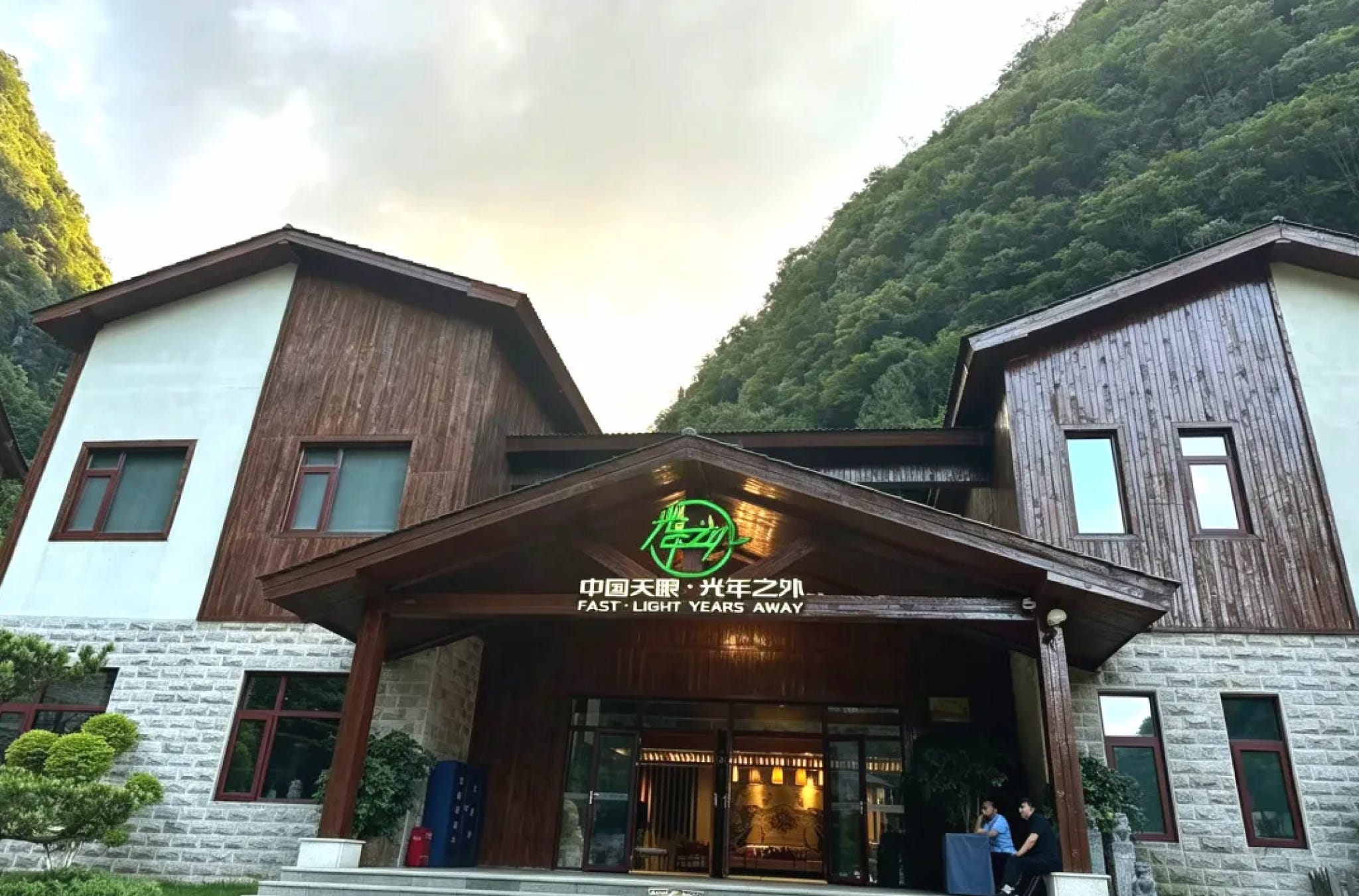
How could such access be possible? Fu confirmed through public records that the FAST Light Years Away (中国天眼光年之外酒店) was indirectly owned by the National Astronomical Observatories of the Chinese Academy of Sciences (CAS), which oversees FAST. The profiteering scheme seemed also to have official endorsement: the legal representative of the hotel’s operating company, Zhao Baoqing (赵保庆) is also a manager of the FAST observation base.
Since the hotel opened in 2020, Fu found through publicly-accessibly data and interviews, it had received tens of thousands of guests. Other vendors on the Chinese booking platform Ctrip were also offering FAST “experience” tickets. Scientists told Fu that the electromagnetic interference caused by tourists’ cell phones on site could have contaminated its data. In his initial October 10 investigation, Fu added that he had filed a complaint with central authorities on the Observatories’ potential illegal activity.
Two days later, CAS published a notice stating that it had opened an investigation into the matter. From there, the story was quickly picked up by central and local Party media, including CCTV, Xinhua, and The Paper, and became a trending topic on Weibo under the hashtag “book a 2688 yuan hotel stay and you can drive to the center of the FAST telescope” (2688元住酒店自驾进天眼核心区).
The Backlash
It wasn’t until about a week later that the trouble started. In a since-deleted video and article, both posted on October 20, Fu detailed his frustration with local authorities in Guizhou, who had called him several times after filing the complaint. According to Fu’s own account, his friend who accompanied him on the FAST tour had been questioned by police. Later, Fu received a call from someone who identified themselves only as a “regional leader” (辖区领导), who had called to check in on Fu and emphasize that his activities must comply with the law. He then received a call from an individual who claimed to be from the “administrative department” (行政主管部门), who asked Fu what he had done and then notified him that he had been reported and would be investigated. Fu had also received a call from CAS, which informed him that they were investigating the matter. These phone interactions were recorded by Fu and published in a video, which was taken down for “breaking rules” (违规).
The latest update on Fu’s WeChat account was on October 20, when he deleted and re-uploaded the above-mentioned video, this time without the clips of the phone calls between himself and the authorities.
So far, there have been no updates on the Chinese Academy of Sciences’ investigation. But Fu’s original investigative articles remain live on his WeChat account. For outside observers, the question of why Fu’s video depicting government pressure would be censored, while his original journalistic investigations could remain, is a puzzling one.
The answer lies in the concept of “supervision by public opinion” (舆论监督), a phrase translated by Chinese advocates of a freer press as “watchdog journalism” which has also been embraced by the Party as a means of “monitoring” societal problems toward the goal of stability. Xi Jinping’s moves to control a comparatively freewheeling press in the 2010s also meant ensuring their alignment with Party goals — one of which has famously been to rein in corruption by “hunting tigers and swatting flies,” or going after both high-ranking Party members as well as local bureaucrats. While the media played a far greater role in exposing corruption in previous decades — including among high-ranking officials — what Fu’s case shows is that, however rare supervision has become, there are still journalists determined to open up space for critical coverage.
But the broader Chinese media response exposes the limits of independent reporting. As a journalist working outside the formal CCP-led press structure — which the Party itself terms “mainstream” — Fu’s revelations could not be taken at face value as “reporting.” In China’s highly controlled press space, the “right to report” (采访权) is a privilege afforded only to licensed journalists and their licensed outlets. When Chengdu’s Red Star News, published by the local Party-led media group, picked up the story, quoting Fu’s work and adding its own reporting, it referred to him only as a “tourist.” Once Red Star had red-washed the reporting, making it safe for other outlets to use, the story could go national, provoking the CAS’ public announcement of its investigation.
“I simply couldn’t understand why the price of making a report under my real name was so high.”
While the facts Fu exposed might have been tolerated as they became the subject of nationwide reporting, his exposure of the pressure he faced was a far more sensitive matter — particularly as the FAST story was already in the spotlight. Local authorities were already likely facing pressure from central authorities to address what may become a major corruption scandal. Now, Fu’s video suggested authorities were pressuring him to keep quiet, just ahead of the Party’s fifth plenary session, which would push for greater Party discipline. As far as local authorities were concerned, it seems, Fu’s “supervision” work ended with his initial exposure of the scandal; it’s now on the implicated officials to try to clean up the mess.