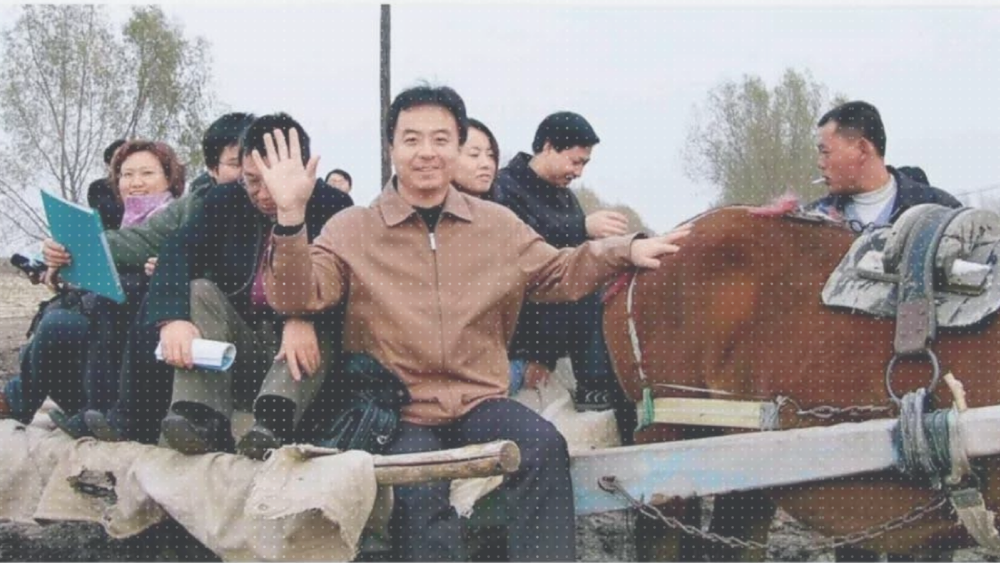
At a meeting in Beijing last month attended by senior propaganda officials, Cui Shixin (崔士鑫), a veteran journalist with a storied career in the Party-run press system, was appointed head of China’s official association for working journalists. Cui, who most recently served as deputy editor-in-chief of the Chinese Communist Party’s flagship People’s Daily (人民日报), is in many respects the ideal media leader by the Party’s standards, and his appointment offers a reference point for how journalistic values are defined in China.
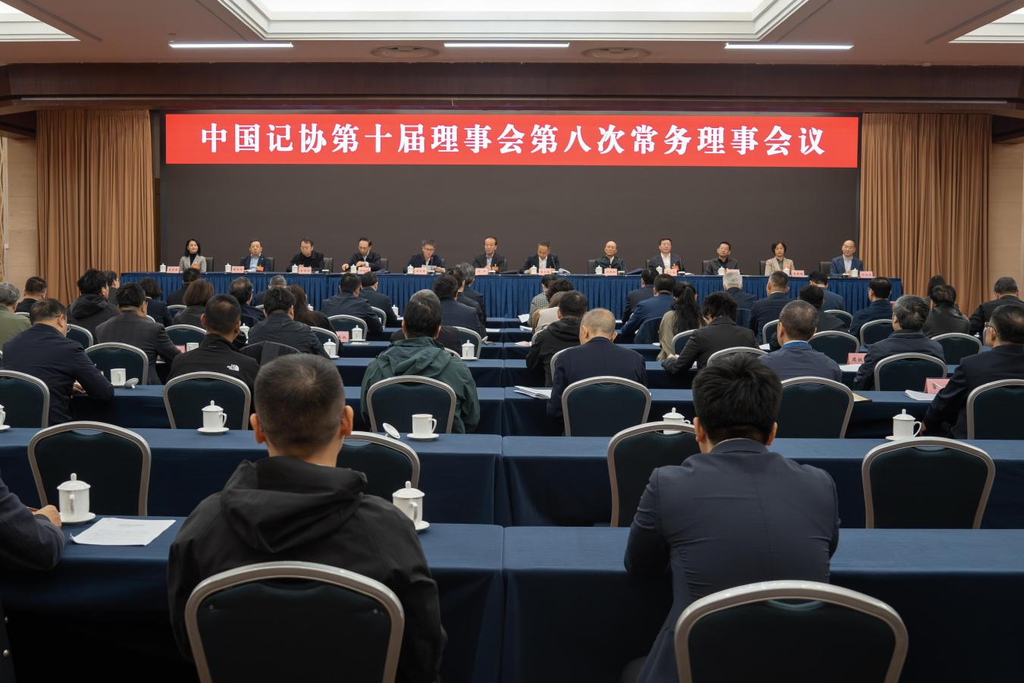
The October 24 meeting of the All-China Journalists Association (中华全国新闻工作者协会), or ACJA, promoted Cui to vice chair and secretary of its secretariat, formalizing his role as head of the association. He replaces Liu Siyang (刘思扬), who had held the top job since at least 2022. Under the leadership of the Party’s Central Propaganda Department, which sets the country’s media policy, the ACJA plays a key role in the training and discipline of journalists, including enforcing an ethics code that treats loyalty to Party principles as the first duty of the press.
Cui is not so much a journalist as a veteran Party media leader, a man honed and trained inside a newspaper that promotes the Party’s policies and serves as “the vanguard of the country’s news and public opinion front,” meaning that it guides and defines the lines that media across China hold.
His most important posting, and one celebrated by state media, came in 2007, when he volunteered and was sent to Tibet Daily (西藏日报), the Party-run “mouthpiece” of the Tibet region. He went under a 1994 program of “paired assistance” (对口支援) that sends staff from central institutions to work temporarily with counterparts in Tibet. The People’s Daily, the Central Committee paper, was paired with Tibet Daily, the regional Party committee’s paper. Cui stayed about seven years, first as deputy editor-in-chief and then, from 2012, as editor-in-chief.
Cui Shixin is a People’s Daily cadre on assignment to aid Tibet, and first deputy editor-in-chief of the Tibet Daily. Bringing the particular zeal of a People’s Daily reporter, in July 2007 Cui Shixin signed up voluntarily and, dispatched by People’s Daily, came to the Tibet Daily to carry out paired assistance work.
Officials and professionals sent by central Party and state bodies, and by paired provinces, to work in Tibet on fixed-term postings, typically of three years. The postings are a core part of Beijing’s “paired assistance” policy for the region.
A policy pairing central agencies, wealthier provinces and state enterprises with specific regions they are responsible for assisting. Paired assistance for Tibet was formalized at the Third Tibet Work Forum in 1994. Here it refers to the pairing of People’s Daily with the Tibet Daily.
“the particular zeal of a People’s Daily reporter”
While it is unclear exactly why Cui was chosen for the post at Tibet Daily, it is possible that he played a key role in asserting discipline at the media group during a sensitive period. The region was a focus of Party concern over fears of “separatism,” and Cui’s arrival came about a year after the Party installed a hardline chief there, Zhang Qingli (张庆黎). In a speech shortly after his arrival, at a meeting held to plan the region’s “anti-separatism struggle” (反分裂斗争), Zhang told officials the Party was in a “fight to the death” (你死我活的斗争) with supporters of the Dalai Lama, the exiled spiritual leader of Tibetan Buddhism.
A 2011 profile by People’s Daily Online says that Cui arrived “with the particular zeal of a People’s Daily reporter” (带着人民日报记者特有的热忱). In Party media language, that zeal means commitment to the paper’s role as the Party’s mouthpiece, and Cui’s job was to ensure that Tibet Daily would play that role in the region. The paper had just switched to color printing, and Cui reportedly found it lacking in strong columns and commentary — with pages, he said, lacking a unified style and “guiding quality” (指导性), a reference to the ideological role of the Party-led media. According to official profiles, he turned the paper into a regional copy of the People’s Daily. He built each page around regular columns, let commentary set the tone, and set rules on how to cover the news.
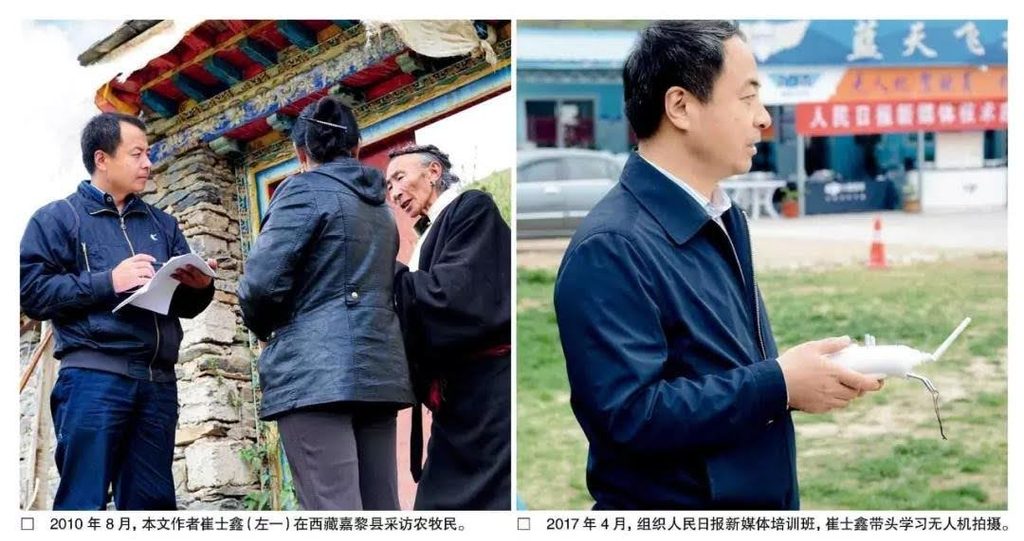
Cui’s zeal proved useful in March 2008, when protests led by monks erupted in Tibet, demanding freedom, respect for human rights, and a safe return for the Dalai Lama to China. Tibet has long been a sensitive topic for Chinese media, and state outlets ignored the peaceful protests, while authorities blamed the Dalai Lama for the unrest. Back in Lhasa, Cui wrote four “commentator articles” (评论员文章) — referring to unsigned pieces that speak for the paper as an institution — over a 10-day period. All blamed the “Dalai separatist forces” (达赖分裂势力).
Lest journalists in the Cui Shixin mold be mistaken for all Chinese journalists, it is worth recalling that the late 2000s, including the period around the events in Tibet, also offered alternative models of critical coverage and discussion, rather than mere service to the Party.
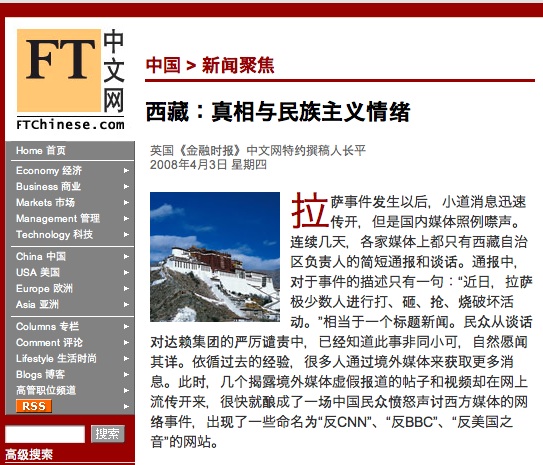
One journalist who even ventured to openly question the censorship around Tibet was Chang Ping (长平), then deputy editor-in-chief of Southern Metropolis Weekly (南都周刊) in Guangzhou, a magazine under the Party-run Nanfang Daily Group. In early April 2008, Chang wrote an article for FTChinese (FT中文网) called “Tibet: Truth and Nationalist Sentiment” (西藏:真相与民族主义情绪). The article not only criticized the news blackout around protests in Tibet that year, but also asked, provocatively, whether China’s ethnic majority Han Chinese harbored the same sense of cultural superiority toward Tibetans and other minorities that they resented in Western coverage of China. After the piece was published, Chang was swiftly removed from his post and shuffled aside to a research job.
Eighteen years after Lhasa was gripped by violence, Cui Shixin’s zeal and loyalty have earned him a position at the top of China’s official journalism hierarchy. He now leads the organization that is meant to represent the Party in representing the country’s estimated one million journalists. Chang Ping, who in that same year represented a different sort of voice, of the journalist as a free-thinking professional, has long since moved on, living in exile in Germany.